
2 min read ·
Compare Cremation and Burial on Cost and Timeline
Most crematories return remains in 5-10 business days after signed authorization. In most states, timely ground burial requires no embalming.
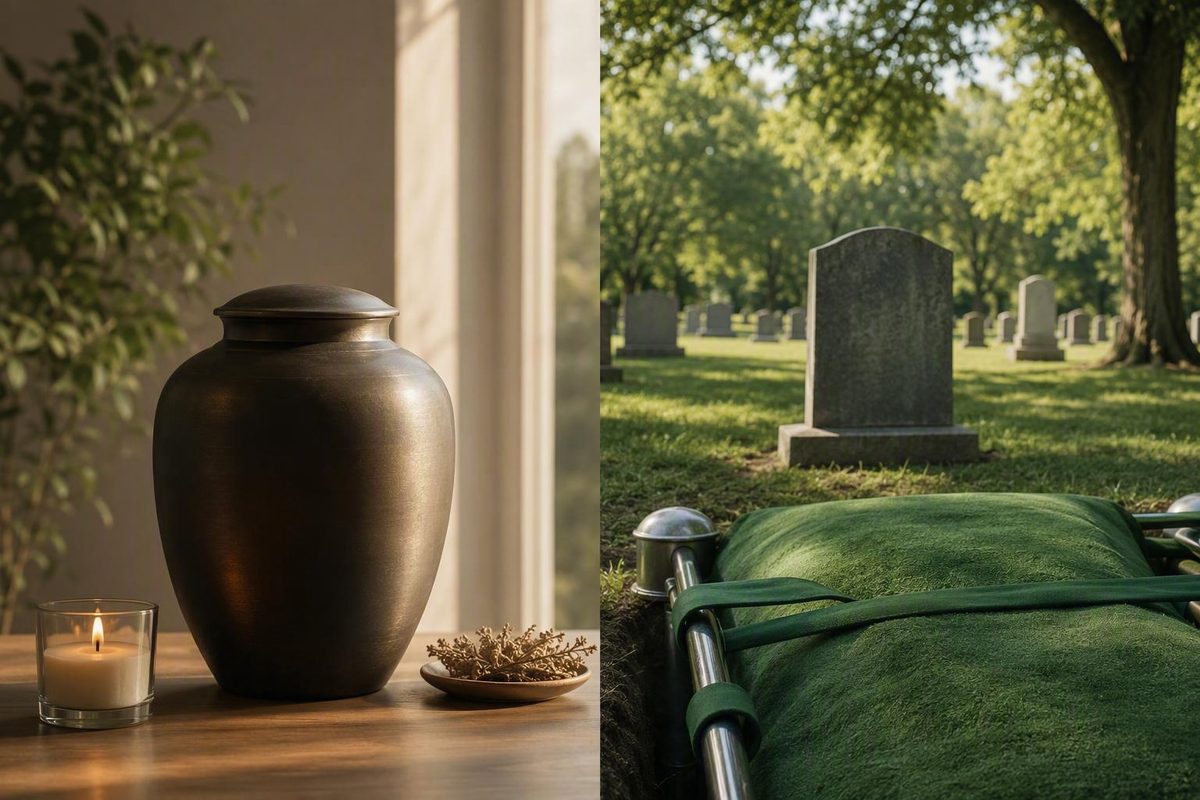
Cremation now accounts for more than 60% of dispositions in the United States, up from under 30% two decades ago. The shift is largely driven by cost, but the decision involves more than price. Here is a straightforward comparison of what each option entails.
Direct Cremation
Direct cremation means the body is cremated without a prior viewing or ceremony at the funeral home. Remains are returned in a basic container (or an urn you provide). It is the least expensive disposition option available.
Typical cost: $700–$2,500 depending on market and provider. This covers removal, paperwork, the cremation itself, and a basic urn or container.
What it does not preclude: a memorial service at any location, at any time, held by whoever the family chooses. Many families hold services weeks or months later at a location meaningful to the deceased.
Timeline: Cremation typically takes 2–3 hours. Most crematories return remains within 5–10 business days of receiving the signed cremation authorization.
What to ask: Who operates the crematory? Some funeral homes contract with third-party crematories. Request a tracking or identification process — reputable providers assign a metal ID tag to remains throughout the process.
Traditional Burial
Ground burial with a casket and grave marker is the most familiar option and remains common in communities with strong religious or cultural traditions favoring bodily preservation.
Typical cost: $7,000–$12,000 for a conventional funeral with viewing, ceremony, casket, cemetery plot, vault, and opening/closing fees. Costs range widely by region; rural areas are generally 20–40% less expensive than urban ones.
The cemetery costs — plot, vault, opening/closing — are separate from the funeral home’s charges and are often underestimated. A cemetery plot in a metropolitan area typically runs $2,000–$6,000; opening and closing fees add another $1,000–$2,000.
Embalming: Not required for ground burial in most states if the burial occurs within a reasonable time. Refrigeration is an alternative to embalming for a brief viewing and is generally less expensive.
Green Burial
Green burial (also called natural burial) forgoes embalming, metal caskets, and concrete vaults in favor of biodegradable materials — shrouds, wicker or untreated wood containers — in a natural burial ground or conservation cemetery.
Typical cost: $1,500–$4,000 for the disposition itself; plot costs vary widely.
The Green Burial Council (greenburialcouncil.org) maintains a directory of certified providers and cemeteries by state.
Aquamation (Alkaline Hydrolysis)
Available in roughly 30 states, aquamation uses water, heat, and alkaline solution to reduce remains, producing results similar to cremation. Some families choose it on environmental grounds.
Typical cost: $1,500–$3,500 where available.
Key Questions for Any Option
- Is there a family cemetery or existing plot? This changes the calculus considerably.
- What does the deceased’s faith tradition require or recommend?
- Does the family want a physical gathering point for future visits — a grave, a niche in a columbarium?
- What are realistic transportation costs if the death occurred far from home?
There is no universally correct answer. Both cremation and burial can be conducted with full dignity. The choice belongs to the family, informed by the deceased’s stated wishes wherever those exist.