
18 min read ·
Understanding how to appraise estate sale items
Fair market value uses sold comps, but a two- or three-day sale may need a lower liquidation value, while insurance value estimates retail replacement.
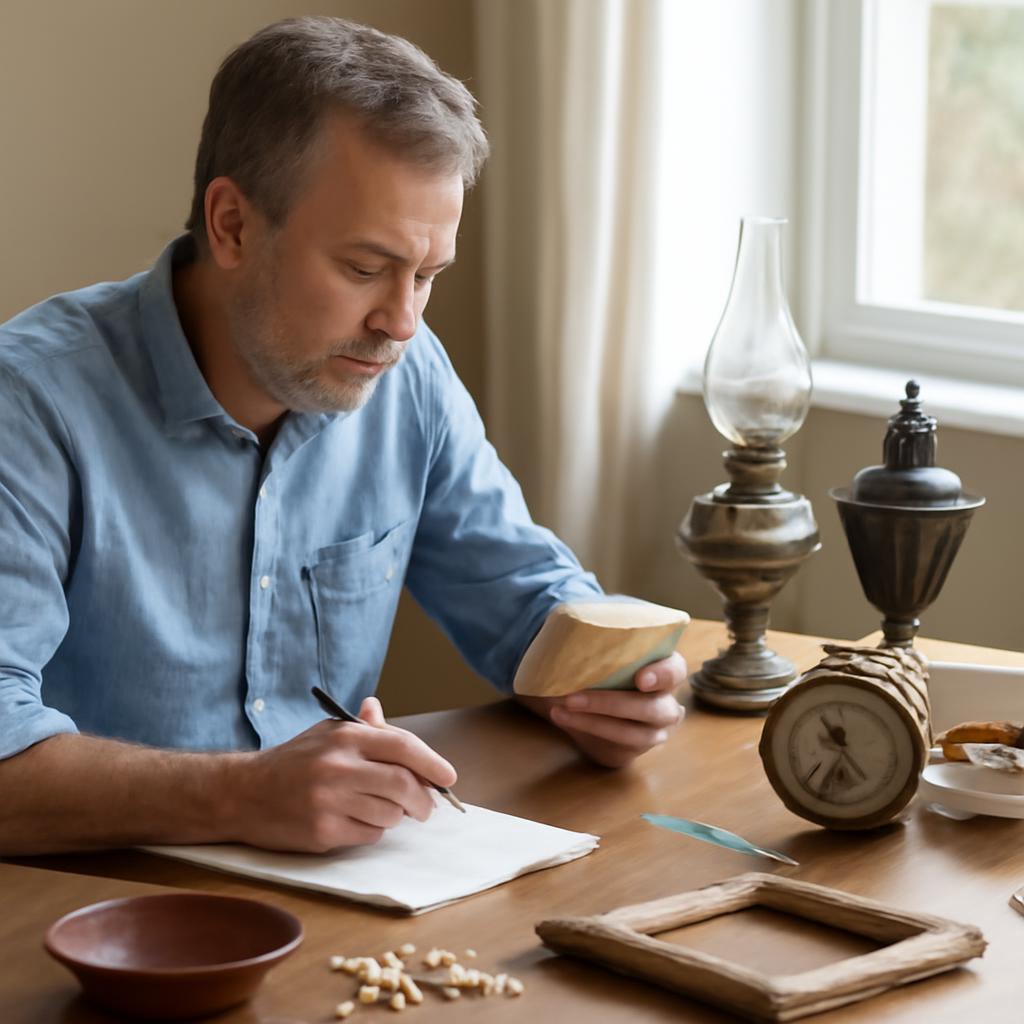
What how to appraise estate sale items means
In practical terms, learning how to appraise estate sale items means answering three separate questions in the right order:
- What is this item?
- What kind of value am I trying to find?
- What should I do with that value once I have it?
That distinction matters because estate items can have more than one legitimate number attached to them. A piece may have a fair market value based on comparable sold results, a lower liquidation or estate-sale value because it must sell quickly in a local two- or three-day event, and a higher insurance replacement value meant to estimate the cost of replacing it at retail rather than what you would actually receive in a sale Googie Down on fair market, insurance, and quick-sale appraisal types, Element 79 on market value versus insurance replacement value for estate jewelry, VRA Commercial on date-of-death fair market value for estate settlement.
That is why people get confused. They may inherit a ring, see an old insurance appraisal, and assume that is the same as a realistic selling price. Multiple sources warn against that shortcut because insurance values are designed for replacement, not liquidation or open-market selling Element 79 on why old insurance appraisals can overstate expected sale proceeds, Googie Down on insurance appraisals using current-for-sale pricing plus an added margin.
For ordinary estate contents, appraisal also does not always mean a courtroom-grade document. Sometimes it simply means screening a houseful of belongings to separate:
- everyday household goods,
- items with resale potential,
- items needing specialist review,
- and items better donated, discarded, or sold in bulk.
That lighter form of valuation is different from a formal written appraisal prepared for probate, insurance, tax reporting, divorce, or disputes among heirs The Perfect Piece Atlanta on estate valuation versus formal appraisal, Ericson, Scalise & Mangan on executor responsibility and when formal values may be challenged.
So the most useful beginner definition is this:
To appraise estate sale items is to identify them, judge condition and authenticity, compare relevant sold evidence, match the number to the purpose, and then choose the right sales or professional path.
How how to appraise estate sale items works
From start to finish, the process usually works like a funnel: broad sorting first, narrow research later.
Start with triage, not deep research. A whole estate may contain hundreds or thousands of objects. Even professional estate-sale companies and appraisers work by first identifying obvious categories, standouts, and potential problem items before doing deeper research Antiques & Chatchkes on initial assessment, detailed inspection, research, and written valuation report, Antique Identifier on fast identification, condition checks, and sold-price comparison as the core field method.
Next, identify the item as specifically as possible. That usually means looking for maker’s marks, model numbers, metal stamps, backstamps, signatures, labels, receipts, prior appraisals, grading reports, original boxes, and any family documentation. The more precise the identification, the better your comparison set Antique Identifier on checking maker’s marks and backstamps, Element 79 on provenance, receipts, boxes, and reports adding context and buyer confidence.
Then inspect condition honestly. Condition is often where beginners go wrong. A small chip, hairline crack, replaced part, missing accessory, altered finish, or amateur repair can change value drastically. For jewelry, damaged prongs, worn settings, or mismatched stones matter; for ceramics, chips and cracks matter; for furniture, refinishing or replaced hardware can matter a lot Antiques & Chatchkes on condition, authenticity, and rarity during detailed inspection, Antique Identifier on condition-based discounts and repair detection.
After that, look for sold comparables, not hopeful asking prices. Several sources converge on the same principle: fair market value is grounded in what similar items have actually sold for, not what sellers wish to get. That can include auctions, eBay sold listings, local marketplace sales, or specialist venues depending on the category Googie Down on FMV using sold comparisons rather than offers or listings, Blue Moon Estate Sales on researching recent auction and marketplace sales to determine fair market value, Ericson, Scalise & Mangan on using public references such as Kovel’s for collectibles.
Then adjust for selling context. A realistic estate-sale price may be well below a patient online selling price because the estate sale has a short deadline, local foot traffic, and liquidation pressure. Blue Moon describes estate sales as a two- to three-day local selling environment, and another field guide frames the same gap as an opportunity created by rushed pricing. Those are different interpretations, but they point to the same practical truth: an item’s “worth” changes with venue and time horizon Blue Moon Estate Sales on estate sales as a 2–3 day local market rather than eBay, Antique Identifier on quick pricing creating underresearch and occasional underpricing.
Finally, decide whether your estimate is good enough or whether you need a professional. For common dishes, linens, books, basic tools, or mixed household contents, a practical “as is” estimate or group value may be enough. For fine art, diamonds, unusual collections, firearms, or items tied to probate, insurance, donation, or family conflict, published guidance repeatedly points toward a professional appraiser and sometimes a category specialist Ericson, Scalise & Mangan on valuing household contents “as is” and using professionals for difficult assets, executor.org on hiring specialists for extensive jewelry or antiques, Investopedia on finding reputable jewelry appraisers through major appraisal associations.
The main approaches
Most readers comparing options are really choosing among four approaches.
1. DIY screening
This is the best fit when you have many items, modest stakes, and enough time to research. DIY screening usually means:
- sorting by category,
- checking marks and labels,
- photographing the item,
- reviewing sold comps,
- and creating a rough range rather than pretending to know an exact number.
Its strengths are cost control and speed. Its weaknesses are reproduction risk, category blind spots, and the temptation to over-rely on incomplete online matches Antique Identifier on field checks and quick tools such as a loupe, magnet, UV light, and scale, Googie Down on eBay and Facebook Marketplace as a novice starting place rather than a complete answer.
2. Hybrid screening plus specialist escalation
For most families, this is the most sensible approach. You do not need a formal appraisal for every saucepan and side table. Instead, you self-screen most contents and escalate likely standouts:
- precious metals,
- signed or branded jewelry,
- fine art,
- rare collections,
- designer furniture,
- firearms,
- or anything with strong family disagreement attached.
This approach reflects the reality that professional help is valuable but should be used where it changes the decision executor.org on using firms to value general contents while hiring specialists for extensive jewelry or antiques, Antiques & Chatchkes on organizing items and gathering documents before appraisal.
3. Formal appraisal
A formal appraisal makes sense when the value will be used outside the family. Common examples include probate, divorce, insurance, charitable donation, tax reporting, and contentious distributions among heirs Googie Down on when appraisals are needed for probate, divorce, insurance, and donations, VRA Commercial on date-of-death appraisals for estate settlement, probate, and tax reporting.
The tradeoff is cost and time. Published summaries vary widely on pricing. One source gives general personal-property appraisal ranges of about $90 to $150 per hour and specialists around $200 to $250 per hour; another gives $125 to $400 per hour for appraisers; jewelry-specific articles often quote $50 to $150 per item instead Googie Down on hourly appraisal cost ranges, Ericson, Scalise & Mangan on hourly appraiser fees and site-visit charges, Investopedia on jewelry appraisal fees often charged per item. The variation is a reminder to ask how the fee is structured before you hire anyone.
4. Estate-sale pricing or liquidation valuation
This is not the same as a formal appraisal. It is pricing for a short, local sales event. Estate-sale companies often research fair market value first, then discount from that number to reflect the sale’s time pressure and audience. One estate-sale operator describes typical pricing at roughly 30% to 60% of broader fair market value, while another source argues rushed research can also lead to accidental underpricing on particular categories Blue Moon Estate Sales on pricing below FMV for a short local sale, Antique Identifier on research gaps created by fast estate-sale tagging.
That difference is not really a contradiction. It is two sides of the same market. Some items are deliberately priced to move; others are simply not researched deeply enough.
A good way to compare these options is to ask:
- Do I need a legally defensible number, or just a practical selling estimate?
- Is the item common or specialized?
- Is the likely value high enough to justify expert fees?
- Will the item be sold locally, online, at auction, or kept for insurance?
- Could heirs, a court, an insurer, or a tax authority challenge the number later?
A practical process
If you want a repeatable method, use this one.
Step 1: Sort everything into three piles.
Make three groups:
- ordinary household contents,
- possible resale standouts,
- specialist-review items.
Ordinary contents may include everyday kitchenware, used books, common clothing, and generic furniture. Ericson, Scalise & Mangan notes that books, tools, appliances, and similar contents can sometimes be valued together as household contents rather than item by item, based on what a buyer would pay “as is” Ericson, Scalise & Mangan on aggregate “as is” household-content valuation.
Step 2: Define the purpose before you chase a number.
Ask whether you are trying to:
- price an estate sale,
- divide property fairly,
- insure a piece,
- prepare for probate or tax reporting,
- or decide whether an item deserves a better sales channel.
If you skip this step, you may compare the wrong kind of values. Fair market, liquidation, replacement, and date-of-death values are not interchangeable Googie Down on different appraisal approaches by purpose, VRA Commercial on date-of-death valuation for estate purposes.
Step 3: Identify the item as specifically as possible.
Look for:
- maker’s marks,
- metal purity stamps,
- signatures,
- model numbers,
- upholstery or cabinet labels,
- porcelain backstamps,
- and any paperwork.
For precious metals, marks such as sterling or 925 for silver, and 10K, 14K, or 18K for gold, are common starting points for identification Antique Identifier on silver and gold marks used in field appraisal. For jewelry, maker’s marks, craftsmanship, materials, and provenance repeatedly show up as value drivers Element 79 on the value role of maker, materials, craftsmanship, condition, and provenance, Investopedia on jewelry value depending on metals, gemstones, craftsmanship, and designer.
Step 4: Record the condition before cleaning anything.
Take clear photos first. Then note damage, missing parts, repairs, wear, odors, refinishing, replaced hardware, or altered stones. Cleaning may improve presentation, but aggressive cleaning and amateur repairs can hurt value, especially in antiques and jewelry Antique Identifier on using UV light and close inspection to spot repairs and condition problems, Element 79 on careful jewelry cleaning and avoiding harsh methods on delicate materials.
Step 5: Gather every scrap of provenance.
Receipts, prior appraisals, certificates, grading reports, old photos, original boxes, and catalog descriptions can help prove authenticity and make comparison easier. They may also increase buyer confidence if you later sell Antiques & Chatchkes on gathering receipts and certificates before appraisal, Element 79 on documents and original packaging supporting value and trust.
Step 6: Use sold comparables carefully.
When searching sold comps, match:
- the same maker or model,
- similar age or pattern,
- similar condition,
- similar completeness,
- and, ideally, similar venue.
A pristine set with the original box is not a comp for a chipped partial set. A realized auction result may not match a local estate-sale tag. A national online price may not be realistic for a rushed in-person liquidation Blue Moon Estate Sales on fair market research and then adjusting for estate-sale realities, Googie Down on FMV relying on sold values and item details including condition and measurements.
Step 7: Create a range, not one magic figure.
For most estate items, a single precise number is false confidence. A better format is:
- online fair market value range,
- likely estate-sale range,
- specialist-review note if needed.
That structure forces you to separate “what it could bring with time and reach” from “what it may bring this weekend in a house sale.”
Step 8: Escalate the right categories.
Bring in a pro when you see:
- diamonds or significant gemstones,
- signed fine jewelry,
- fine art,
- firearms,
- rare or unusual collections,
- designer furniture,
- or anything with a likely value high enough that an expert opinion could change the plan.
Published guidance is consistent that appraiser expertise should be category-specific. A competent generalist is not automatically the right expert for coins, diamonds, or unusual collections Great Lakes Family Probate on matching the appraiser to the collection type, Investopedia on vetting jewelry appraisers through established associations.
Step 9: Vet the appraiser, not just the price.
Ask:
- What categories do you specialize in?
- What kind of value will the report state?
- What methods do you use?
- Do you provide a written report?
- How do you charge?
- Do you also buy or sell the items?
At least two sources warn against conflicts of interest when the appraiser also buys or charges based on a percentage of value, and one ties that concern to USPAP ethics Googie Down on following USPAP standards and avoiding appraisers who buy or sell the appraised items, Ericson, Scalise & Mangan on avoiding percentage-of-value fee structures.
Step 10: Match the item to the sales channel.
A strong appraisal is only useful if you pair it with the right next move.
- Estate sale: fast, local, practical, but often lower realized prices.
- Online marketplace: broader reach, but you handle listing, packing, shipping, returns, and fraud risk.
- Auction house: useful for exceptional items, but timing and commissions matter.
- Consignment or specialist dealer: useful for category-specific pieces, especially jewelry Element 79 on channel tradeoffs, fees, timing, and return policies, Blue Moon Estate Sales on why estate-sale pricing differs from longer online selling formats.
Common mistakes and tradeoffs
The biggest mistake is thinking appraisal is just “looking it up online.”
Mistake 1: Using asking prices instead of sold prices. Anyone can list a teacup or ring at an ambitious number. That does not prove market value. Sold comps are still the better baseline for fair market value Googie Down on FMV using sold comparisons, Blue Moon Estate Sales on researching recent sales, not just listings.
Mistake 2: Confusing insurance value with sale value. Old insurance paperwork can be useful documentation, but it can also create unrealistic expectations. Replacement value is not the same thing as what an estate sale, dealer, auction, or private buyer will pay today Element 79 on insurance replacement value overstating sale expectations.
Mistake 3: Ignoring condition, completeness, and repairs. Beginners often focus on age or brand name alone. But age does not rescue a cracked plate, a repaired figurine, or a bracelet missing its original clasp. Condition can outweigh age very quickly Antiques & Chatchkes on condition inspection as a core appraisal step, Antique Identifier on severe value effects from damage and repairs.
Mistake 4: Overcleaning or “improving” the item first. Polishing, refinishing, regluing, or replacing parts before documentation can erase evidence or reduce value. Photograph first, clean cautiously, and when in doubt ask a specialist Element 79 on cautious cleaning and repair decisions for jewelry.
Mistake 5: Treating an estate-sale tag as a final verdict. Estate-sale pricing can be very competent, but it is still pricing for a fast local event. Some pieces are intentionally discounted to move; others may be under-researched because of time pressure Blue Moon Estate Sales on liquidity-based pricing, Antique Identifier on rushed tagging creating research gaps.
Mistake 6: Hiring the wrong kind of appraiser. A generalist may be fine for broad household review, but a diamond, firearm, rare collection, or niche decorative-arts object may need a specialist. Expertise is category-specific Great Lakes Family Probate on appraiser expertise needing to match the collection type, executor.org on using specialists for jewelry or antiques.
Mistake 7: Assuming every valuable-looking item deserves a formal appraisal. Professional appraisal has a cost. For common contents, the decision value may not justify the fee. For higher-value or legally sensitive items, it often does. That is why the hybrid method works so well for many estates The Perfect Piece Atlanta on starting with broader valuation to identify items that need formal appraisal, executor.org on using a firm to value contents while escalating selected categories.
Mistake 8: Treating legal or tax summaries as universal rules. Probate rules vary by state, and published summaries of tax-trigger thresholds for collectible appraisals do not always agree. That disagreement is itself a warning sign: if the number will be used for probate, taxes, or court, verify the current rule with an attorney, tax professional, or qualified appraiser rather than relying on a blog post Ericson, Scalise & Mangan on state variation in probate valuation rules, Bott & Associates summary of collectible appraisal thresholds, Great Lakes Family Probate on different stated IRS appraisal thresholds for collections.
The core tradeoff in all of this is simple:
- More speed usually means less precision.
- More precision usually costs more time or money.
- The right choice depends on what is at stake.
How to choose the next step
A sound decision starts with matching the process to the item.
If you are looking at mostly ordinary household contents, do a practical “as is” sort, group low-value items together, and avoid spending days researching objects that will not materially change the outcome Ericson, Scalise & Mangan on household contents being valued as a whole where appropriate.
If you have items with clear identity signals—brand names, model numbers, precious-metal stamps, signatures, original boxes, or paperwork—do a first round of DIY screening using sold comps. That is often enough to decide whether something belongs in the ordinary pile or the specialist pile Antique Identifier on fast triage using marks, tools, and sold comparisons.
If you have jewelry, art, rare collections, or legal-use valuations, stop short of overconfidence and get expert help. The appraisal should state the type of value being given and should come from someone with relevant category expertise Investopedia on what a jewelry appraisal should include, VRA Commercial on qualified appraisers and written reports for estate purposes.
If the question is how to sell, choose the channel that fits the item and your tolerance for delay:
- choose an estate sale when speed, convenience, and clearing the house matter most;
- choose online selling when the item is easy to identify, easy to ship, and worth the extra work;
- choose auction or a specialist dealer when the item is exceptional and the buyer pool needs expertise Blue Moon Estate Sales on local liquidation constraints, Element 79 on auction, consignment, local specialist, and online marketplace tradeoffs.
A practical next step for most readers is this:
- Walk the estate once and create the three piles.
- Photograph and document the possible standouts.
- Do sold-comp research on items with clear identification.
- Get specialist quotes only on items where the result could change the plan.
- Match each item to the right selling or legal path.
That gives you a workable answer without pretending every object needs a museum-level valuation.
What should a beginner know about how to appraise estate sale items?
Beginners should know that the first job is not pricing—it is identification. If you cannot tell what an item is, you cannot compare it properly. Start with marks, labels, model numbers, maker names, metal stamps, and paperwork; then compare recent sold results in similar condition Antique Identifier on marks, condition, and sold-price comparison as the core method, Googie Down on FMV using sold comps with condition and description details.
They should also know that there is no single universal value. Estate-sale value, fair market value, insurance replacement value, and date-of-death value can differ for the same item Googie Down on different appraisal purposes and values, VRA Commercial on date-of-death valuation for estate settlement.
Finally, beginners should resist over-researching common contents. Use your time on items with clear signs of potential value or legal importance Ericson, Scalise & Mangan on aggregate “as is” valuation for household contents.
What are the main risks of how to appraise estate sale items?
The main risks are:
- using the wrong kind of value for the job,
- relying on asking prices instead of sold comps,
- missing damage or hidden repairs,
- overestimating common items because they are old,
- and skipping specialist help where the category demands it Blue Moon Estate Sales on FMV research and estate-sale context, Antiques & Chatchkes on condition, authenticity, and rarity inspection.
There is also a legal and financial risk when informal numbers are used for probate, insurance, donations, or family disputes. In those situations, published guidance repeatedly points toward professional appraisal and documentation Googie Down on probate, divorce, insurance, and donation uses for appraisal, Ericson, Scalise & Mangan on valuations potentially being challenged by heirs, creditors, courts, or the IRS.
How do you evaluate how to appraise estate sale items options?
Evaluate your options by asking four questions:
- What is the purpose of the number? Sale planning, insurance, probate, and tax work may require different values.
- How specialized is the item? Everyday contents can often be screened by you; diamonds, fine art, and unusual collections usually need expertise.
- What is the likely payoff? Do not spend formal-appraisal money on low-value common goods.
- What sales channel fits the item? Local estate sale, online marketplace, auction, and consignment each reward different kinds of property Element 79 on choosing among local specialists, online marketplaces, auction houses, and consignment, executor.org on firms that value and sell estate assets versus specialists for selected categories.
For many estates, the best option is a hybrid: self-screen most items, then pay for expertise only where it changes the outcome The Perfect Piece Atlanta on using valuation first to identify items that warrant appraisal.
Sources
- Third Party · How to appraise estate sale items: a buyer’s field guide - Antique Identifier Online.
- Third Party · Appraisals - When To Get One.
- Third Party · Estate Sale Appraisal Explained.
- Third Party · How To Value Items for Estate Planning Purposes | Bott & Associates, Ltd..
- Third Party · The Art of Estate Sale Pricing: How We Determine What Items Are Worth 💰 - Blue Moon Estate Sales | Orlando East.
- Third Party · How to Value Items When Someone Passes – Ericson, Scalise & Mangan, PC.
- Third Party · How to Sell Estate Jewelry: A Step-by-Step Guide.
- Third Party · How to Appraise and Pass On Rare and Unusual Collections | Great Lakes Family Probate and Estates PLLC.
- Third Party · How to Value Jewelry Inherited From a Loved One.
- Estate Planning Guide · Bring in an Appraiser to Value Items in an Estate - executor.org.
- Third Party · Date of Death Appraisal Guide - Date of Death Valuation Questions Answered.
-
Third Party · [
Estate Valuation vs. Estate Appraisal — What’s the Difference?
](https://www.theperfectpieceatlanta.com/estate-valuation-vs-estate-appraisal-whats-the-difference).