
21 min read ·
How to Thank the People Who Supported Your Family After a Loss
More than 40 adaptable examples cover funerals, memorials, celebrations of life and graveside services. General attendance can be covered by a broad acknowledgment.
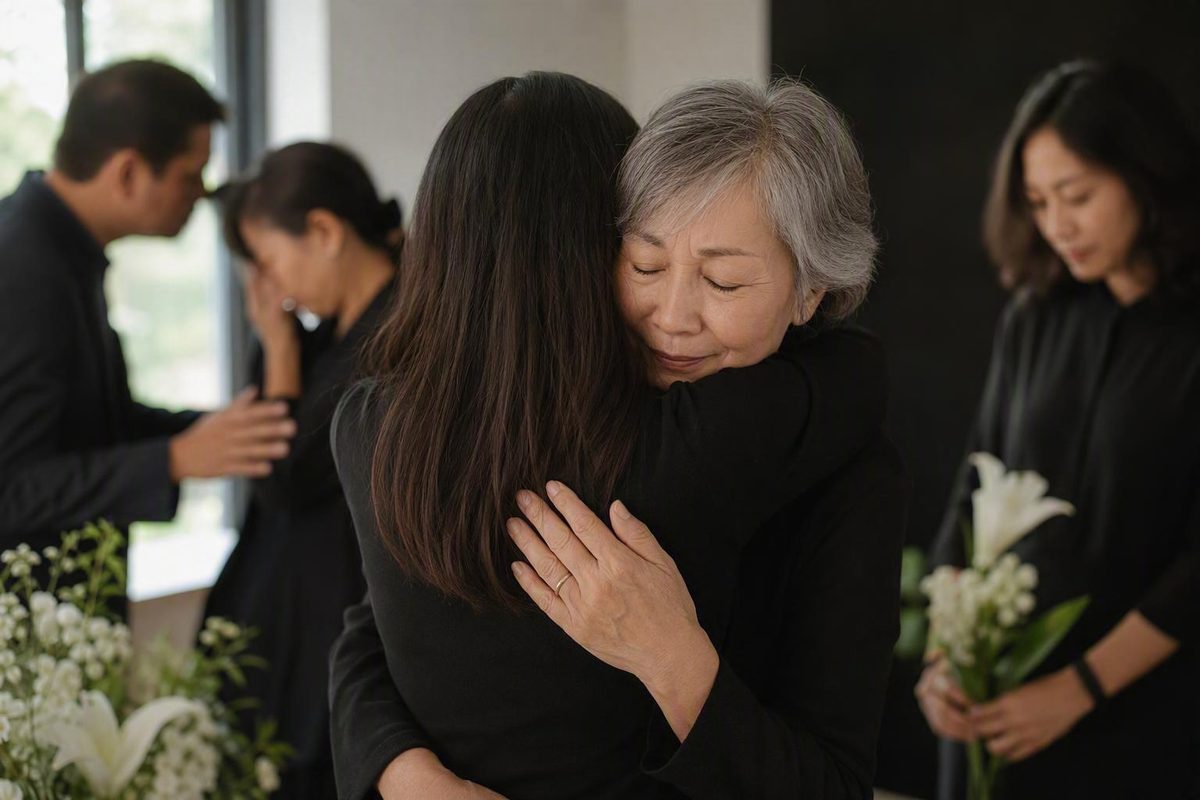
An appreciation message after a funeral does not need to be long, polished, or written on a particular kind of card. A few sincere sentences are enough. The simplest approach is to name the kindness, say what it meant or how it helped, and close warmly.
This guide includes more than 40 adaptable examples for a funeral, memorial service, celebration of life, graveside service, or another gathering. Replace the names, relationships, gestures, and service terms so that every message reflects what actually happened.
A simple five-part formula for a funeral appreciation message
If you do not know where to begin, use this five-part structure:
- Greeting: Address the person by name.
- Thanks: Express your appreciation directly.
- Specific kindness: Name the gift, action, presence, or service.
- Impact: Briefly explain what it meant or how it helped.
- Closing and signature: End warmly and identify the sender clearly.
A fill-in framework looks like this:
Dear [Name], thank you for [specific kindness]. [How it helped, honored the deceased, or supported the family]. We are deeply grateful for your thoughtfulness. [Closing/signature].
You do not have to use every element in a separate sentence. The same structure can fit in two lines.
General two-sentence note
Dear Marcus, thank you for your kindness and support following Elena’s death. Our family deeply appreciates the care you showed us.
Warmer personal note
Dear Priya, thank you for sitting with us at Daniel’s memorial and for sharing your story about their college years. Hearing that memory helped us picture a happy part of his life that we had not known about. With gratitude, the Lewis family.
Very short message
Thank you for thinking of our family and supporting us after Mia’s death. We are sincerely grateful.
The most useful detail is often something small: the lasagna delivered on Tuesday, the lilies chosen because they were the deceased’s favorite, the reading given at the service, or the long journey someone made to attend. Naming the recipient and the deceased can also keep a short template from sounding impersonal.
Describe only an effect you genuinely experienced. If flowers did not “bring comfort,” you can call them thoughtful or say they honored the deceased. If someone attended but you did not speak with them, thank them for being present rather than claiming that their presence carried you through the day. Accuracy is more sincere than emotional language added automatically.
How to make a short template sound personal
A short note can feel personal when it includes one or two accurate details. Consider adding:
- The recipient’s name: “Dear Simone” rather than “Dear friend.”
- The exact kindness: A meal, floral arrangement, donation, reading, ride, letter, or visit.
- The deceased’s name: This connects the gesture to the person being remembered.
- A memory or relationship: Mention how the recipient knew the deceased or why a story mattered.
Here is how generic wording can be revised:
| Generic wording | More personal wording |
|---|---|
| Thank you for your support. | Thank you for bringing dinner for our family on the evening after Robert’s service. It gave us one fewer task to manage. |
| Thank you for the flowers. | Thank you for the yellow roses you sent for Amina’s memorial. They reminded us of the flowers she grew beside her porch. |
| Thank you for helping at the service. | Thank you for reading Aunt Clara’s favorite poem at the service. We appreciated the care you gave to that part of the ceremony. |
| Thank you for the donation. | Thank you for donating to the local animal shelter in Theo’s memory. Supporting its work was important to him. |
| Thank you for your kind words. | Thank you for writing about your first day working with Luis. Your story showed us how warmly he welcomed new colleagues. |
Choose a tone that fits the relationship
Formal wording may suit an employer, professional, officiant, medical team, or person you do not know well:
Dear Dr. Patel, thank you for the attentiveness and respect you showed Mr. Evans and our family. We sincerely appreciate your care.
Warm wording may feel more natural for a friend or relative:
Nina, thank you for staying close and handling so many small things during an exhausting week. Your steady help meant a great deal to all of us.
Very brief wording is appropriate when energy is limited:
Thank you for the meal and for thinking of us. We truly appreciate your kindness.
Spiritual wording can acknowledge prayer, pastoral care, or a shared belief:
Thank you for keeping our family in your prayers and for reminding us of the hope we share. Your faithful support has been deeply appreciated.
Religious language should be used only when it fits the family, recipient, and occasion. When you are uncertain about shared beliefs, choose neutral wording such as “Thank you for keeping us in your thoughts.”
Before sending a template, check every name, relationship, pronoun, gift, service role, and emotional claim. In particular, avoid:
- Guessing what the recipient contributed
- Saying a gesture was comforting if that is not true
- Over-apologizing because time has passed
- Making exaggerated claims about what the person’s help accomplished
- Using religious language without confidence that it is suitable
- Leaving placeholders or references to the wrong person
- Publishing a donation amount without a clear reason and the donor’s agreement
The signature can identify one person or the whole family:
- One person: “With gratitude, Naomi”
- Several relatives: “With thanks, Naomi, Ben, and Claire”
- Family surname: “The Alvarez family”
- On behalf of the deceased’s family: “The family of Samuel Alvarez”
Messages for attendance, flowers, cards, prayers, and shared memories
Attendance alone does not necessarily call for an individual note. A family may use a broad acknowledgment for attendees while reserving personal messages for people who traveled, participated in the ceremony, or offered especially meaningful support. One commercial guide suggests using a general program acknowledgment alongside personal notes for specific help (Funeral Templates’ acknowledgment guide).
For attending the funeral
Dear Helen, thank you for joining us at Jacob’s funeral. We appreciated your presence as our family gathered to remember him.
For a close friend’s attendance
Maya, thank you for being beside me at my mother’s service. I was grateful to have a familiar and caring friend nearby.
For someone who traveled
Dear Owen, thank you for making the long trip to attend Grace’s funeral. We know the journey required time and planning, and we deeply appreciate your effort to be with our family.
For attending a memorial or celebration of life
Thank you for joining us to celebrate Noah’s life. It meant a great deal to gather with people who knew him through so many different chapters.
For a floral arrangement
Dear Rosa, thank you for the beautiful arrangement you sent for Leah’s service. Your thoughtful tribute was sincerely appreciated.
For flowers connected to the deceased
Thank you for sending sunflowers in remembrance of George. He always loved their bright color, and it was touching to see them included at the memorial.
For a group floral tribute
Please share our thanks with everyone at the Hartwell office for the floral tribute. We appreciated the team’s thoughtful remembrance of Anita.
Ultra-short flower acknowledgment
Thank you for the flowers honoring Ben. Your thoughtfulness meant a great deal to our family.
For a sympathy card
Thank you for your sympathy card and kind words following Nadia’s death. We appreciate you thinking of our family.
For written condolences
Dear Thomas, thank you for taking the time to write to us. Your thoughtful message was received with deep appreciation.
For a particularly personal letter
Dear June, thank you for your beautiful letter about my father. Your description of his patience when you first worked together helped me see another side of the person so many people respected.
For sharing a story
Thank you for telling us about the road trip you took with Caleb. Your story made us laugh and brought back his sense of adventure so clearly.
For a previously unknown memory
We are grateful that you shared your memory of Mrs. Chen helping your family when you first moved to the neighborhood. It showed us how her quiet kindness reached people in ways we did not always see.
For sending photographs or written memories
Thank you for sending the photographs and writing down what you remembered about Sofia. These details gave our family another glimpse of her early years.
Explicitly faith-based
Thank you for your prayers and for worshipping with us as we remembered David. We are grateful for the faith and care you shared with our family.
Gently spiritual
Thank you for holding our family in your heart and surrounding us with such gentle care. Your spiritual support was deeply appreciated.
Belief-neutral
Thank you for keeping us in your thoughts after Erin’s death. Knowing you were thinking of our family meant a great deal.
Each example can be shortened or expanded. Replace “funeral” with “memorial,” “celebration of life,” “graveside service,” or the term used by your family or faith community.
Messages for meals, donations, and practical help
Practical support can be acknowledged by explaining exactly what it made easier. When true, “You gave us one fewer meal to plan” is more informative than a broad claim that a gesture changed everything.
For a prepared meal
Dear Aisha, thank you for bringing the vegetable soup and bread after Martin’s death. Having dinner ready gave us one fewer decision to make that evening.
For service refreshments
Thank you for preparing and arranging the refreshments after the memorial. Your work allowed our family to spend more time speaking with guests.
For repeated food deliveries
Dear Paul, thank you for bringing meals throughout the weeks after Mom’s funeral. Your continued help made everyday routines more manageable.
For a coordinated group meal
Please thank everyone in the neighborhood meal group for cooking for our family. We appreciated the careful coordination and every meal that arrived at our door.
For a donation to a named charity
Thank you for donating to the River County Hospice Fund in Margaret’s memory. We are grateful that you honored her through an organization our family values.
For a cause connected to the deceased
Dear Ian, thank you for supporting the community garden in Priya’s name. She cared deeply about that project, and your contribution was a thoughtful way to remember her.
For help with funeral expenses
Thank you for contributing toward the funeral expenses. Your generosity helped our family meet an immediate practical need, and we are sincerely grateful.
For a collective donation
Please extend our thanks to every member of the cycling club who contributed to the memorial fund for Andre. We appreciate the group’s generous tribute.
There is usually no need to include the amount in the message. Keep it private unless there is a clear purpose for naming it and the donor is comfortable with disclosure.
For transportation
Thank you for driving our relatives between the airport, hotel, and service. Your help made the travel arrangements much easier to manage.
For childcare
Dear Keisha, thank you for caring for the children during the funeral and reception. It allowed us to focus on the service while knowing they were with someone we trusted.
For pet care
Thank you for looking after Milo during the days surrounding the funeral. Taking that responsibility from us was a practical and generous kindness.
For errands
Dear Sam, thank you for picking up groceries, collecting the printed programs, and handling the pharmacy run. Each errand removed something from an already full list.
For household tasks
Thank you for taking care of the laundry and tidying the guest room before our relatives arrived. Your quiet, practical help was deeply appreciated.
For funeral planning
Dear Renee, thank you for helping us organize the photographs, music, and service details. Your careful work helped us prepare a ceremony that reflected Tomas’s life.
For hosting visitors
Thank you for welcoming our out-of-town family into your home. Your hospitality made a difficult journey less complicated for everyone.
Support often continues after the service, and appreciation messages are not limited to the funeral day:
Dear Claire, thank you for continuing to check in and bring groceries in the months since the memorial. We appreciate the steady, practical care you have shown our family.
If records are incomplete, do not guess:
Thank you for your kindness and support following Evelyn’s death. Our family sincerely appreciates your thoughtfulness.
Messages for clergy, pallbearers, caregivers, and other service roles
A useful note for someone who performed a role should name the contribution without overstating its effect. Professional status alone does not create a universal obligation to send a personal message. Families can prioritize people whose assistance was exceptional, substantial, or personally meaningful.
For a clergy member
Reverend Moore, thank you for leading Hannah’s funeral and guiding our family through the preparations. Your words reflected her generosity and commitment to her community.
For a secular officiant
Dear Alex, thank you for conducting the memorial with such care. We appreciated the time you took to learn about Jonah and shape the ceremony around his life.
For a pallbearer
Dear Marcus, thank you for serving as a pallbearer at my father’s funeral. Our family is grateful that you took part in this important responsibility.
For a musician or vocalist
Dear Lena, thank you for singing “Abide with Me” at the service. Your preparation and contribution were deeply appreciated.
For a reader or usher
Thank you for reading Aunt Mae’s chosen passage and helping guests find their seats. We appreciated the calm attention you gave to both roles.
For the ceremony organizer
Dear Olivia, thank you for coordinating the speakers, music, and order of service. Your organization kept the ceremony moving smoothly and gave our family fewer details to manage.
For hospice staff
To the hospice team, thank you for treating Mr. Allen with dignity and attentiveness during his final days. Our family is grateful for the compassion we observed in his care.
For a long-term caregiver
Dear Marta, thank you for the patient and respectful care you gave my mother over the past three years. Your knowledge of her routines and preferences helped her retain a sense of familiarity.
For medical staff
To the nursing team, thank you for the attentiveness you showed Elena and for explaining each step clearly to our family. We sincerely appreciate your care.
For funeral-home personnel
Dear Ms. Carter, thank you for your careful help with the arrangements and for answering our questions clearly. Your responsiveness made the planning process easier to navigate.
For cemetery personnel
Thank you for the exceptional care you gave to preparing the graveside and coordinating our family’s arrival. We appreciated your attention to the details we had discussed.
For a neighbor
Dear Ron, thank you for collecting our mail, moving the bins, and watching the house while we were away for the funeral. Your help went far beyond a customary condolence.
For a coworker
Dear Mei, thank you for covering my appointments and keeping me informed only when necessary. Your thoughtfulness gave me space to attend to my family.
For a workplace team
To everyone on the Northfield team, thank you for rearranging deadlines, sending meals, and supporting our family after Peter’s death. Your collective kindness was deeply appreciated.
For a community member
Dear Ms. Brooks, thank you for opening the community hall, organizing volunteers, and staying afterward to help clean. Your practical support made the gathering possible.
These notes should reflect what the family actually observed. For caregivers, hospice workers, or medical staff, focus on specific qualities—dignity, attentiveness, patience, clear communication, or practical care—rather than making claims about outcomes you cannot assess.
Who should receive an individual note—and who can be thanked as a group?
You generally do not need to send an individual thank-you message to every person who attended the funeral or sent a standard condolence card.
Use this table to organize the list:
| Type of support | Individual or group acknowledgment? | Detail to mention | Suitable format |
|---|---|---|---|
| General attendance | Broad acknowledgment is often sufficient | Presence at the service | Program, memorial page, community post |
| Significant travel | Individual | Distance or effort involved | Card, email, or direct message |
| Flowers from one person | Individual | Arrangement or connection to the deceased | Card or private message |
| Group floral tribute | Group or individual | Group name and tribute | Note to organizer or separate cards |
| Memorial donation | Individual where records permit | Organization or cause | Card, email, or private message |
| Meal train | Group acknowledgment, with individual notes optional | Coordination and practical benefit | Note to organizer, group email |
| Clergy or service role | Individual | Role performed | Card or letter |
| Workplace support | Group unless one person gave distinct help | Shared gift, leave coverage, or meals | Group card or email |
| Exceptional care | Individual or team note | Care actually observed | Card or letter |
| Standard condolence card | Usually no individual note required | General thoughtfulness if replying | Optional short message |
One collective message may be the most accurate response when a workplace, congregation, neighborhood, club, or extended family made one shared gesture. Send it to the organizer and ask that your thanks be passed to everyone.
Guides differ on whether each named contributor to a group gift should receive a separate card. A family may send separate notes or write to the group’s organizer while referring to everyone involved. Choose the approach your family can manage and that fits the group.
For a workplace
Please share our thanks with everyone at Calder & Finch for the meals, flowers, and flexibility you extended to our family. We are grateful for the whole team’s thoughtfulness.
For a congregation or faith community
To the members of Grace Fellowship, thank you for your prayers, visits, meals, and help with the service. Please extend our appreciation to everyone who took part.
For a neighborhood
To our neighbors on Willow Lane, thank you for the food deliveries, yard work, and kind messages. Your shared support helped with many practical needs.
For extended family or a friend group
Dear Camille, please pass our thanks to the whole group for assembling the photograph display and hosting visitors after the memorial. We appreciate the time and care everyone contributed.
A broad acknowledgment in a funeral program, memorial page, obituary notice, or community post can thank everyone who attended or expressed sympathy. It does not prevent you from sending personal notes to those who provided substantial help.
Timing and format: cards, texts, emails, and online posts
Suggested timing varies among commercial funeral-etiquette guides. Fox & Weeks describes sending notes within two to three weeks as ideal while emphasizing that there is no fixed deadline and that it is never too late (Fox & Weeks’ timing guidance).
Another commercial guide says many families aim for a broader period of two to six weeks and likewise recognizes that taking longer is acceptable (Funeral Pamphlets’ timing guide). These are suggestions rather than binding deadlines.
A message sent weeks or months later can still be sincere. You may acknowledge the delay briefly, explain it warmly, or not mention it at all.
Simple delayed acknowledgment
Although some time has passed, I wanted to thank you for the flowers you sent after Nora’s death. Your thoughtfulness was sincerely appreciated.
Warmer delayed message
Dear Eli, I have thought often about the afternoon you spent helping us sort Dad’s photographs. I was not ready to write sooner, but I want you to know how much I appreciated your patience and care.
No mention of the delay
Dear Fatima, thank you for sharing your memories of Leila and for bringing dinner to our family. Your kindness meant a great deal to us.
Choose a format based on your energy, relationship with the recipient, privacy needs, and the recipient’s likely preference.
| Format | Effort | Best suited to | Considerations |
|---|---|---|---|
| Handwritten card | Moderate to high | Close relationships, formal roles, substantial personal help | Traditional and tangible, but not inherently more sincere |
| Preprinted or custom card | Low to moderate | Larger lists or a coordinated family response | Add one accurate personal sentence when possible |
| Low | Distant contacts, professional recipients, longer updates | Private and easy to organize; may be overlooked | |
| Text message | Very low | Friends, informal contacts, immediate acknowledgment | Direct and practical; keep sensitive details out of shared devices |
| Private memorial-page message | Low | Online supporters and memorial communities | Check who can view the message |
| Public social post | Low | Broad acknowledgment | Keep names, gifts, donations, and private circumstances general |
Handwritten cards are traditional, but they are not automatically superior. A preprinted card with one personal line—“Thank you for driving Aunt May to the service”—can be both manageable and specific.
Email or text may suit someone who ordinarily communicates with you that way, lives far away, or offered support online. Digital-message guidance presents email, text, and social media as available options while recognizing that some recipients may still value a physical card (Wendt Funeral Home’s digital-message overview).
Public posts require more caution. Naming a donor, contribution, medical detail, family relationship, or private act of help may reveal information the person did not expect to be shared. Ask permission before publishing specifics, or use general wording:
Our family is deeply grateful to everyone who attended, sent messages, provided meals, made memorial contributions, and helped us in practical ways. Your kindness has been sincerely appreciated.
Formats can be combined. A family might publish a general acknowledgment, send a group email to a workplace, text close friends promptly, and mail personal cards later to service participants and significant helpers.
A low-energy system for organizing and sending thank-you messages
You may send one- or two-sentence messages and work gradually. There is no need to complete the entire list in one sitting.
Start with a simple tracker:
| Name | Contact details | Support provided | Preferred format | Assigned writer | Status |
|---|---|---|---|---|---|
| Jordan Lee | Mailing address | Flowers | Card | Maya | Drafted |
| River Street team | Group meal | Tom | Sent | ||
| Rev. Collins | Mailing address | Led service | Card | Maya | Not started |
Record flowers, donations, meals, gifts, letters, travel, service roles, and practical assistance as information becomes available. A paper notebook is sufficient; a shared spreadsheet may be easier when several relatives are helping. Keeping a written record avoids having to rely on memory later.
Next, group recipients by gesture:
- Flowers
- Meals
- Donations
- Attendance and travel
- Service participation
- Practical help
- Caregiving or professional support
- Shared memories and letters
Create one base sentence for each category, then add one accurate detail. For example:
Thank you for [meal]. It helped by [practical effect]. We appreciate your kindness.
That structure can become:
Thank you for bringing breakfast on Saturday. It meant our visiting relatives had something ready before the service. We appreciate your kindness.
Divide the list among relatives if that feels appropriate. A trusted friend can collect names, find addresses, prepare envelopes, type dictated messages, or maintain the tracker. The bereaved person does not have to perform every administrative step personally.
A helper should be transparent about writing on behalf of the family:
Dear Ms. Grant, I am helping the Rivera family with their correspondence after Luis’s funeral. They asked me to convey their sincere thanks for the meal you organized and for your continued kindness. With appreciation, Dana Wu, on behalf of the Rivera family.
Three minimum-effort options are entirely workable:
- Preprinted card plus one personal sentence: “Thank you for reading at Imran’s service.”
- Short private text or email: “Thank you for bringing dinner and checking on us. We appreciate you.”
- One collective acknowledgment: “Please share our thanks with everyone who contributed to the memorial gift.”
If records are imperfect, never guess. Use a truthful general message:
Thank you for thinking of our family and showing your support after Theresa’s death. Your kindness was sincerely appreciated.
Before sending each message, use this compact checklist:
- Name the kindness when you can confirm it.
- Check names, pronouns, relationships, roles, and gifts.
- Choose a channel suitable for the recipient.
- Protect private information.
- Sign clearly as an individual, family, or representative.
- Send the message when you are able.
Frequently asked questions
What is a short appreciation message after a funeral?
A short appreciation message can be as simple as:
Thank you for your kindness and support after James’s funeral. Our family sincerely appreciates your thoughtfulness.
If possible, replace “kindness and support” with the exact gesture:
Thank you for bringing dinner after James’s funeral. It gave us one fewer task to manage that evening.
A greeting, specific acknowledgment, brief statement of impact, closing, and signature are useful, but they do not need separate sentences. One funeral-services guide similarly recommends keeping the note brief while acknowledging the recipient’s specific contribution (Smart Cremation’s sympathy-note structure).
How late is too late to send a funeral thank-you message?
There is no fixed deadline. Although some guides suggest sending notes within a few weeks, those recommendations vary and are not binding. A message sent weeks or months later can still be appropriate.
You may briefly mention the delay:
I know some time has passed, but I wanted to thank you for your thoughtful letter about Rose.
You can also omit the delay and focus entirely on the kindness received.
Do I need to thank everyone who attended the funeral?
No individual note is generally necessary for every attendee. A broad acknowledgment in the program, memorial page, obituary notice, or community post may cover general attendance.
Prioritize personal messages for people who traveled a significant distance, participated in the service, gave flowers or donations, wrote a personal letter, provided practical help, or offered exceptional care. Customs vary among cultures, faiths, regions, families, and communities, so follow any tradition that is meaningful and manageable for your family.
Is it acceptable to send a funeral thank-you message by text or email?
Yes. A private text or email can be suitable when that is how you normally communicate with the recipient, the person lives far away, or a physical card is difficult to manage.
Use direct messages for personal details. In public posts, avoid identifying donations, amounts, relationships, medical circumstances, or private acts without permission. You may send a brief digital acknowledgment now and a card later, but a second message is optional.
Can another person write or send funeral thank-you notes for the family?
Yes. A relative or trusted friend can organize the list, prepare cards, type dictated wording, address envelopes, or send messages on the family’s behalf. The helper should not pretend to be the bereaved person. A clear signature such as “On behalf of the family of Grace Miller” keeps the representation honest.
The five-part formula remains the same whoever prepares the message: greet the recipient, express thanks, name the kindness, state its truthful impact, and close warmly. Gratitude does not require perfect wording, a particular card, or a strict schedule. Choose one accurate detail, write only as much as you can manage, protect private information, and send the message when you are able.