
22 min read ·
From Death to Receiving the Remains: What the Cremation Timeline Really Includes
A cremation can take a few hours within an overall wait of several days or longer. Provider timelines differ in where they start and what "complete" means.
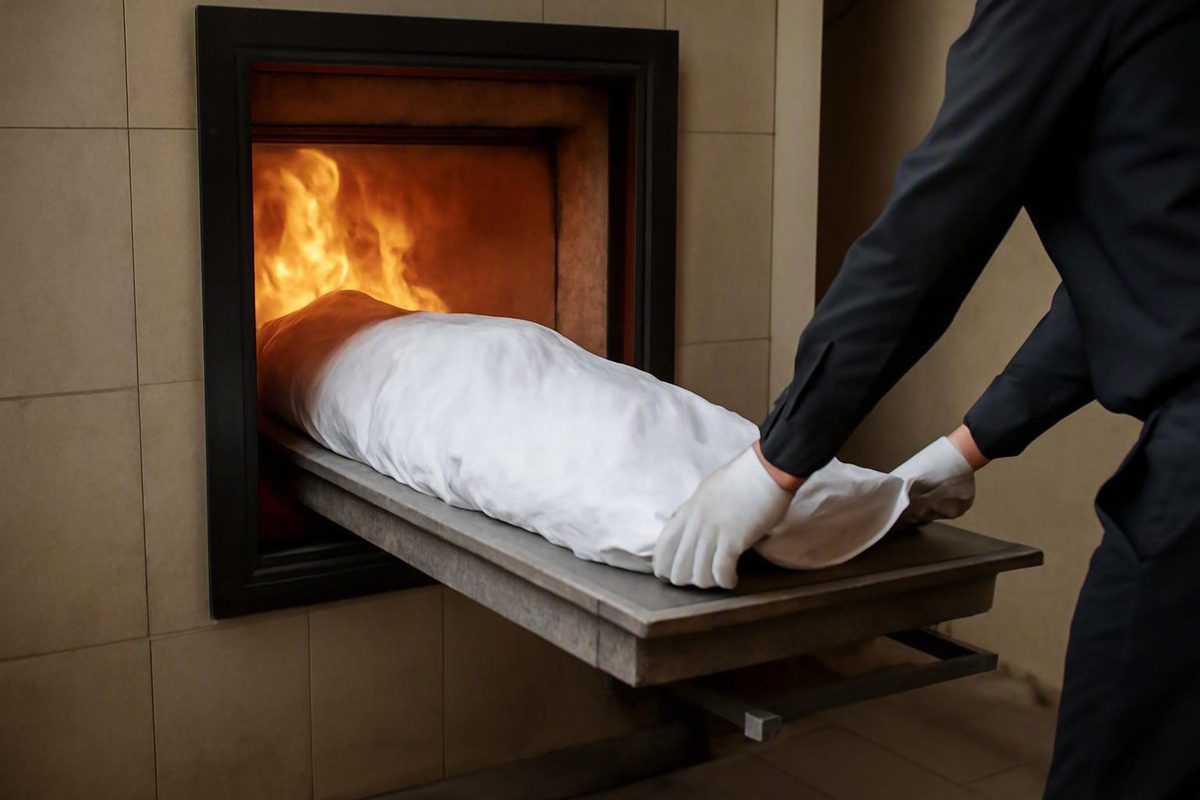
The short answer: a few hours in the chamber, several days overall
For a typical adult, the physical cremation commonly takes about two to four hours. Cooling, separation of remaining metal, and processing commonly add another one to two hours. These estimates describe work at the crematory, not the entire period from death until the family receives the processed remains. Memorials.com distinguishes the two-to-four-hour chamber cycle from the additional cooling and processing time.
The complete process often takes roughly 7–15 business days. This is a synthesis of overlapping estimates published by funeral homes, crematories, and cremation-service providers—not a national average, legal deadline, or guarantee. The sources use different starting and ending points, so the range should be treated only as an orientation for planning. National Cremation’s collection of funeral-director estimates shows both the variation among providers and the importance of paperwork, approvals, and medical review.
Three milestones are commonly confused:
- Time inside the cremation chamber: Commonly about two to four hours for a typical adult.
- Time until the remains are processed: Often another one to two operational hours after the chamber cycle, although processing may occur later in the facility’s workflow.
- Time until the family receives the remains: Frequently several business days after death or completed arrangements, depending on approvals, scheduling, processing, pickup, and delivery.
Here is the practical timeline at a glance:
| Stage | Practical estimate | What happens | What can change the estimate |
|---|---|---|---|
| Transfer and intake | Same day or later after release | The deceased is transferred into the provider’s care, identified, and placed in secure storage | Place and circumstances of death, release by a facility or authority, distance, and transport availability |
| Documentation and authorization | Often several days within the broader timeline | Personal information is collected; the death record, cremation authorization, and applicable approvals are completed | Certifying-professional availability, missing information, signatures, medical review, local procedure, weekends, and holidays |
| Scheduling | Varies by provider | The cremation is scheduled after the provider confirms that the case may proceed | Workload, equipment availability, outside-crematory use, service plans, and operating schedules |
| Physical cremation | About 2–4 hours for a typical adult | Heat reduces the body and combustible container, leaving primarily bone fragments | Body size and composition, container material, equipment, and chamber conditions |
| Cooling and processing | Commonly about 1–2 additional operational hours | The remains cool, metal is separated, and bone fragments are processed | Equipment, facility workflow, and whether processing occurs immediately |
| Ready for pickup | Often within the broader provider-estimate range | Processed remains are identified, packaged, labeled, and made available | Provider procedures, container arrangements, release requirements, and operating hours |
| Delivery or shipping | Additional time after readiness | The container is delivered locally or sent using the provider’s available shipping method | Destination, carrier schedule, weather, weekends, holidays, and address problems |
The table combines ranges reported across several commercial providers. It is illustrative rather than predictive: one provider describes a typical 7–14-day death-to-return timeline, while also separating the two-to-three-hour chamber cycle from one to two hours of cooling and processing. DFS Memorials’ timeline illustrates how those stages are counted separately.
Business days generally exclude weekends and may also exclude holidays, depending on the provider’s counting convention. A quote spanning two weekends can therefore feel substantially longer on the calendar. Ask which days the provider excludes and whether the first day is counted.
The most useful immediate question is not simply, “How long does it take to cremate someone?” Ask instead:
“Based on the approvals still outstanding and your current schedule, when do you expect the processed remains to be ready for us?”
The funeral home or crematory is usually the primary coordinator for that case-specific estimate. A physician, coroner, medical examiner, government office, outside crematory, or carrier may still control an individual stage.
A step-by-step timeline from death to return of the remains
No single schedule fits every case. The following sequence is an illustration, not a promise that each stage will occur on a particular day:
transfer and intake → identification and paperwork → authorization and approvals → scheduling → physical cremation → cooling and processing → pickup or delivery
Transfer into the provider’s care
After the appropriate release, the deceased is transferred from the place of death, hospital, care facility, medical examiner’s facility, or another location. The provider records identifying information and places the deceased in secure storage while arrangements and required documents are completed.
Transfer does not mean cremation can begin immediately. The provider must maintain identification, establish who may authorize the arrangements, and determine whether a medical professional or public authority must complete another part of the process.
Identification and arrangements
The funeral home or cremation provider gathers information for its records and the death record. Families may be asked for details such as the deceased’s legal name, date and place of birth, residence, marital status, Social Security number, military history, and parents’ names.
The provider also records the arrangements and explains its identification procedures. The Cremation Association of North America describes identification checks, secure storage, authorization, placement in a suitable container, cooling, metal separation, processing, and packaging as distinct parts of the general process. It cautions that legal requirements differ among jurisdictions. CANA provides a general overview of the cremation process and its jurisdictional variation.
Death-certificate completion
Under general provider procedures, the appropriate certifying professional or authority completes the medical portion of the death record. The funeral provider may prepare or submit other information but may not control how quickly the certifier responds.
This can become a significant source of elapsed time. A straightforward certification may move promptly. An unclear cause of death or circumstances requiring official review can prevent later approvals from moving forward. Because the responsible professional and filing process vary by location, the provider should explain who currently has the record and what remains incomplete.
Cremation authorization
Cremation is generally not scheduled until the provider has accepted authorization from the person or people entitled to make that decision under applicable law or a valid controlling document. The relevant order of authority and signature requirements vary by jurisdiction and circumstance.
If the person with authority cannot be reached, a required form is incomplete, an appointment document must be reviewed, or family members dispute the arrangements, the provider may be unable to proceed. Families should ask the provider to identify the exact document or signature still needed rather than relying on a general statement that authorization is pending.
Permits, review, and clearance
Depending on the jurisdiction and circumstances of death, the case may require a permit, medical review, approval, or release before cremation. A coroner, medical examiner, or another authority may have a role.
There is no dependable nationwide waiting-period rule that applies to every family. Requirements differ by state and locality, and provider explanations sometimes combine a legal hold with the practical time required for certification, filing, and scheduling. The provider should identify the actual local requirement affecting the case rather than applying a generalized national rule.
Provider scheduling
After the provider confirms that required documentation and approvals are complete, the case can be placed on the crematory schedule. If the funeral home operates its own crematory, scheduling may remain within one organization. If it uses another facility, transfer and the outside crematory’s workload become part of the timeline.
A viewing or funeral with the body present must occur before cremation. A request to witness the start of the cremation does not occur before scheduling; instead, it may limit the dates or times the provider can offer. Families who want to witness should ask early how that request affects availability.
Legal clearance and scheduling are separate milestones. A cleared case may still wait for chamber availability, staffing, transfer, or completion of a planned service.
Physical cremation
For a typical adult, the chamber cycle commonly lasts about two to four hours. The deceased is placed in a combustible cremation container, and heat reduces the body and container material, leaving primarily bone fragments rather than finished, powder-like ashes. A provider timeline separates the chamber cycle from the post-cremation stages.
The duration is not fixed. Body size and composition, container material, cremator design, and chamber conditions can affect how long the cycle takes.
Cooling, metal separation, and processing
After the chamber cycle, the remaining material goes through a cooling stage before further handling. Staff separate remaining metal, which can include material from the container or medical implants, and process the bone fragments into the granular material commonly called ashes or cremated remains.
“Ashes” is familiar shorthand, but the returned material consists primarily of processed bone fragments. Its texture may be granular rather than like fireplace ash.
The processed remains are matched to the provider’s identification records and placed in a labeled container. If the family has arranged for a suitable urn, the provider may place the remains in it. Otherwise, the provider may use a temporary container, depending on its procedures.
Pickup, delivery, or shipping
Processing and receipt are separate milestones. The remains may be ready before the family collects or receives them.
- Pickup occurs after the provider confirms that the remains may be released.
- Local delivery, if offered, follows the provider’s own schedule.
- Shipping adds packaging, carrier acceptance, transit, and delivery time.
- Family-requested holding can postpone collection without changing when cremation occurred.
The realistic progression is therefore paperwork and approvals first, cremation after clearance and scheduling, processing after the chamber cycle, and collection or delivery last. No date should be treated as firm until the provider confirms it for the specific case.
Why the complete process takes longer than the cremation itself
The chamber cycle is only one step in an administrative, legal, medical, and operational sequence. A cremation lasting a few hours can therefore sit inside an overall wait of several days or longer.
Death certification depends on another professional
The funeral home ordinarily cannot complete the entire death-record process by itself. A physician, medical examiner, coroner, or another authorized certifier may have to complete the required medical information. A delay there can prevent permits, approvals, or scheduling from advancing.
A family may have supplied everything requested while the case still waits on a third party. Asking “Who currently has the record, and what action is pending?” is more useful than repeatedly asking whether the paperwork is done.
Authorization must come from the proper person
Because cremation is irreversible, providers generally verify that authorization comes from the person or people entitled to make the decision. Exact legal authority and signature requirements must be confirmed locally.
This stage can take longer when:
- The authorized decision-maker cannot be reached.
- A required form is incomplete.
- More than one signature is required under the applicable procedure.
- A document appointing an agent must be located or reviewed.
- Family members dispute the arrangement.
- The provider needs clarification about decision-making authority.
Prompt family action can reduce an avoidable delay, but it cannot permit a provider to disregard applicable authorization requirements.
Local approvals and medical review may be required
Permits and medical or government review differ by jurisdiction and by the circumstances of death. An expected death under medical care may follow a different path from a sudden, unattended, accidental, or unexplained death.
A coroner or medical examiner may decide that an examination, autopsy, or investigation is necessary. If the authority has not released the deceased, the cremation provider may be unable to proceed. Such involvement can add days or weeks, but the evidence does not support a reliable universal delay.
Clearance and scheduling are different stages
Even after clearance, the provider still must schedule the cremation. Capacity may be affected by:
- Cases already cleared and awaiting cremation
- Crematory operating hours
- Staffing
- Equipment maintenance
- Transfer to an outside crematory
- A requested witness date
- A viewing or funeral before cremation
- Post-cremation processing workload
An in-house crematory removes one organizational handoff, but it does not guarantee faster completion.
Business days are not calendar days
Suppose a provider quotes ten business days late in the week. Depending on how it counts the first day, weekends, and holidays, the corresponding calendar period may be considerably longer.
Always ask:
- “Are you counting business days or calendar days?”
- “Which days do you exclude?”
- “On what event and date does the count begin?”
Starting points are often inconsistent
A provider’s quoted timeline might begin at:
- Death
- Transfer into its care
- The arrangement conference
- Receipt of complete personal information
- Acceptance of signed authorization
- Completion of the death certificate
- Final medical or government clearance
These starting points are not interchangeable. A promise beginning after final clearance may exclude several days that have already passed since death.
Endpoints also vary. “Complete” might mean:
- The chamber cycle has ended.
- Cooling and processing are finished.
- The remains are packaged.
- The remains are ready for pickup.
- The family has collected them.
- Delivery or shipping has been completed.
Ask the provider to state both the starting point and endpoint in plain language.
What can make the physical cremation shorter or longer
The two-to-four-hour estimate is a useful range for a typical adult, not a fixed machine cycle. Physical and equipment-related factors affect chamber time independently of paperwork or scheduling.
Body size and composition
A person’s size and body composition can affect how long the chamber cycle takes. Some provider guidance places an average-sized adult nearer two to three hours and indicates that a larger person may require three to four hours or more. DFS Memorials summarizes these physical variables while distinguishing them from the broader turnaround.
Exceptional cases should not be used to predict a typical adult’s timeline. An estimate associated with an infant, stillborn child, unusually large adult, or another atypical circumstance answers a different question.
Cremation container
Container material and construction can affect combustion and duration. Providers generally require a container suitable for cremation, but the type offered or permitted may vary according to the arrangement, applicable rules, and facility policy.
A container-related difference may change the chamber cycle. It does not explain a week-long wait caused by documentation or scheduling.
Equipment and chamber conditions
Cremators differ in design, age, operating characteristics, and maintenance. Chamber conditions, including retained heat from prior operation, can also affect duration.
Two providers may therefore give slightly different physical estimates without either being wrong. One may describe its usual chamber time, while another may use a more conservative range or include part of the cooling period.
What does not change chamber time
A missing signature, delayed death certificate, permit, holiday, or medical review does not make the physical cycle longer once it begins. Those issues change when cremation can occur.
It helps to separate the two categories:
- Physical-duration variables: Body size and composition, container, equipment, and chamber conditions
- Overall-turnaround variables: Documentation, authorization, medical review, approvals, service plans, provider capacity, processing, and delivery
Common delays and which ones a family can influence
Not every delay has the same cause. Grouping delays by who controls them helps families focus on useful next steps without assuming responsibility for events outside their control.
Family-influenced issues
Some preventable delays can be reduced by providing complete information and returning documents promptly. Examples include:
- Missing personal information needed for the death record
- Unsigned or incomplete authorization forms
- Difficulty reaching the legally authorized decision-maker
- Delayed delivery of documents establishing authority
- Disagreement among people whose consent is required
- Waiting to finalize a viewing or funeral before cremation
- An undecided pickup, container, delivery, or shipping arrangement
The provider should explain precisely what is missing. “We still need the signed authorization from the appointed agent” is more useful than “We are waiting on the family.”
Provider-controlled issues
The funeral home or crematory may control—or coordinate—other parts of the schedule:
- Arrangement and intake workflow
- Submission of completed documents
- Transfer to the crematory
- Chamber scheduling
- Staff availability
- Equipment maintenance
- Post-cremation processing
- Packaging and release arrangements
- Any local delivery it offers
If an outside crematory is involved, the funeral home may coordinate the case without controlling that facility’s schedule. Ask whether the case has been accepted, whether final clearance has been received, and whether a tentative cremation date exists.
Medical or government authority issues
Some delays lie outside both family and provider control. These can include:
- Delayed medical certification
- An unclear or pending cause of death
- Coroner or medical-examiner review
- An autopsy
- An investigation
- An official hold
- Permit or agency processing
- Review of incomplete or conflicting records
Investigations and autopsies can add days or weeks, but no universal figure is reliable. The appropriate authority determines when the deceased may be released.
Delivery-service issues
After the processed remains leave the provider, elapsed time can be affected by carrier schedules, weekends, holidays, weather, remote destinations, address problems, or unsuccessful delivery attempts.
“Ready for shipping” and “delivered” are therefore different milestones. Ask the provider which carrier or method it uses and whether it can estimate arrival for the particular destination.
A preventable-delay checklist
A family can help keep the controllable stages moving by taking these steps:
- Provide requested personal information promptly and accurately.
- Identify the legally authorized decision-maker as early as possible.
- Tell the provider about an appointment document or family disagreement.
- Return authorization and arrangement forms promptly.
- Ask whether every required signature has been received and accepted.
- Confirm whether anything is waiting on a physician, coroner, medical examiner, or government office.
- Decide whether a viewing or funeral will occur before cremation.
- Confirm the pickup person, delivery address, or shipping method.
- Ask who will notify the family when the remains are ready.
Prompt action cannot override a legal hold, medical review, investigation, or third-party process. It can reduce only delays within the family’s control.
Direct cremation, a funeral before cremation, and expedited service
Direct cremation means cremation without a viewing, visitation, or funeral service beforehand. The deceased is transferred into the provider’s care, required documentation and approvals are completed, and cremation occurs without first coordinating a ceremony at which the body is present.
Direct cremation may proceed sooner because there is no pre-cremation ceremony to schedule. It does not bypass death certification, authorization, permits, medical review, applicable holds, or crematory capacity.
An arrangement involving a viewing or funeral before cremation may add steps such as:
- Embalming or other preparation selected for the service
- Dressing and placement in a casket or rental casket
- Coordinating a venue, clergy member, or celebrant
- Waiting for relatives to travel
- Holding a visitation or funeral
- Transporting the deceased after the service
Those choices do not fundamentally change the chamber cycle. They change the date on which the deceased is available for cremation. A memorial held after cremation can be scheduled separately, but the family should ask whether any request involving the processed remains will affect release or collection.
Can preplanning make cremation faster?
Preplanning can reduce uncertainty over decisions and documents within the family’s control. The family may already know the intended provider, decision-maker, service type, and location of important records.
It cannot complete a death certificate in advance, remove an official hold, eliminate required authorization, or guarantee immediate crematory availability. Its main value is reducing avoidable uncertainty rather than guaranteeing a shorter timeline.
What expedited service can—and cannot—do
Where offered, expedited service may shorten provider-controlled scheduling after specified approvals have been received. It may not accelerate physician certification, government review, an investigation, a legal hold, or the availability of an authorized decision-maker.
AM Cremation & Funeral Care provides a Florida-specific example: its advertised 24-hour expedited commitment begins only after the provider receives the stated medical approval and next-of-kin authorization. That is the provider’s own policy in Florida, not a national rule or a promise of cremation within 24 hours of death. The provider’s explanation illustrates why an expedited clock must be read from its stated starting point.
Before paying for expedited service, ask:
- When does the expedited clock begin?
- Which approvals must already be complete?
- Does it expedite transfer, scheduling, cremation, processing, or only some of those stages?
- Does the promise end when cremation occurs or when processed remains are ready?
- Are pickup, delivery, and shipping excluded?
- What happens if a physician or public authority causes a delay?
- What remedy applies if the provider misses a deadline within its control?
A defined starting point and endpoint are more useful than a general assurance that the case will be handled as soon as possible.
How to get a reliable estimate from the funeral home or crematory
A general online range can help set expectations, but it is not a safe basis for nonrefundable travel, a memorial requiring the remains, burial, niche placement, or scattering. Use the following questions by phone or email to obtain a case-specific picture.
Ask what remains outstanding
Start with:
- Has the deceased been transferred into your care?
- Has identity been confirmed?
- Has the certifying professional completed the death record?
- Is the cremation authorization signed and accepted?
- Are any other signatures required?
- Are any permits or approvals outstanding?
- Is a coroner or medical examiner reviewing the case?
- Is there an official hold?
- What is the single next step preventing scheduling?
These questions help identify whether the case is waiting on the family, provider, certifying professional, crematory, or public authority.
Define the starting point
Ask the provider to finish this sentence:
“Our estimated timeline begins when ______.”
The answer might be death, transfer, completion of arrangements, acceptance of authorization, death-certificate completion, or final clearance. If the estimate begins after final clearance, request a separate update on what must occur before clearance.
Request four separate estimates
Instead of asking for one broad turnaround, request these milestones:
- When authorization and required approvals are expected to be complete
- When cremation is tentatively expected to occur
- When the processed remains are expected to be ready for pickup
- When delivery or shipping is expected to arrive
This prevents “cremation completed” from being mistaken for “the family can collect the remains now.”
Ask who operates the crematory
Useful questions include:
- Do you operate your own crematory?
- If not, which facility will perform the cremation?
- Has that facility accepted the case?
- When is transfer expected?
- Does the quoted estimate include transport to and from that facility?
- Who will process and package the remains?
- Who should the family contact for status updates?
Using a third-party crematory is not inherently a problem, but it creates another handoff and can limit the funeral home’s control over scheduling.
Clarify business days, weekends, and holidays
Ask:
- Are these business days or calendar days?
- Which weekends or holidays are excluded?
- Is the day arrangements are completed counted?
- Does the crematory operate on weekends?
- Can processed remains be released on weekends?
- Could an upcoming holiday affect an office, crematory, or carrier?
If the family has a deadline, provide the exact date instead of saying “about a week.”
Ask about the current case—not only the normal timeline
A normal range may not reflect current workload. Ask:
- How many cleared cases are ahead of this one?
- Has a tentative chamber date been assigned?
- Is equipment maintenance expected?
- Is the certifying professional causing a delay?
- Is a coroner or medical examiner affecting the case?
- When should we expect the next update if nothing changes?
The provider may be unable to guarantee a date, but it should be able to explain the current stage and the next required action.
Explain any special plans
Tell the provider if the family wants to:
- Witness the cremation
- Hold a viewing or funeral first
- Use a particular urn
- Divide the remains among several containers
- Carry the remains during air travel
- Request delivery or shipping
- Arrange cemetery burial or niche placement
- Hold a memorial at which the remains must be present
- Scatter the remains on a particular date
Ask whether each request changes scheduling, processing, packaging, or release. Frame uncertain operational details as provider questions rather than assuming every facility handles them the same way.
Wait for a case-specific update before committing
Do not make nonrefundable travel plans or announce a memorial, burial, niche placement, or scattering date based solely on the general provider-derived range. Wait until the provider confirms the necessary approvals, tentative cremation date, and expected pickup or delivery milestone.
Frequently asked questions
Does the two- to four-hour estimate include cooling and processing?
Usually not. The two-to-four-hour estimate generally refers to the physical chamber cycle for a typical adult. Cooling, separation of remaining metal, and processing commonly add about one to two operational hours, although the facility may schedule those steps later. The Cremation Society of Philadelphia distinguishes a three-to-four-hour physical cremation from a longer process after additional steps.
Even the combined operational time does not guarantee same-day release. Identification, processing, packaging, and provider workflow can place readiness for pickup on a later date.
How soon after death can cremation take place?
There is no single nationwide answer. Cremation can occur only after the deceased has been released, required documentation and authorization have been completed, applicable approvals have been obtained, and the provider has scheduled the case.
The controlling procedure depends on the jurisdiction and circumstances of death. Ask the provider which requirement is currently preventing scheduling and whether its estimate begins at death or only after final clearance.
When will the cremated remains be ready for pickup or delivery?
Provider estimates often place the complete process within roughly 7–15 business days, but that synthesized range is neither a national standard nor a guaranteed deadline. It also means little unless the provider states whether it is counting from death, completed arrangements, authorization, or final approval—and whether the endpoint is pickup readiness or actual delivery.
Central Bucks Crematory, for example, describes a 7–14-day death-to-receipt timeline for its own direct-cremation customers in Pennsylvania while noting that death-certificate and permit delays can change it. That local estimate should not be generalized nationally. Its step-by-step guide demonstrates why provider location and starting point matter.
Can an autopsy or medical-examiner review delay cremation?
Yes. If a coroner or medical examiner has jurisdiction, orders an autopsy, investigates the death, or has not released the deceased, the provider may be unable to proceed.
The delay can be days or weeks, but there is no reliable universal duration. It depends on the examination, investigation, agency workload, and local process. Prompt family paperwork cannot override an official hold or incomplete medical review.
Is direct cremation faster than cremation after a funeral service?
It can be. Direct cremation omits a viewing, visitation, or funeral before cremation, so those events do not have to be scheduled and completed first. A funeral beforehand may also involve preparation, travel coordination, venue scheduling, and post-service transport.
Direct cremation still cannot bypass required documentation, authorization, medical review, approvals, holds, or crematory scheduling. A Pennsylvania crematory’s comparison similarly defines direct cremation by the absence of a pre-cremation viewing or funeral while emphasizing that paperwork and permits must still be completed. Its comparison illustrates the scheduling distinction without establishing a national rule.
The bottom line
The distinction that matters most is simple: physical cremation usually occupies only a few hours, while the complete arrangement and return of the processed remains commonly take days.
Ask for separate estimates covering authorization, scheduled cremation, pickup readiness, and delivery. Confirm whether the provider counts business or calendar days, and ask exactly where the quoted timeline begins and ends. Avoid committing to time-sensitive plans until the provider gives an update based on the actual approvals and current workload.
Mortuary Guide provides general information, not case-specific professional advice. Laws and procedures vary by state and locality, so applicable requirements should be confirmed with a licensed local provider or relevant authority. Mortuary Guide’s terms explain the scope and limits of its general information.