
8 min read ·
Plan Two Hours for the Full Funeral Timeline
The service itself often takes 30 to 60 minutes. Plan another 10 to 15 minutes before it starts, plus time to greet the family or exit a busy venue.
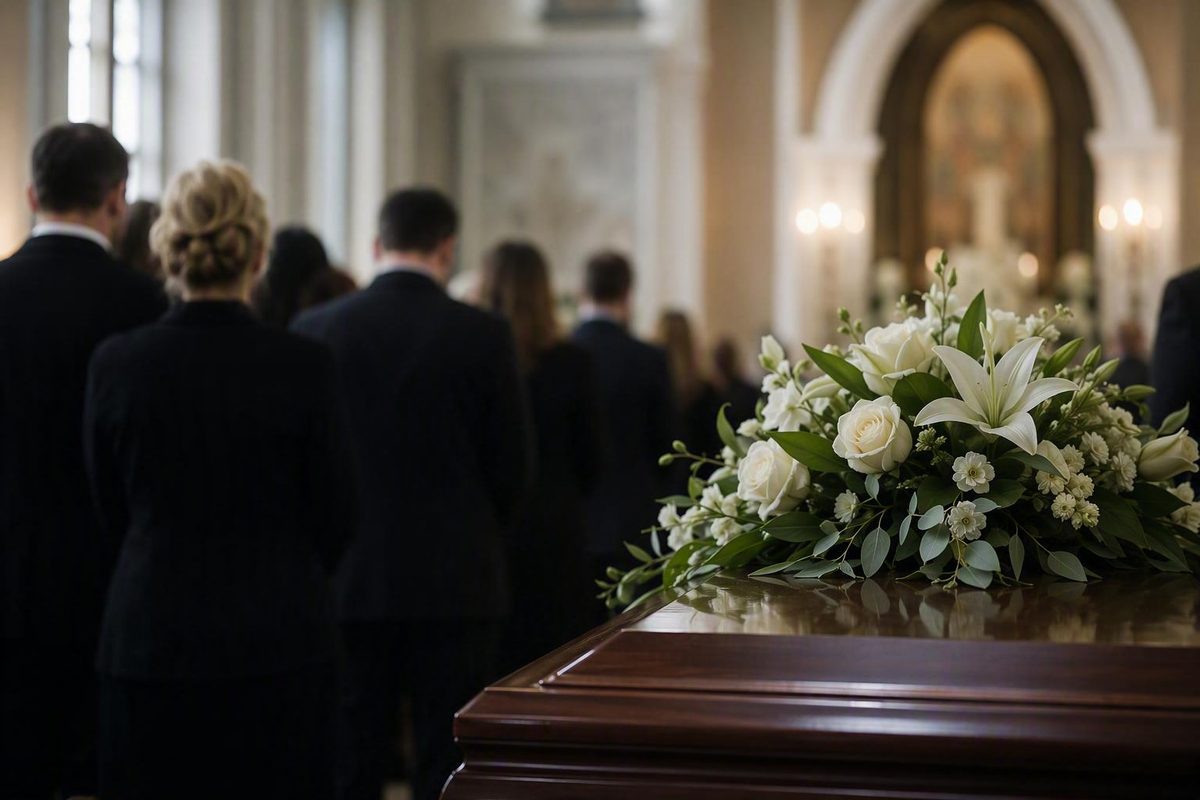
Most funeral services last about 30 to 60 minutes. If you are also attending a procession and graveside committal, plan for roughly 90 minutes to 2½ hours, depending mainly on travel and the ceremony. A reception can add another one to three hours, while a visitation may be a separate drop-in period rather than time every guest is expected to stay.
These are planning ranges, not rules. A brief graveside gathering may be under half an hour; a religious liturgy, a service with several speakers, or a large community funeral can take longer. The obituary, invitation, funeral home, or family is the best source for the actual schedule.
Funeral timing at a glance
| Part of the funeral | Practical planning range | What changes the timing |
|---|---|---|
| Arrival and seating | 10–15 minutes before the start | Venue, parking, crowd size, procession instructions |
| Main funeral or memorial service | 30–60 minutes | Worship format, readings, music, speakers, rituals |
| Procession to a cemetery | 15–30 minutes or more | Distance, traffic, number of vehicles, local practice |
| Graveside or committal service | 15–30 minutes | Prayers, military or cultural honors, burial arrangements |
| Reception or repast | 1–3 hours | Meal service, venue booking, speeches, open-house format |
| Visitation or viewing | Often scheduled for 1–3 hours | Drop-in versus structured service, family and faith customs |
The ranges for the ceremony, procession, committal, visitation, and reception align with planning guidance from Slater Funeral Services and Thomas M. Gallagher Funeral Home. Neither source treats them as fixed limits, and you should not either.
How long should an attendee set aside?
Start with the events listed in the notice rather than treating “the funeral” as one block of time.
Service only: allow about 60 to 90 minutes
For a ceremony at a funeral home, place of worship, cemetery chapel, or other venue, allow time to park, enter quietly, find a seat, and remain through the closing or recessional. A 45-minute service can therefore require more than an hour of your day.
Arriving 10 to 15 minutes early is a useful default. For a crowded service, an unfamiliar venue, or a funeral where you have been asked to join the procession, allow more. If the family gives an arrival time, follow that instead.
Service plus burial: allow about 1½ to 2½ hours
A burial itinerary commonly includes three separate pieces:
- the main service;
- the procession or independent drive to the cemetery; and
- the committal at the graveside or place of interment.
A 30-to-60-minute service and a 15-to-30-minute committal already account for 45 to 90 minutes. Parking, assembling vehicles, traveling, and walking to the gravesite add the rest. A distant cemetery, traffic, bad weather, limited mobility, or a large procession can extend the schedule significantly.
Do not assume every guest should join the procession. The officiant or funeral director may invite everyone, limit it to family, or ask guests to meet directly at the cemetery. Follow the announcement and local traffic rules; never speed or drive through a signal simply to keep up.
Service, burial, and reception: allow about 3 to 6 hours
When all three happen on the same day, the reception is often the largest variable. A light-refreshment gathering may last about an hour, while a meal or open-ended gathering can run for several hours. You generally do not need to stay until the end unless you are helping the family or have been given a role.
If you must leave by a certain time, identify a natural transition: after the main service, after the committal, or after speaking briefly with the family at the reception. Quietly leaving during a prayer, reading, eulogy, or ritual can be disruptive.
Visitation plus funeral: check whether they are separate
A visitation, viewing, wake, or calling hours may occur the evening before, immediately before the service, or in one or more scheduled blocks. Some are informal drop-in periods; others include prayers, remarks, or a defined vigil. Guests at a drop-in visitation commonly attend for only part of the posted window, but the family’s notice should guide you.
Do not add the full visitation window to the next day’s ceremony unless you intend or are expected to attend both. If the notice says “visitation 4–7 p.m.; service at 11 a.m. tomorrow,” those are separate commitments.
Why some funerals take longer
The service format
A simple chapel or graveside service can be short. A liturgy with music, readings, Communion, several speakers, or community rituals naturally needs more time. There is no single duration that applies across religions or cultures.
For example, the United States Conference of Catholic Bishops describes Catholic funeral rites as distinct stations: the Vigil Service, Funeral Liturgy, and Rite of Committal. They may occur at different places and times, so the funeral is not necessarily one continuous ceremony. A parish and funeral director can provide the actual local schedule.
Likewise, the Church of England’s attendee guidance notes that its funerals may take place in a church, cemetery, crematorium, or green burial ground and may include hymns, music, and readings. That illustrates why venue and chosen elements matter more than a universal clock.
Other faith communities and families have their own structures. Some emphasize a concise burial; some hold several gatherings; some observe rituals over more than one day. Ask rather than assuming how long a Jewish, Muslim, Hindu, Buddhist, Christian, humanist, military, or culturally specific funeral “should” last.
The number of personal elements
Every eulogy, reading, prayer, musical selection, photo tribute, or period of reflection takes time. A service with one speaker and recorded music may fit a short venue booking. A service with an open microphone or several live performances is less predictable.
For planners, a written order of service and agreed speaker limits help create a realistic schedule without rushing meaningful moments. Include a buffer for transitions and emotion; speakers may need a pause, and guests may need time to move between spaces.
Venue and travel logistics
Crematorium chapels, places of worship, funeral homes, and cemeteries may each have booking windows. A funeral director normally coordinates these pieces, but attendees should still account for:
- parking and seating;
- accessibility and walking time;
- a vehicle procession or independent travel;
- traffic, road closures, and weather;
- moving a large group between the service, cemetery, and reception.
The posted start time is usually the ceremony start, not the time to enter the parking lot.
Family and cultural choices
Clothing, procession etiquette, standing or sitting, photography, and participation in rituals all vary. Use any instructions in the obituary or invitation. If there are none, choose respectful clothing suitable for the venue and weather, arrive in good time, silence your phone, and follow the officiant’s and funeral director’s cues.
How planners can estimate the full schedule
If you are arranging the funeral, work backward from confirmed venue and cemetery times.
- List every event. Include visitation, vigil, ceremony, procession, committal, reception, and any private family time.
- Ask each venue for its usable window. Confirm whether setup, receiving guests, and clearing the room count against the booking.
- Draft the service order. Estimate readings, music, eulogies, prayers, and transitions rather than assigning one vague block.
- Map the travel. Check the route at the relevant time of day and add time for the procession to assemble and park.
- Add a compassionate buffer. Ten or fifteen extra minutes can prevent the day from feeling rushed, but coordinate it with venues that have firm end times.
- Publish a clear itinerary. Tell guests which events are open to everyone, whether they should join the procession, and whether the reception is immediately afterward.
If the schedule is uncertain, say so plainly. “Graveside committal to follow” is more useful than an exact end time that is unlikely to hold.
Frequently asked questions
How long is a funeral without a burial?
Often about 30 to 60 minutes for the service itself. Plan another 10 to 15 minutes before the start, plus time to greet the family or leave a busy venue. A memorial or celebration of life can be longer if it includes a meal, several tributes, or open social time.
How long is a graveside funeral?
A graveside-only service is often about 15 to 30 minutes, although prayers, military honors, cultural practices, weather, accessibility, and the family’s wishes can change that. Arrival and cemetery travel are additional.
Do I have to attend the reception?
Usually not. A reception is generally an invitation to support the family and share memories, not a required extension of the ceremony. If you attend, it is normally acceptable to offer condolences and leave before the gathering ends unless you have a specific role.
Can a funeral take all day?
Yes. A visitation, formal service, long procession, burial, and reception can occupy much of a day. In some traditions, related observances extend across multiple days. The main ceremony may still be under an hour.
Is this the same as asking how many days after death the funeral happens?
No. “How long is a funeral?” usually means the duration of the service or the attendee’s time commitment. The number of days between death and a funeral is a different timeline affected by release, authorization, body care, faith practices, travel, and provider availability.
The practical answer
For a typical invitation, reserve about 60 to 90 minutes for the service alone, up to 2½ hours when a cemetery committal follows, and several hours when the day includes a reception. Then replace that estimate with the family’s actual itinerary as soon as it is available.
The respectful choice is not to force every funeral into an average. Build in time, follow the family’s and faith community’s directions, and allow the ceremony to move at the pace the occasion requires.