
19 min read ·
What to Budget for an Ash Scattering at Sea
Planning benchmarks are about $200–$500 for many basic unattended services and $500–$3,000 or more for attended charters, with major exceptions.
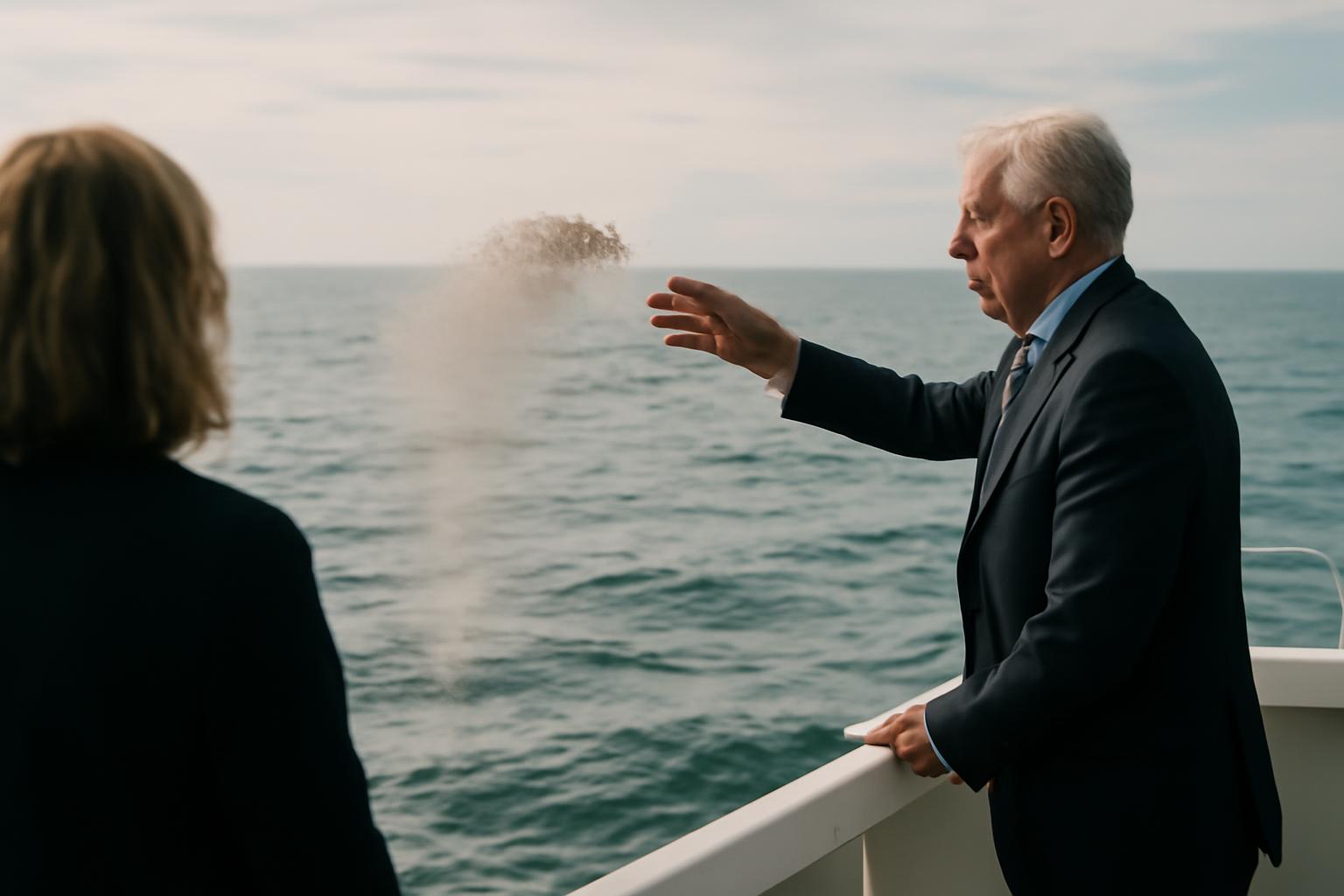
The short answer: typical sea-scattering costs
As a broad starting point, budget about $200–$500 for many basic unattended sea-scattering services and about $500–$3,000 or more for an attended private ceremony. These are planning ranges, not guaranteed 2026 prices or a dependable national average. Vessel size, location, trip length, guest count, and ceremony choices can all change the quote (Memorials.com cost guide).
Individual unattended offerings can fall near $100–$250, while attended services can begin below $500 in some markets. Those low-end examples do not establish what is available in a particular harbor (Gulfside Adventures market examples).
At the opposite extreme, one New England operator lists an unattended service at $1,375 before additional charges. Its large-group attended base rates reach $9,975 before the stated administration charge, a possible fuel surcharge, gratuity, cremation, travel, and ceremony extras (New England Burials at Sea rates).
A low charter or unattended-service price should not be mistaken for the complete cost from death through final disposition.
| Arrangement | Broad planning price | Family participation | Common inclusions | Common exclusions |
|---|---|---|---|---|
| Do it yourself from a family boat | No commercial charter charge; vessel-related costs vary | Family conducts the scattering | Use of a boat already available to the family | Cremation, fuel, marina costs, travel, documentation, and local paperwork |
| Unattended service | Often about $200–$500; individual providers may charge less or substantially more | No guests aboard | Captain or crew, offshore voyage, and scattering; sometimes coordinates, a certificate, or reporting | Cremation, shipping, urn, travel, administration charges, fuel surcharges, and gratuity |
| Remotely attended service | Provider-specific; one published example starts at $1,375 before additions | Family listens remotely | Unattended voyage plus a scheduled connection | Cremation, shipping, administration charges, gratuity, and enhanced video |
| Small attended charter | Often about $500–$3,000 or more | Family and friends travel aboard | Private vessel, captain, offshore trip, and basic scattering assistance | Cremation, travel, flowers, officiant, urn, gratuity, and extra time |
| Large-group charter | Several thousand dollars; one provider’s base rates approach $10,000 | Larger memorial group aboard | Larger vessel, crew, offshore voyage, and ceremony time | Administration charges, fuel adjustments, gratuity, catering, travel, and upgrades |
All figures in this guide are either broad estimates from commercial planning guides or provider-specific advertised prices. They are not promises that a comparable service will be available at that price in every harbor.
Commercial rates and policies can change, so compare quotes using the same departure port, guest count, trip duration, date, and ceremony requirements.
What each type of sea-scattering service provides
The main choices differ in who goes aboard, who handles the cremated remains, and who manages the voyage and documentation.
Do-it-yourself scattering means the family uses its own lawfully operated, suitable boat rather than hiring a dedicated scattering operator. This can eliminate a commercial charter charge, but it does not make the arrangement cost-free. The family may still have to account for vessel access, fuel, transportation of the remains, marina expenses, weather-related changes, reporting, and any applicable state or local requirements.
Using a family boat does not require a special EPA-authorized burial vessel. The boat must instead be operated lawfully and be appropriate for the planned trip. Families should consult applicable boating authorities and marina rules and make practical decisions about offshore conditions with the vessel operator.
Unattended scattering means the family delivers or ships the cremated remains to an operator, which conducts the scattering without guests aboard.
Depending on the operator, an unattended package may include:
- Secure receipt and handling of the cremated remains
- A captain-led reading or brief ceremony
- The offshore voyage and scattering
- The date and geographic coordinates
- A memorial or disposition certificate
- Preparation or submission of the EPA report
- Return of an empty reusable container, if agreed in advance
These inclusions are not universal. Confirm how the remains must be packaged, whether shipping is included, when the scattering will occur, what documentation the family will receive, and who will submit the federal report.
Remotely attended scattering is an unattended voyage with a scheduled connection for the family. New England Burials at Sea, for example, advertises a conference call through which as many as four family members can listen to the captain’s ceremony. A remote package should not automatically be understood to include a livestream or professionally edited video; the connection may be audio only.
Attended scattering places relatives or friends aboard a private or shared vessel. The family may offer readings, play music, observe a period of silence, release permitted flowers, or participate in releasing the remains. Pricing can be set per vessel, passenger tier, hour, or package, so two similarly advertised rates may cover different passenger capacities and amounts of time.
Ask whether the listed duration is dock to dock. If a charter lasts two hours, that time commonly includes the outbound and return journeys, leaving only part of the trip for the ceremony itself.
A cruise-ship scattering is another possibility, but it should not be treated as reliably free or automatically available. A cruise line may accommodate a ceremony without imposing a separate ceremony fee, yet the family still pays cruise fares, transportation, lodging where needed, and expenses associated with carrying the remains. Approval, location, scheduling, documentation, and onboard procedures depend on the cruise line and itinerary.
Real price examples from coastal providers
The following table is a July 30, 2026 planning snapshot of advertised prices. These operators serve different markets and should not be treated as representative of national pricing.
| Geography and provider | Service format | Advertised price | Passengers or duration | Known inclusions | Stated or possible additions |
|---|---|---|---|---|---|
| Sausalito, California — Marin Memorial Services | Unattended or attended | $250 unattended; $700 attended | Attended price covers up to six people for 1.5 hours | Private parking and a memorial card with the date and coordinates for the attended service | $30 per additional guest, up to 28 total; optional Bay tour at $400 per hour |
| Florida — Ocean Ashes | Unattended or attended | Unattended starts at $395; attended ceremonies are described as costing under $2,000 | Private attended charters are offered for groups of varying sizes | Provider advertises EPA paperwork and GPS coordinates | Livestreaming, photography, videography, travel, urns, and other upgrades may cost extra; exact package inclusions are unclear |
| New England — New England Burials at Sea | Unattended, remotely attended, or attended | $1,375 unattended; $2,475–$3,275 for 1–6 attended passengers; $4,975–$9,975 for 110 or more | Attended trips typically take about two hours port to port; remote service permits up to four callers | Certificate, captain-led elements, and EPA-report work, depending on the format | 18% administration charge, possible fuel surcharge, gratuity, flowers, urns, or additional sets of remains |
| Dana Point, California — Capt. Dave’s | Private witnessed charter | $471.70 for one 90-minute option; $779.10 for one two-hour option; at least $2,957.40 for a larger vessel | The first two examples cover up to six passengers; the larger option is advertised for up to 49 | Certificate recording the date and coordinates | Gratuity, processing or booking costs, trip protection, extra time, and permit-related requirements may apply |
For the New England unattended example, the published arithmetic is:
- Base price: $1,375
- Stated administration charge: 18%, equal to $247.50
- Subtotal: $1,622.50
- Still excluded: any fuel surcharge, gratuity, cremation, shipping, travel, urn, or ceremony upgrade
The same provider lists attended base rates of $2,475–$3,275 for one to six passengers, $4,575–$8,475 for 36–110 passengers, and $4,975–$9,975 for 110 or more, with larger groups directed to request a quote. These figures are subject to its published fee structure and availability (New England Burials at Sea rate sheet).
The Dana Point examples illustrate why “private charter price” is an incomplete description. One vessel and schedule starts at $471.70 plus gratuity for 90 minutes and up to six passengers. Another two-hour option for the same maximum group starts at $779.10 plus gratuity, while a larger vessel starts at $2,957.40 plus gratuity.
It would be misleading to average these listings. They cover different coasts, ports, vessels, passenger capacities, seasons, durations, inclusions, and mandatory-fee structures. A $700 six-person charter is not directly comparable with a $1,375 unattended ceremony, and neither is comparable with a large vessel intended for more than 100 passengers.
Use these prices to understand the possible order of magnitude and to identify questions for providers—not to predict the exact rate in your harbor.
Service price versus the complete end-to-end budget
The scattering-service price is only one part of the arrangement. A complete budget may include:
- Removal and transfer of the deceased
- Cremation and authorization paperwork
- Transfer or shipment of the cremated remains
- The boat charter or unattended-scattering service
- Transportation to the departure harbor
- Flights, lodging, meals, parking, and local transport
- A scattering tube or biodegradable water urn
- Obituary or death announcements
- Memorial programs, cards, or keepsakes
- Flowers or loose petals
- Clergy, celebrant, or musician
- Photography, video, or livestreaming
- Administration charges, fuel surcharges, and gratuity
Rest Ashured, a commercial scattering-service provider, cites $1,500 as an average direct-cremation cost. That is a third-party planning estimate, not a guaranteed current national rate, and actual cremation quotes can differ substantially by provider and location (Rest Ashured cost discussion).
Illustrative basic unattended budget
Assumptions:
- Unattended scattering service: $200–$500
- Illustrative direct-cremation input: $1,500
- No shipping, special urn, travel, memorial, or optional ceremony items
Arithmetic:
- $200 + $1,500 = $1,700
- $500 + $1,500 = $2,000
The result is a preliminary end-to-end estimate of $1,700–$2,000 before shipping, an urn, travel, local paperwork, or memorial extras. It is not a package sold by one provider. It combines a broad scattering estimate with a separate third-party cremation estimate solely to demonstrate budgeting.
Illustrative six-person attended budget
Using the Sausalito provider’s published price:
- Attended charter for up to six people: $700
- Optional biodegradable-urn planning range: $30–$200
- Charter plus optional urn: $730–$900
- Add the illustrative $1,500 cremation input: $2,230–$2,400
The resulting $2,230–$2,400 excludes family travel, flowers, clergy, announcements, added cruising time, and any cremation quote above $1,500. It also does not imply that the charter company sells cremation, an urn, and the voyage as one package. The charter price comes from Marin Memorial Services, while the urn and cremation figures come from separate commercial estimates.
Fee-adjusted large-group example
New England Burials at Sea lists a base range of $4,975–$9,975 for 110 or more attended passengers. Applying its stated 18% administration charge produces:
- $4,975 × 1.18 = $5,870.50
- $9,975 × 1.18 = $11,770.50
This is a fee-adjusted example from a high-cost provider, not a typical family budget. It still excludes a possible fuel surcharge, gratuity, cremation, group travel, flowers, programs, catering, and other ceremony additions.
A special urn is not always necessary. A crematory may return the remains in a basic container, which may be suitable for a direct release.
Published product estimates differ. A commercial planning guide places biodegradable water urns at approximately $30–$200. An older urn-vendor guide lists water urns at $59–$250, while the New England provider advertises selected biodegradable urns at $145–$295 (The Living Urn’s product-cost discussion).
If the plan is to place an urn into the water instead of pouring the remains, confirm with the operator that the product and proposed method comply with the rules applying at the chosen location.
The factors that raise or lower the charter price
The largest cost drivers generally include:
- Attended versus unattended format. An attended trip reserves passenger capacity and ceremony time for the family. An unattended service does not place guests aboard.
- Guest count. More guests may require a higher passenger tier or a larger vessel.
- Vessel size and type. A small boat carrying six passengers and a large-group vessel have different published rates.
- Departure harbor. Vessel availability, local operating costs, and the route to open ocean vary by port.
- Trip duration. Added ceremony time, sightseeing, alternate destinations, or a longer route may increase the bill.
- Offshore travel time. The voyage must reach a compliant ocean location and return.
- Season, date, and departure time. Availability and provider pricing can vary by schedule.
- Ceremony scope. Flowers, an officiant, professional media, music support, or additional crew services can increase the total.
Additional guests may be charged individually. Marin Memorial Services, for example, charges $30 for each person beyond the first six, up to its stated maximum of 28. Other operators use passenger tiers, so one additional guest could require a different vessel or pricing category.
Extra time can also make a substantial difference. The Sausalito operator lists an optional Bay tour at $400 per additional hour. A separate charter-provider guide gives an example of $275 per additional half-hour, although that amount should not be generalized to other operators (Gulfside Adventures charter guide).
Do not assume that one coast is universally cheaper. The relevant comparison is between actual providers serving the intended departure harbor, using the same guest count, date, duration, route, and ceremony requirements.
Possible add-ons include:
- Loose flowers, petals, a bouquet, or a wreath
- Clergy, a celebrant, or another officiant
- Music equipment or a performer
- Livestreaming or a conference call
- Photography or edited video
- A biodegradable urn or scattering tube
- Printed programs or memorial certificates
- An additional set of cremated remains
- A longer trip or alternate destination
- Catering or refreshments where offered
New England Burials at Sea lists $200 to scatter an additional person’s remains during the same service. Before combining scatterings, confirm what authorization, identification, and documentation the operator requires for each person.
Off-peak timing may reduce a particular quote, but it is not a guaranteed source of savings. A Newport Beach charter provider promotes possible 25%–40% off-peak savings. That is a provider-specific marketing statement, not a general discount families should expect (Newport Beach Sailing Charters guide).
Ask for dated prices for the preferred day and at least one alternative weekday or off-season date. The comparison will show whether the selected operator actually offers a lower rate.
Extra charges that advertised starting prices may omit
A starting price establishes only the lowest advertised rate for some version of the service. It does not establish the final amount due.
Use this checklist when reviewing a quote:
- [ ] Shipping and compliant packaging for the cremated remains
- [ ] Provider handling or storage charge
- [ ] Administration charge
- [ ] Fuel surcharge
- [ ] Captain or crew gratuity
- [ ] Applicable taxes
- [ ] Booking or payment-processing fee
- [ ] Local disposition paperwork or permit charge
- [ ] Parking at the marina
- [ ] Family transportation and lodging
- [ ] Extra vessel time
- [ ] Alternate-route or destination charge
- [ ] Trip-cancellation protection
- [ ] Weather-related change costs
- [ ] Flowers, urn, officiant, music, photography, or video
- [ ] Fee for an additional set of remains
Gratuity practices vary. One operator may call a tip discretionary, another may recommend a percentage, and another may add gratuity during online checkout. “Plus gratuity” does not reveal whether a minimum is mandatory or what the final dollar amount will be. Ask for the calculation method in writing.
A starting price also does not establish whether fuel, taxes, offshore transit, scattering assistance, coordinates, a certificate, or EPA reporting are included. Request a line-by-line description rather than relying on terms such as “complete,” “simple,” or “all-inclusive.”
Deposits and payment deadlines can affect both cash flow and cancellation exposure. One Southern California operator requires a 50% deposit at booking, with the remaining balance due before departure. This is a provider-specific policy, not an industry rule (A Peaceful Burial at Sea FAQ).
Another provider may require full payment, use a nonrefundable deposit, or impose a different deadline. Before paying, ask:
- Is the deposit refundable?
- When does it become nonrefundable?
- When is the balance due?
- Are card-processing or booking fees added?
- Can the booking be transferred to a different date?
- What happens if the family cancels because of illness or travel disruption?
Weather terms require equal attention. Ask what happens if the captain changes or cancels the trip:
- Is the voyage postponed automatically?
- Can the family choose a new date without an additional charge?
- May the operator substitute another lawful location or route?
- Is a shorter trip partially refundable?
- What happens if guests cannot attend the replacement date?
- Is the deposit refunded if the operator cancels?
- What events, if any, does trip protection cover?
Obtain the final price and every mandatory charge in writing, along with the cancellation, refund, and weather-rescheduling terms. Keep the dated quote and the policies supplied when the booking was made.
U.S. ocean rules and their effect on cost
Federal requirements influence the voyage length and documentation, but the EPA itself does not charge a scattering fee.
For cremated human remains released into U.S. ocean waters, the location must be at least three nautical miles from land. No advance application or notice to the EPA is required under the applicable general permit, but the burial must be reported to the appropriate EPA region within 30 days after the event. The EPA charges no fee to use the general permit or submit the report (EPA burial-at-sea guidance).
The three-nautical-mile boundary is measured from the ordinary low-water mark or a charted closing line across the openings of bays and rivers—not simply from the marina. That distinction can affect the distance, time, and fuel required for the trip.
The absence of an EPA fee does not make the arrangement free. A provider may charge for the captain, vessel, offshore travel, information collection, report preparation, recordkeeping, or a memorial certificate. If “EPA filing” appears as a package inclusion, any associated provider charge is for the operator’s work rather than a federal filing fee.
The federal general permit allows readily decomposable flowers and wreaths at the site. Nondecomposable materials, including plastic or metal flowers and decorations, are not allowed under that permit. Ask the operator to approve floral materials before the trip.
State, county, harbor, marina, or other local requirements may also apply. They can involve authorization forms, disposition documents, or charges. A permit required by a California operator should not be treated as a universal U.S. requirement, just as the absence of an EPA fee does not eliminate possible local paperwork.
The federal ocean provision should not automatically be applied to:
- Bays or enclosed harbor waters
- Lakes and rivers
- Foreign territorial waters
- Every location on an international cruise itinerary
- Pet remains
- Scattering on a beach or from land
These situations may involve different authorities or rules. Confirm the exact location and type of remains before assuming that an ocean charter’s compliance process covers the proposed ceremony.
How to compare quotes and control the total
Obtain two or three dated, itemized quotes from operators serving the intended departure harbor. Give each provider the same information: preferred date range, passenger count, required duration, number of sets of remains, ceremony format, and desired extras.
Pricing basis
Ask:
- Is the rate per vessel, passenger, hour, package, or set of remains?
- Is it a starting price or a firm quote for the requested date?
- How many passengers are included?
- What is the vessel’s maximum passenger capacity?
- What does each additional guest cost?
- Would one additional guest require another vessel?
- Is the quoted duration dock to dock?
- What does each additional hour or half-hour cost?
Included operating costs and services
Request written confirmation of whether the quote includes:
- Captain and crew
- Fuel
- Taxes
- Travel to and from the offshore location
- Scattering assistance
- Time for readings, music, or silence
- Date and coordinates of the scattering
- Memorial certificate
- Preparation or submission of the EPA report
- Parking
- Required local paperwork
Handling the cremated remains
Ask:
- How must the remains be delivered or shipped?
- Is inbound shipping included?
- Is particular packaging required?
- Who confirms receipt and identity?
- Which authorization forms are required?
- What is the arrival deadline?
- Where will the remains be stored before the voyage?
- What happens if the shipment arrives late?
- Will the empty container be returned, recycled, or disposed of?
Charges and payment terms
Request disclosure of:
- Administration charges
- Fuel surcharges
- Mandatory or suggested gratuity
- Booking or processing fees
- Local paperwork or permit charges
- Deposit amount
- Balance deadline
- Cancellation schedule
- Refund policy
- Weather-rescheduling policy
- Trip-protection terms
Ways to control the total without assuming that every choice will save money include:
- Compare an unattended service with an attended charter.
- Limit the guest count if doing so avoids a larger vessel tier.
- Ask for the smallest suitable vessel offered by the operator.
- Avoid adding sightseeing time unless it matters to the family.
- Request quotes for a weekday or off-peak date.
- Use the crematory’s existing container when appropriate.
- Choose family-led readings and music instead of paid ceremony support.
- Use permitted loose flowers rather than a prepared arrangement.
- Consider a lawfully operated family boat only if the family can manage the trip and applicable requirements responsibly.
The most useful initial benchmarks remain about $200–$500 for many basic unattended services and $500–$3,000 or more for many attended charters, with substantial regional and large-group exceptions. Separate cremation from the scattering quote, add mandatory fees and optional expenses, verify the rules for the selected location, and compare written quotes based on the same guest count, duration, and inclusions.
Mortuary Guide provides general information, not legal advice or ash-scattering arrangements. Costs and requirements vary by state and locality, so confirm them with the selected operator and relevant authorities.
Frequently asked questions
What is the cheapest way to scatter ashes at sea?
If the family already has lawful access to a suitable boat, a do-it-yourself scattering may avoid a commercial charter charge. It can still involve fuel, marina access, transportation, documentation, and other vessel-related expenses.
Among commercial choices, an unattended service is commonly the least expensive format because family and friends do not travel aboard. Broad estimates often place these services around $200–$500, though published provider examples range from approximately $100 to $1,375 before possible additions.
Compare the final amount after shipping, handling, administration charges, fuel surcharges, documentation, and gratuity—not just the advertised starting price.
Does the price of scattering ashes at sea include cremation?
Usually not. Cremation and the sea-scattering service are generally separate purchases unless a written quote expressly combines them.
Ask the cremation provider what its price includes, then ask the scattering operator separately about shipping, vessel time, reporting, certificates, and ceremony costs. Do not combine a general cremation estimate with an unrelated charter rate and assume that either provider sells the result as a package.
Can I scatter ashes from my own boat?
Yes. A family may use its own lawfully operated boat for a qualifying scattering in U.S. ocean waters. The EPA does not require the family to use a specially authorized burial vessel.
The family must still follow the federal offshore-distance and reporting conditions and should check any state, local, marina, and vessel rules that apply. Consult appropriate boating authorities and the vessel operator when deciding whether the boat and planned conditions are suitable for the trip.
Do I need a permit, and does the EPA charge a fee?
For qualifying placement of human cremated remains in U.S. ocean waters, the EPA’s general permit does not require an advance individual application. The EPA also charges no fee for use of the permit or submission of the post-burial report.
The scattering must occur at least three nautical miles from land and be reported to the appropriate EPA region within 30 days. State or local paperwork and charges may still apply, and a commercial operator may charge for preparing or submitting documentation (EPA burial-at-sea guidance).
Do I need a biodegradable urn to scatter ashes at sea?
Not necessarily. Cremated remains can be released directly from an appropriate existing container or a scattering tube, so buying a special urn may be unnecessary.
A biodegradable water urn is optional when the family wants to place the container into the water and allow it to break down. Confirm with the operator that the product is intended for water placement and does not contain prohibited nondecomposable materials. If releasing the remains directly, ask the captain for practical instructions before beginning.