
16 min read ·
Navigating Cremation Caskets: Essential Facts for Informed Family Choices
Without a viewing or funeral with the body present, a full casket may not be necessary. Compare alternative containers, finished caskets and rentals.
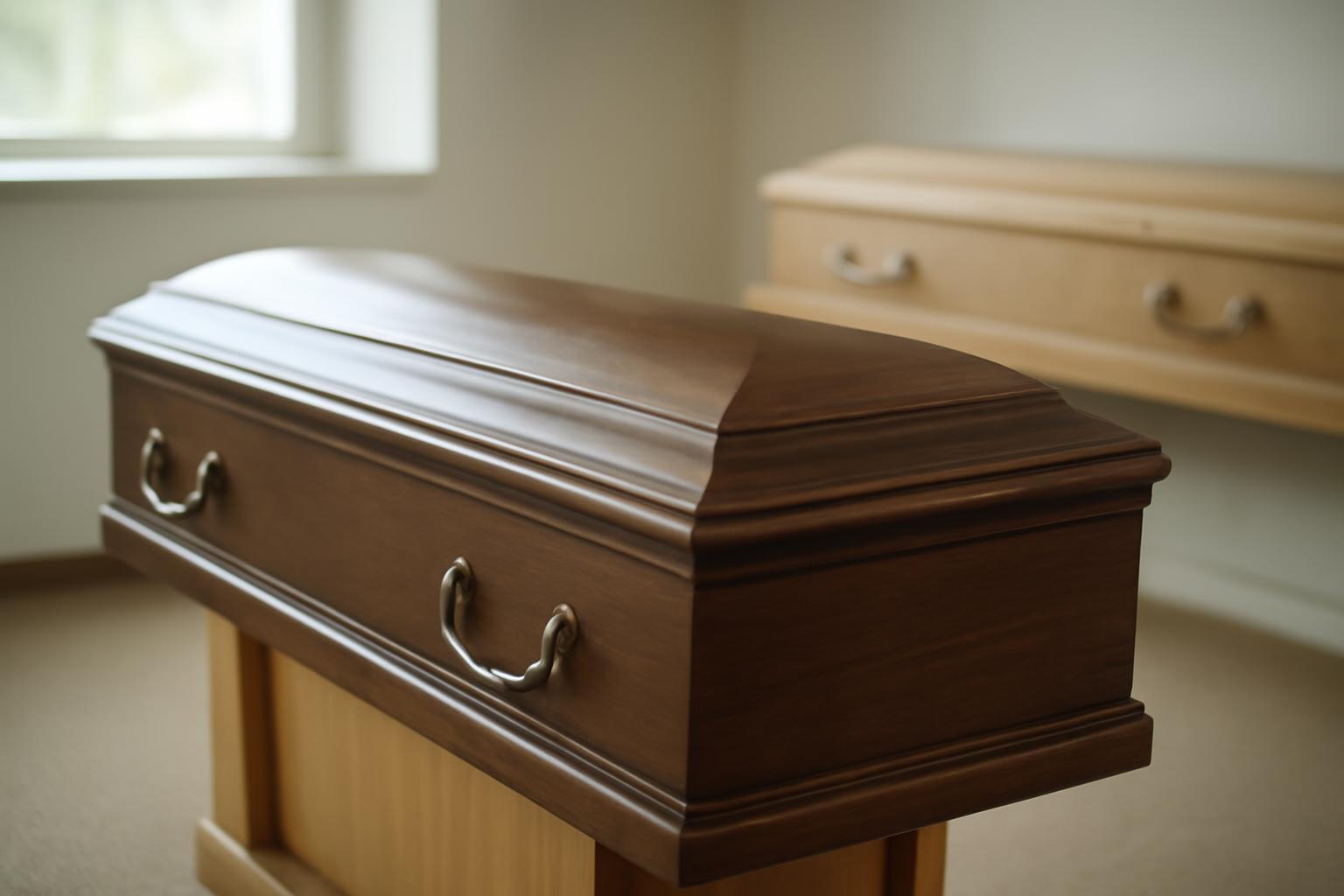
If your family has chosen cremation, one of the first confusing questions is often, “Do we need a casket?” The answer is usually less dramatic than the funeral showroom makes it seem.
Sometimes a full cremation casket makes sense. Sometimes a plain alternative container is all that is needed. And sometimes the most practical choice is a rental casket for the service and a separate removable insert for the cremation itself.
That difference matters because families are often making two decisions at once without realizing it:
- What container will the crematory accept?
- What kind of service, if any, does the family want before cremation?
Those are related questions, but they are not the same question. A crematory’s operational requirements are often simpler than the ceremonial presentation a family may want for a viewing, visitation, or funeral.
The easiest way to reduce stress is to separate the options clearly from the start:
| Option | Typical use | Appearance | What happens after the service |
|---|---|---|---|
| Alternative container | Direct cremation without a public viewing | Plain and functional | Cremated with the body |
| Finished cremation casket | Viewing or funeral before cremation | More traditional and formal | Cremated with the body |
| Rental casket | Viewing or funeral before cremation | Traditional outer appearance | Inner insert or container goes to cremation; outer shell is reused |
Once families understand that basic framework, the buying pressure becomes easier to evaluate. You are not automatically choosing between “respect” and “cheapness.” More often, you are choosing between different levels of ceremony, presentation, and cost.
What Is a Cremation Casket?
A cremation casket is a casket intended for use in the cremation process rather than long-term burial. Funeral-home guidance commonly describes it as made from combustible materials that burn safely with the body and avoid leaving non-combustible parts behind in the cremation chamber (Devlin Funeral Home’s explanation of cremation caskets).
That makes it different from a conventional burial casket in purpose as much as in construction. A burial casket is typically chosen as the permanent casket for interment. A cremation casket is chosen because the family wants the body present for a viewing or funeral before cremation and wants a container that can then be cremated.
Provider guidance also consistently treats metal as a key dividing line. Cremation caskets are commonly described as avoiding metal parts, while burial caskets may include metal hardware or be made of metal entirely. In practice, that is why cremation options are more often built from wood, fiberboard, cardboard, wicker, bamboo, or similar materials rather than steel, bronze, or copper.
For families, the most useful distinction is not technical but practical:
- A burial casket is meant to stay in the ground or mausoleum.
- A cremation casket is meant to support a service and then go through cremation.
- An alternative container is the simplest functional option when no formal body-present service is planned.
That is also why cremation caskets should not automatically be treated as luxury items. Sometimes they are premium purchases. Sometimes they are simply the right tool for a family that wants a traditional-looking goodbye before cremation. The question is not whether a cremation casket is “better” than a container. The real question is whether it matches the kind of service your family actually wants.
Legal Minimum Requirements for Cremation Containers
The title of this section can sound more definite than the evidence really allows, so it helps to be precise: available guidance in the evidence pack supports common provider and crematory minimums, not a single universal nationwide rule that works identically everywhere.
What provider and supplier guidance does agree on is the practical baseline for direct cremation: families often use a simple combustible container rather than a finished casket. Batesville, a major funeral-supply company, describes alternative cremation containers as basic combustible options made from materials such as cardboard or fiberboard, while finished cremation caskets are positioned as a separate choice for families who want a more traditional presentation before cremation (Batesville’s overview of cremation caskets and containers).
That means the safest way to understand “minimum requirements” is this: for many direct cremations, the operational need is a rigid, combustible container that can be handled safely and respectfully. A polished, furniture-style casket is often not the practical minimum. But exact acceptance rules can still vary by crematory, provider, and locality.
So when a funeral home presents a casket as if it were automatically required, families should slow the conversation down and separate custom from requirement. A provider may be describing what it usually arranges, what it prefers to sell, or what works best for a public viewing. None of those is necessarily the same thing as the least elaborate acceptable cremation container.
A useful way to frame the conversation is:
- What is the least elaborate container your crematory will accept?
- If we want a viewing, what additional container options do we have?
- If we do not want a viewing, what would you normally use for direct cremation?
- Do local or facility-specific rules change that answer?
This distinction matters because grief makes people vulnerable to bundled language. Families may hear “for cremation you’ll need a casket” when the more accurate statement might be “for the type of service you’re describing, many families choose a casket.” That is not a trivial difference. It can change the bill substantially.
In other words, the minimum container question is usually operational, while the casket question is often ceremonial. Treating those as separate decisions is one of the simplest ways to stay in control.
Common Types and Materials for Cremation Caskets
Provider guides describe a fairly consistent group of cremation-casket materials: hardwoods such as oak, cherry, walnut, and mahogany; softwoods such as pine, cedar, and poplar; cardboard; fiberboard or engineered wood; and natural woven materials such as bamboo, wicker, and seagrass (Sullivan-King Mortuary & Crematory’s guide to casket types for cremation).
The market can look crowded, but most options fall into three practical categories.
1. Simple alternative containers These are the plainest options and are commonly used for direct cremation. They may be cardboard, reinforced paper-based construction, fiberboard, plywood-style construction, or simple unfinished wood. Their strength is function. They are meant to transport and support the body appropriately for cremation, not to create a formal visual presentation for mourners.
2. Finished cremation caskets These look much more like what most people imagine when they hear the word “casket.” They may be made from softwood or hardwood, include interior fabric, and have a more finished appearance suitable for a visitation or funeral. Their value is usually ceremonial and emotional rather than technical. They provide a familiar, dignified presentation when families want the body present before cremation.
3. Natural-material or woven options Bamboo, wicker, willow, and similar materials are increasingly visible. Some families prefer them because they feel less conventional, warmer in appearance, or more aligned with personal or spiritual preferences. They may also be marketed with environmental language, but families should ask what the material, fasteners, lining, and construction actually are rather than assuming every “natural” option meets the same standards or values.
Each material comes with tradeoffs.
Hardwoods
Hardwood cremation caskets often look the most traditional and substantial. That appearance matters to some families, especially when older relatives or a faith community expect a more classic funeral setting. The tradeoff is usually price and weight. These are often positioned as premium choices.
Softwoods
Softwoods such as pine, cedar, and poplar can still look dignified while often feeling simpler and less formal than hardwood. They may appeal to families who want real wood without paying for the most ornate finish. They can also fit services that feel more understated or personal.
Fiberboard and cardboard
These are often the most economical and functional options. For direct cremation, that may be exactly the point. The main limitation is presentation. A family planning no public viewing may find them entirely appropriate. A family planning a church visitation may not.
Woven and other natural materials
These can feel warm, handmade, and distinctive. They are often chosen because they do not resemble a conventional polished burial casket. But they are not universally the right answer. Some families love the look; others find it too informal for the kind of service they want.
The best question is not, “Which material is best?” It is, “Which material fits the service, budget, and tone we actually want?” A direct cremation, a private family farewell, and a full visitation all create different priorities. Once you match the container to the real event, many of the options become much easier to sort.
Rental Caskets for Cremation Services
Rental caskets exist because many families want a traditional-looking service but do not want to purchase a full casket that will not be buried.
The standard rental model is straightforward: the funeral home provides a decorative outer shell for the visitation or funeral, while a removable inner container or insert holds the body. After the service, the insert or container is used for cremation and the exterior shell is reused for future services (Funerals Your Way’s guide to casket selection).
That arrangement solves a common emotional and financial tension. A family may want the appearance of a conventional casket because it feels familiar, respectful, or comforting to relatives. At the same time, they may not want to pay for a purchased casket that is being chosen only for a few hours of viewing before cremation.
A rental can make especially good sense when:
- the family wants a visitation before cremation
- relatives expect a traditional presentation
- the deceased chose cremation, but the family still wants a body-present service
- cost control matters, but the family does not want to eliminate ceremony altogether
It is often the most obvious middle-ground option, but families should still ask detailed questions before agreeing. “Rental” does not by itself tell you what is included.
Ask:
- Does the rental fee include the inner insert or cremation container?
- What material is the insert made from?
- Are there separate charges for transfer, setup, preparation, or use of the viewing room?
- Does the funeral home have more than one rental style?
- Is the casket in the showroom the same one reflected in the quoted fee?
The practical value of a rental is not that it is always cheap. The value is that it lets you pay for appearance temporarily instead of buying a permanent product you do not need. For many families, that is the most sensible compromise available.
Your Rights Under the FTC Funeral Rule
Mortuary Guide’s summary of the FTC Funeral Rule says funeral homes must provide a written General Price List on request, in person, at no charge; that the basic services fee is the main non-declinable charge; that embalming is usually optional rather than automatic; and that funeral homes are required to accept outside caskets without charging a handling fee. The same summary places the non-declinable basic services fee at roughly $1,400 to $4,000+ depending on market (Funeral Home Pricing: What You Are Actually Paying For).
For a broader explanation of GPL line items, optional charges, and common markups, see Funeral Home Pricing: What You Are Actually Paying For.
For a family choosing cremation caskets, those protections matter in very practical ways.
First, you do not have to shop blindly from a display room. The GPL is the document that turns vague conversation into itemized choices. It lets you see whether the quote is being driven by the container itself, by staff services, by use of facilities, by body preparation, or by transportation charges.
Second, outside purchasing is part of the conversation whether or not you use it. A planning guide from Funerals Your Way states that federal law allows families to purchase caskets from any retailer, which is why it is reasonable to ask a funeral home in advance what dimensions, delivery timing, or crematory-compatibility details it needs if you do not buy through the home (Funerals Your Way’s casket-selection guide).
Third, many families can save money simply by asking the provider to build the arrangements from the minimum upward instead of starting with a package and removing items later.
A useful breakdown is:
- Usually non-declinable: the basic services fee
- Often optional depending on arrangements: embalming, viewing, facility use, upgraded preparation, ceremonial vehicles, premium casket selection
- Variable by provider and circumstance: timing-related charges, special transfer charges, oversized-container charges, and fees connected to specific crematory material requirements
If a conversation starts to feel rushed, a simple script helps:
“Please show us the minimum cremation arrangement first. Then show us the itemized cost of each additional service only if we decide we want it.”
That script does two things at once. It makes the funeral home move from package language to line-item language, and it reminds everyone in the room that ceremony is being chosen by the family, not assumed by the seller.
Cost Factors in Cremation Caskets and Containers
The biggest pricing mistake families make is comparing containers by appearance instead of by function.
A basic alternative container, a finished cremation casket, and a rental casket may all be discussed under the same umbrella, but they are not serving the same purpose. One is a functional minimum for direct cremation. One is a ceremonial purchase. One is a temporary presentation solution. Their price differences reflect those different jobs.
Several factors tend to move the price up:
Material
Real wood usually costs more than fiberboard, cardboard, or simple unfinished construction. Within wood, more polished or more traditionally “premium” finishes are often priced above plainer softwood options.
Level of finish
A plain combustible container and a viewing-ready casket may both be acceptable for cremation, but they are not priced alike. Interior fabric, decorative shaping, finish quality, and more formal presentation all tend to increase cost.
Whether there is a public service
This is often the hidden cost driver. Once a family wants visitation, a funeral ceremony, or both, other charges can accumulate around the container decision: preparation, staff time, transfer logistics, use of facilities, and schedule coordination. That is why two cremation arrangements can differ sharply even when both end in the same disposition.
Rental versus purchase
A rental can lower the cost of a traditional-looking service because the family is paying for temporary use of the exterior presentation rather than ownership of a full casket. But it should still be evaluated as part of the total arrangement, not as an isolated bargain word.
Provider pricing structure
A casket or container price never tells the whole story by itself. One funeral home may quote a lower container but higher service fees. Another may present a more expensive-looking arrangement that is actually more efficient once itemized. The only reliable comparison is between line-item totals built around the same service plan.
That is why a disciplined comparison process helps so much:
- ask for the minimum direct-cremation arrangement first
- ask what changes if a viewing is added
- ask what changes if the family chooses a rental instead of a purchased casket
- compare at least two or three providers on the same assumptions
- make sure you know whether the quoted number is for the container alone or for the container plus service package
The emotional environment around funerals makes visual upselling especially powerful. Families naturally want to avoid regret, embarrassment, or the feeling that they did too little. But price discipline does not mean indifference. It means making sure the money is going toward the part of the experience that matters most to the family, rather than toward assumptions built into a package.
Key Questions to Ask Providers
Before you choose any cremation casket or container, confirm that the crematory will accept it as offered. Planning guidance recommends checking compatibility, confirming exact interior and exterior measurements, and asking in advance whether a third-party item or certain materials could lead to additional charges tied to crematory requirements (Funerals Your Way’s casket-selection guide).
Identification and timing deserve the same attention as materials and price. In Mortuary Guide’s practical comparison of cremation and burial, families are advised to ask who operates the crematory, what tracking or identification system is used, and how long the return of remains usually takes. That guide describes reputable providers as using a metal ID tag through the process and says remains are commonly returned within about 5 to 10 business days after the crematory receives the signed authorization (Cremation vs. Burial: A Practical Comparison).
A short checklist can keep the conversation focused:
- Is this exact casket or container acceptable to the crematory you use?
- If we are considering a third-party purchase, what specifications do you need before delivery?
- What are the exact interior and exterior measurements?
- Do you offer an oversize option if needed?
- Are there any added fees related to the chosen material, weight, timing, or crematory policy?
- If we want a viewing, what preparation options are available besides embalming?
- How is identification maintained from transfer through cremation and return?
- Who actually performs the cremation: your own staff or a separate crematory?
- When should we realistically expect the cremated remains back?
Finally, keep this guide in the right category. As Mortuary Guide notes in its terms of use, this material is general information only, not a substitute for advice from a licensed funeral director, attorney, or estate professional, and laws and costs vary by state and locality. In this area, local practice matters.
Is a casket always required for cremation?
No. If there is no viewing or funeral with the body present, many providers say a full casket may not be necessary. Funeral-home guidance commonly notes that cremation without a body-present service may be arranged without purchasing a traditional casket, and that rental caskets are often available when families do want a viewing before cremation (Sharp Funeral Homes’ discussion of when a casket may or may not be needed).
What families should not confuse is “no casket” with “no container.” In many arrangements, the body still goes to the crematory in a combustible container, even if that container is plain cardboard, fiberboard, or simple wood rather than a finished casket.
Are metal components allowed in cremation caskets?
As a general rule, provider guidance describes cremation caskets as avoiding metal components so they can be cremated safely with the body. One funeral-home guide explains cremation caskets as all-wood or otherwise free of metal parts intended to interfere with the cremation process (Callahan Fay Caswell Funeral Home’s explanation of cremation caskets).
In practice, that means families should confirm the full construction, not just the headline material. A casket marketed as wood may still include decorative hardware, fasteners, or trim that a particular crematory wants handled differently.
What are standard casket dimensions for adults?
There is no single universal adult size that families should assume will apply everywhere. Provider and planning guidance vary in how they describe “standard” measurements, which is exactly why the safest approach is to ask for the exact interior and exterior dimensions of the specific casket or container being offered (Funerals Your Way’s casket-selection guide).
That step matters most when the deceased was unusually tall, broad-shouldered, or likely to require an oversize option. In those cases, “standard adult” is not precise enough to rely on.
Can cremated remains be buried in a casket?
Yes. Batesville’s cremation guidance notes that cremated remains can be buried in a casket (Batesville’s overview of cremation caskets and containers).
Whether that makes sense depends on what the family wants the final disposition to express. Some families want a traditional cemetery burial after cremation. Others prefer urn burial, niche placement, scattering where permitted, or keeping the urn at home. If burial is the plan, confirm cemetery rules and fees first, because plot type, container expectations, and related charges may differ.
Cremation caskets are best understood as optional tools, not automatic requirements. They can support a familiar, body-present service before cremation, but many direct cremations use much simpler containers. The most useful consumer protections are also the most basic ones: ask for the GPL, separate the minimum cremation arrangement from optional ceremony choices, and confirm the crematory’s acceptance standards before buying anything. When families keep those steps in order, the process becomes clearer, calmer, and usually less expensive.