
10 min read ·
Funeral Carriage: Meaning, Options, and Planning Questions
Usually horse-drawn, it may mean a caisson, an enclosed hearse or even a motorized hearse. Ceremony, route and provider coordination shape the choice.
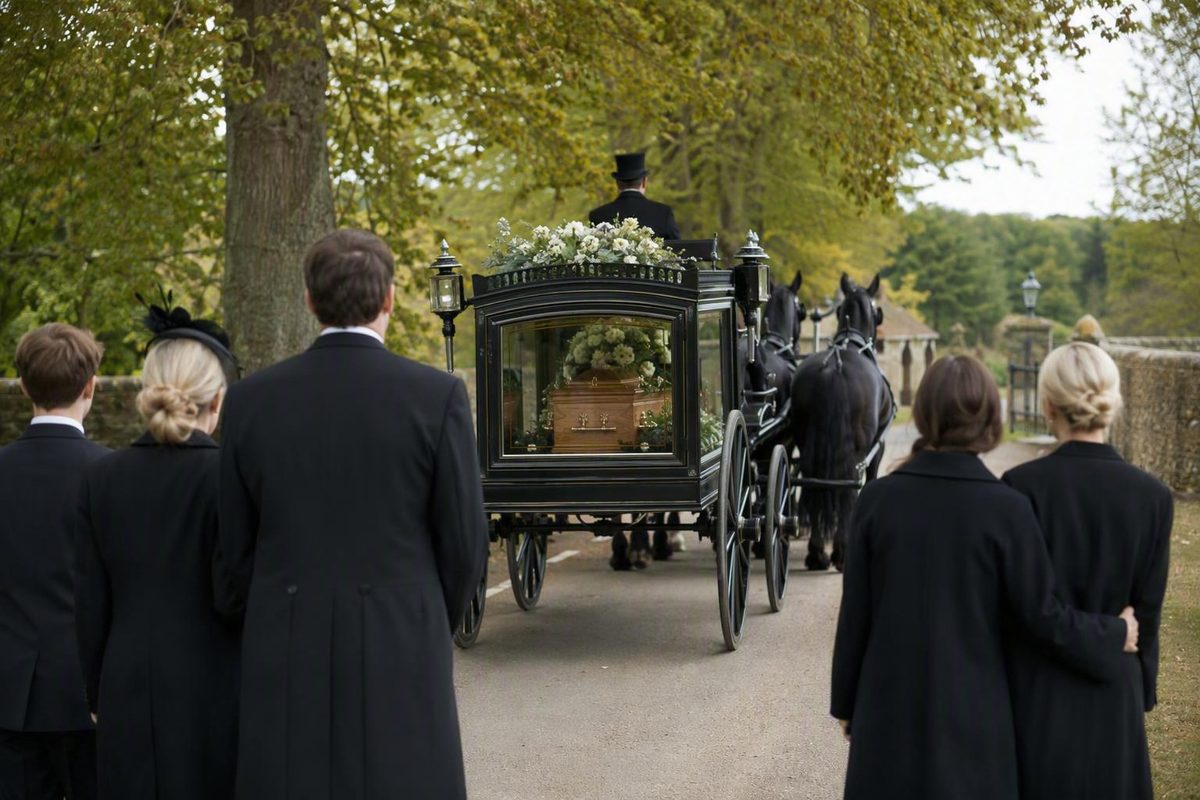
Funeral Carriage: Meaning, Options, and Planning Questions
Overview
A funeral carriage is a vehicle used to carry the deceased during a funeral, most often a horse-drawn carriage, caisson, or enclosed horse-drawn hearse, though the term can also overlap with the modern motorized hearse. Which vehicle fits your service depends on the ceremony type, route, and what the funeral home and provider can coordinate.
Because providers and funeral homes use the words carriage, hearse, caisson, and funeral coach in overlapping ways, the most practical first step is to learn what each term generally means and then ask the funeral director which options are realistic for your route, timing, and budget. The sections below explain the terminology, the carriage’s place in the procession, a short history of why the terms overlap, and the coordination and provider questions worth settling before you book anything.
What a funeral carriage means today
In everyday use, “funeral carriage” usually points to a horse-drawn vehicle that carries a casket or urn as part of a funeral service. Providers in this space describe several related vehicles: for example, Southern Breezes Carriages offers “a Horse Drawn Caisson or a fully enclosed horse drawn hearse for Funerals,” which shows that even a single provider may distinguish between an open caisson and an enclosed carriage-style hearse.
The related terms you are likely to encounter break down roughly like this:
- Funeral carriage — a broad, informal term for a horse-drawn vehicle used in a funeral, sometimes used loosely for any ceremonial funeral vehicle.
- Horse-drawn hearse — a carriage built or enclosed specifically to hold a casket, often with glass or paneled sides.
- Caisson — an open, flat wagon-style vehicle historically associated with military honors, on which the casket rests in view.
- Funeral coach / motorized hearse — the standard modern vehicle; Heritage Coach notes the hearse “is still used as the standard vehicle for transporting caskets” and typically leads the procession.
These labels are not applied uniformly across the industry, so the same vehicle may be called a carriage by one provider and a hearse by another. When you speak with a funeral home or carriage operator, describe what you picture — open or enclosed, horse-drawn or motorized — rather than relying on the term alone. That avoids misunderstandings before any quote or booking.
How funeral carriages fit into the procession
The carriage or hearse carries the deceased at the head of the funeral procession, moving from the funeral home, church, or other service location to the cemetery or final resting place. According to Heritage Coach, the hearse driver leads the funeral procession, with family and mourners following behind — a horse-drawn carriage typically fills the same leading role when it substitutes for a motorized hearse.
This position at the front is not just logistics. Heritage Coach describes the hearse as a symbol of respect and dignity, and a horse-drawn carriage tends to carry that symbolism even more visibly because it slows the pace and draws attention to the moment. Families sometimes choose a carriage precisely because a slower, more ceremonial procession feels appropriate for the person being honored.
How much of the route the carriage covers varies. Some services use a carriage only for the final stretch inside or near the cemetery, while others plan a longer church-to-cemetery route. Because pace, road conditions, and distance all matter more for a horse-drawn vehicle than for a motorized one, the workable route is something to confirm with the funeral director and the carriage provider rather than assume. A useful takeaway: decide early which portion of the journey matters most to your family, then ask whether a carriage can realistically cover it.
A brief history of funeral carriage and hearse use
The overlap between “carriage” and “hearse” is historical. Brugger Funeral Homes traces the evolution of funeral transport from hand-carried funeral biers to coffins, then to horse-drawn funeral carriages, rail transport, and eventually motorized hearses. As Brugger explains, after horse-drawn funeral carriages came into use, the word “hearse” was applied to them because coffins were placed on the carriage — so the two terms have described the same category of vehicle for a long time.
When motorized vehicles replaced horses for everyday funeral transport, the name “hearse” moved with the function. That is why today’s standard funeral vehicle is called a hearse or funeral coach, while “funeral carriage” now more often signals a deliberate return to the horse-drawn tradition. Heritage Coach covers how this tradition caught on and why the hearse remains the standard casket-transport vehicle in processions today.
For a family planner, the practical point of this history is simple: the vocabulary overlaps because the vehicles share one job — carrying the deceased with visible dignity. Whether you ask for a “carriage,” a “horse-drawn hearse,” or a “caisson,” the provider will care most about the specifics of your service, not the label.
Choosing the right funeral carriage or hearse option
The right option depends on the type of service, what is being carried, and how much of the procession the family wants the vehicle to cover. There is no single correct choice; the options below are discussion prompts for your conversation with the funeral home, drawn from the kinds of services carriage providers actually describe.
Southern Breezes Carriages, for example, offers both a horse-drawn caisson and a fully enclosed horse-drawn hearse, which maps onto some common decision points:
- Traditional casket burial — an enclosed horse-drawn hearse or a standard motorized hearse both accommodate a casket; the choice is largely about tone, route length, and cost.
- Cremation-related service — some carriage services are used with urns rather than caskets; ask the provider directly how an urn would be carried and displayed.
- Military honors — the open caisson has a strong association with military tradition; if the deceased served, ask the funeral director how a caisson could fit alongside other honors.
- Family participation — some providers offer carriages for family members to ride in as part of the procession, separate from the vehicle carrying the deceased.
- Short or cemetery-only routes — a carriage may be most practical for a limited ceremonial stretch, with a motorized hearse handling any longer transfer.
Pallbearers, flowers, and other elements of the service also interact with the vehicle choice — for instance, how the casket is loaded and by whom differs between an enclosed hearse and an open caisson. Rather than settling these details alone, bring your preferences to the funeral director, who can tell you which combinations are workable for your specific service and location. The most useful question to ask first is: “Given our service type and route, which of these options would you realistically recommend we explore?”
What affects funeral carriage pricing?
Exact funeral carriage costs are not standardized and generally require a direct quote from a provider, because pricing depends on the specifics of your service. The supplied sources do not publish price figures, and any typical range you see quoted online may not reflect your location or route — so treat quote conversations, not published averages, as your real pricing source.
When you request a quote, the factors below are reasonable things to ask how the provider accounts for:
- The type of vehicle requested (open caisson, enclosed horse-drawn hearse, family carriage, or motorized hearse)
- The route length and complexity, including how far the horses would travel
- Staffing, such as drivers or attendants accompanying the carriage
- Location and travel distance for the provider to reach your service
- Date and timing of the service
- Any add-ons, such as customization, flowers on the vehicle, or an additional carriage for family
Framing these as questions — “How does route length affect your pricing?” — tends to produce a clearer, itemized quote than asking only for a single number. It also helps you compare providers on the same basis. If a quote seems high or low, ask what is included, since inclusions like setup time, travel, and staffing can differ significantly between providers. Your funeral director can often help you interpret quotes and confirm which costs would sit inside the overall funeral bill versus being paid to the carriage provider directly.
How to coordinate a funeral carriage
Arranging a funeral carriage is a coordination task involving three main parties: the funeral home or funeral director, the cemetery or destination, and the carriage provider. The funeral director is usually the right starting point, since funeral homes routinely arrange transportation of the deceased and can tell you whether a carriage fits the service they are already planning. Providers such as Southern Breezes Carriages take direct inquiries as well — the site invites families to call for arrangements — but even when you contact a provider first, the funeral home still needs to be part of the plan.
The practical items to align across those parties include:
- Route — where the carriage joins the procession, which roads it uses, and where it ends
- Timing — when the deceased is transferred to the carriage and how the slower pace affects the schedule
- Access — whether the cemetery and service locations can accommodate horses and a carriage
- Weather — what happens if conditions are poor on the day, and whether a motorized backup is available
- Local requirements — whether any permits, escorts, or route approvals apply on your planned roads
On that last point, be cautious about assuming rules either way. Requirements for escorts or approvals vary by location, and the supplied sources do not establish any universal rule — so treat permits and escorts as a local question for the funeral director, cemetery, and provider rather than something you can settle from general articles. The same applies to loading procedures and procession order: confirm them with the people running your specific service.
A workable sequence is: raise the idea with the funeral director, ask which providers they have worked with or can coordinate with, get a quote, and then hold one joint conversation where route, timing, and contingencies are confirmed by everyone involved.
Questions to ask before hiring a provider
Before booking, a short vetting conversation protects the family from day-of surprises. The supplied sources do not establish industry-wide standards for insurance, licensing, or animal care, so treat these as questions to ask rather than requirements every provider must meet:
- How many funerals have you served, and can you describe a similar service you handled?
- What is your backup plan if a horse, vehicle, or driver is unavailable on the day?
- How do you handle bad weather — do you proceed, reschedule, or switch to an alternative?
- What insurance do you carry for this type of service?
- How are your horses cared for, and how do they handle traffic and crowds?
- Will you coordinate directly with our funeral director and cemetery, or does the family relay details?
A provider who answers these questions clearly and welcomes coordination with your funeral home is giving you the most important trust signal available: evidence that they have managed the real logistics of a funeral before. If answers are vague, ask the funeral director whether they can recommend an operator they have worked with.
Etiquette and personalization considerations
The broad etiquette principle is that the carriage or hearse leads and mourners follow respectfully. Heritage Coach frames the hearse as a symbol of respect and dignity in the procession, and the same expectation carries over to a horse-drawn carriage: vehicles in the procession follow behind it, and guests treat the moment it passes as a solemn one.
Personalization is where a carriage can reflect the person being honored. Southern Breezes Carriages lists service options and customization choices for its funeral carriages, which suggests families can often discuss the look of the vehicle, flowers, and how family members participate. Specific customization varies by provider, so ask what is possible rather than assuming a particular arrangement is standard.
A few items are worth settling ahead of time with the funeral director and provider: whether photography of the carriage is welcome and who takes photos, how flowers are placed on or around the vehicle, whether family members ride in or walk behind a carriage, and what guests should be told about the procession’s slower pace. Cultural and religious expectations differ, so let the family’s own traditions and the officiant guide those choices rather than any general rule. Handled this way, the carriage becomes a personal, dignified element of the service rather than a logistical worry.