
20 min read ·
Funeral Etiquette Made Simple: How to Show Up Respectfully for the Family
Instructions in the obituary, invitation or service program, plus guidance from clergy or the funeral home, override general advice.
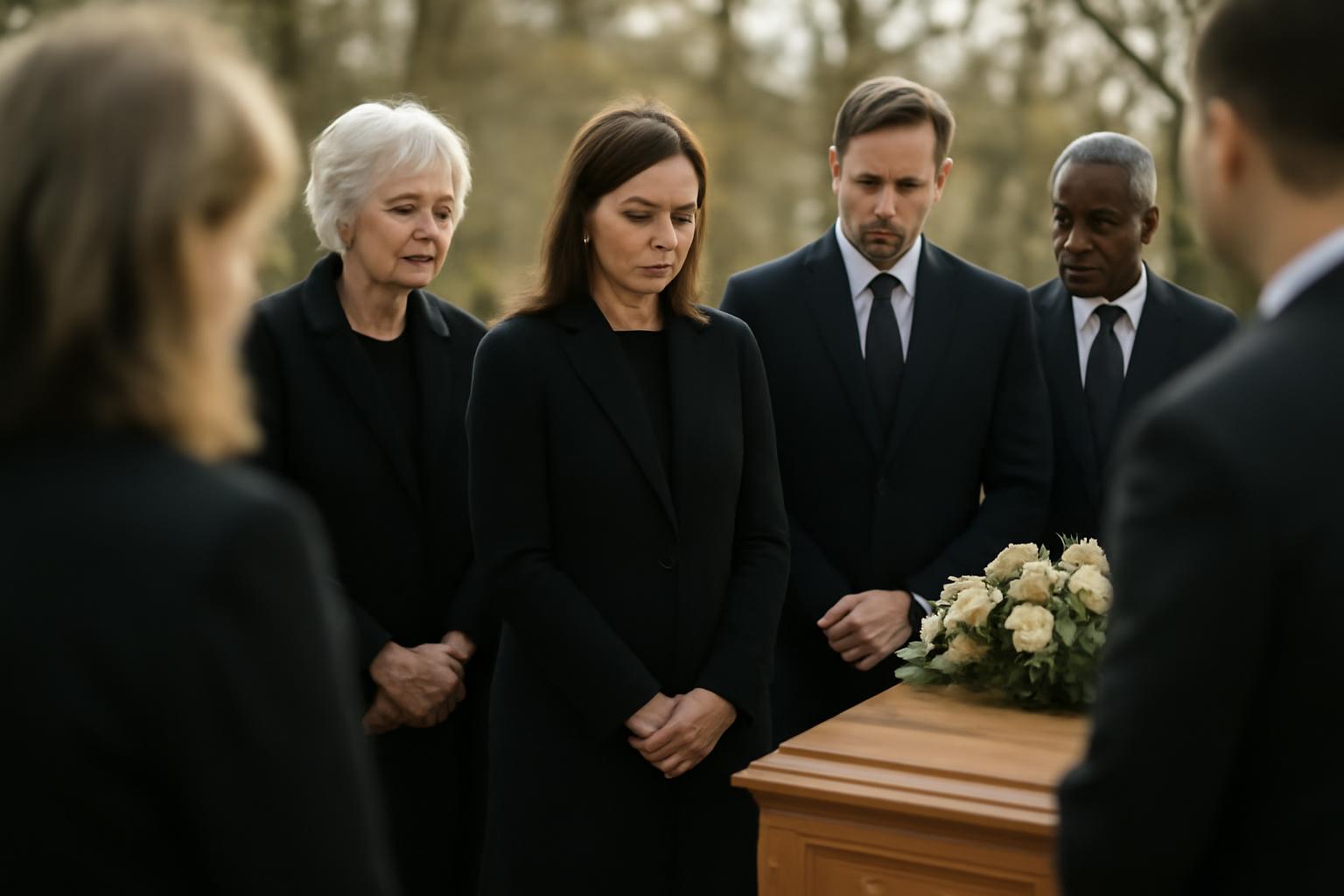
Funeral etiquette is less about performing a perfect script and more about making a hard day a little easier for the people closest to the loss. If you keep that goal in view, most decisions become clearer: dress to blend in, arrive prepared, speak simply, stay unobtrusive, and follow the family’s lead.
This guide reflects common funeral-attendance norms in a general Western context. Services vary widely by family, faith, culture, venue, and location, so any instructions in the obituary, invitation, service program, or from clergy or the funeral home should override general advice.
Core Principles of Funeral Etiquette
A useful definition of etiquette comes from Emily Post: manners are a “sensitive awareness of the feelings of others.” That idea fits funerals especially well. The point is not to impress anyone. The point is to behave in a way that respects the deceased and reduces strain on the bereaved.
Three principles cover most situations:
- Blend in rather than stand out
- Follow the family, clergy, ushers, or funeral-home staff
- Support the bereaved without demanding much of their time or attention
In practice, that usually means:
- arriving a little early
- dressing conservatively
- silencing or powering off your phone
- speaking quietly
- offering brief, sincere condolences
- avoiding behavior that draws focus to yourself
When you are unsure, the safest choice is usually the more formal, quieter, less disruptive one.
The simplest funeral etiquette checklist
If you want a short baseline, start here:
- Read the obituary or service notice for location details, attire requests, and flowers-or-donations guidance.
- Arrive about 10 to 15 minutes early.
- Sign the guest book if one is provided.
- Sit behind the family section unless you are invited forward.
- Silence or power off your phone before entering.
- Keep conversation to a minimum during the service.
- Offer brief condolences such as, “I’m so sorry for your loss.”
- Do not take photos or post online unless the family has clearly welcomed it.
- Follow instructions for the procession, graveside service, or reception.
- Check in again after the funeral, when support often matters most.
Why reading the room matters
“Funeral” can describe very different events: a church service, a funeral-home chapel service, a graveside committal, a visitation, or a celebration of life in a private home or other venue. Some are highly formal. Some are more relaxed. Some include specific religious practices. Some are private.
That is why generic etiquette always has one major exception: the family’s wishes come first.
Before attending, check:
- the obituary or memorial notice
- the invitation or service program
- any direct message from the family
- funeral-home guidance, if available
If something is unclear, especially attire, flowers, donations, or whether children should attend, it is reasonable to ask the family contact or funeral home rather than guess.
What to Wear to a Funeral
For most funerals, the safest choice is conservative, neat clothing in dark or muted colors. Black is traditional in many Western settings, but it is not the only respectful option. Navy, charcoal, gray, and other subdued tones are usually acceptable unless the family requests something different.
The goal is not fashion. It is seriousness, respect, and restraint.
The basic standard
Choose clothing that is:
- clean
- neat or pressed
- modest
- comfortable enough to wear quietly through the service
- suitable for the venue and weather
Avoid clothing that feels flashy, overly casual, revealing, or attention-grabbing. In many settings, that means avoiding very bright colors, loud patterns, slogan clothing, distressed denim, athletic wear, and conspicuous accessories.
A helpful rule is simple: if you are deciding between what feels expressive and what feels understated, choose understated.
Appropriate funeral attire for men
A respectful default for men is:
- a dark suit, or dark dress pants with a blazer
- a collared shirt
- a tie, especially for a traditional service
- dark dress shoes
If you do not own a suit, dark slacks and a simple button-down shirt are often appropriate. The more formal the service, the more a jacket and tie make sense. If the family has clearly signaled a casual or celebratory tone, there may be more flexibility, but “casual” still should not read sloppy.
Appropriate funeral attire for women
A respectful default for women is:
- a dress, skirt, or suit in a dark or muted tone
- a hemline around the knee or longer
- dress pants with a blouse or sweater, if preferred
- simple, comfortable shoes
- minimal jewelry
Many etiquette guides also recommend modest coverage, especially in houses of worship. That is not universal everywhere, but it is a safe choice when you do not know the expectations.
Appropriate funeral attire for children
Children do not need miniature formalwear, but they should still be dressed neatly and conservatively. Good options include:
- dark or subdued pants, skirts, dresses, sweaters, or collared shirts
- comfortable shoes
- simple clothes that allow them to sit, walk, and move without discomfort
Comfort matters. A child who is too hot, too cold, or physically uncomfortable is much more likely to become restless.
Is black required?
Usually not. Black remains the classic choice, but dark neutrals such as navy and gray are also widely accepted. If the family requests something specific, though, their request should guide your choice.
For example, some families ask guests to:
- wear bright colors
- wear the deceased’s favorite color
- dress in team colors
- follow a themed dress request for a celebration of life
In those cases, following the request is more respectful than defaulting to black.
How weather and venue affect what you wear
Weather matters, but it should not push your outfit into something careless or conspicuous. In hot weather, lighter fabrics in subdued colors are often fine. In cold weather, dark coats, scarves, and gloves are appropriate. Outdoor graveside services may call for practical shoes, a coat, sunglasses, or an umbrella.
Venue matters too:
- House of worship: lean more formal and modest
- Funeral-home chapel: conservative funeral attire fits well
- Graveside-only service: sensible footwear may matter more
- Celebration of life venue: check for a family-requested dress code or color theme
Cultural and religious exceptions
This is an area where assumptions can backfire. In some traditions, mourners may wear white rather than black. In some settings, modest dress or a head covering may matter more than color. Because practices differ not just by religion or culture but also by family and level of observance, the safest approach is to verify rather than rely on a generic internet rule.
If you cannot confirm specifics, modest and subdued clothing is still a safer starting point than a fashionable or casual outfit.
Arriving, Seating, and Entry Etiquette
How you arrive shapes your whole presence at the service. A quiet, organized arrival reduces disruption and gives you time to compose yourself before seeing the family.
When to arrive
A common recommendation is to arrive 10 to 15 minutes early. That gives you time to:
- find parking
- enter without rushing
- sign the guest book
- greet the family if appropriate
- find your seat before the service begins
Funerals typically begin on time, and late entrances are more noticeable than at most events because the room is usually quiet and attentive.
If you are running late
Sometimes lateness cannot be avoided. If that happens:
- enter quietly
- use a side or back aisle if possible
- wait if the family is processing in
- take the nearest appropriate seat
Avoid crossing the room in search of a better seat. A discreet arrival matters more than where you sit.
Signing the guest book
If there is a guest book or register, sign it clearly. Families often look back at those names later. This small step matters, especially if the family is too overwhelmed that day to spend more than a moment with each guest.
Where to sit
At most funerals, the first rows are reserved for immediate family and close friends. Several etiquette guides describe the first one to three rows as family seating. Unless you are immediate family or have been invited forward, sit a few rows back.
Safe seating rules include:
- look for “Reserved” signs
- leave the front section to the family
- follow ushers or staff directions
- choose a seat from a side aisle when possible
- avoid changing seats during the service unless necessary
If the family or staff invites you closer, you can accept that invitation.
Accessibility and courtesy
Closer seats and aisle seats may be especially helpful for older adults and people with mobility, hearing, or vision needs. If you are able-bodied and someone else would clearly benefit more from a better seat, offering it is a simple act of courtesy.
Entering and exiting the room
Enter and exit quietly. If the family processes in, it is common to stand as they enter and remain standing until they are seated. Staff or clergy may signal this, but if others stand, follow along.
After the service, exit as directed. In some settings, rows are dismissed after the family leaves first. If there is no formal instruction, do not rush the aisle or crowd the family.
Behavior During the Funeral Service
Most in-service etiquette can be summed up in one sentence: be calm, attentive, and unobtrusive.
Phone etiquette
Before entering, silence or power off your phone. Fully silent is better than relying on audible alerts or vibrations.
If an urgent situation truly requires your attention, step outside quietly before responding.
Talking, eating, and general conduct
During the service:
- keep conversation to a minimum
- do not eat or drink unless the setting clearly calls for it
- avoid commentary or side conversations
- sit quietly and listen attentively
A funeral room can be emotionally fragile. Even whispered chatter can feel louder than you think.
Photos, video, and selfies
As a general rule, do not take photos, video, or selfies unless the family has clearly said that is welcome. Some families may appreciate photos at a reception or celebration of life, but many do not. It is not something to assume.
The same caution applies online. Do not post images, location check-ins, or service details unless the family has made it clear that sharing is acceptable.
Participating in the service
If the service includes prayers, hymns, standing, kneeling, or spoken responses, you are not expected to pretend familiarity. Respectful observation is fine.
A good rule is:
- participate if you are comfortable and know what is happening
- remain quietly respectful if you do not
There is no need to perform unfamiliar religious practices to prove respect.
Open-casket etiquette
If there is an open casket, viewing is usually optional. You do not have to go forward if you would rather not.
If you do approach:
- move calmly
- pause briefly
- do not touch the body or items placed around it
- step aside so others may come through
If you choose not to view, simply focus on greeting the family respectfully.
Showing emotion
Crying is normal. So is needing a moment. Funeral etiquette does not require perfect composure; it requires awareness of the setting.
If you become so distressed that you may disrupt the service, step out quietly. The same is true if a child in your care becomes restless or upset.
What to Say: Offering Condolences
Many people worry most about words. In reality, funeral etiquette favors sincerity over eloquence. Bereaved families are often exhausted and overwhelmed. They usually do not need a speech. They need acknowledgment, kindness, and brevity.
What to say
Short, direct condolences are almost always appropriate, such as:
- “I’m so sorry for your loss.”
- “I’m thinking of you and your family.”
- “She was always so kind to me.”
- “He will be deeply missed.”
- “I’m grateful I knew him.”
If you knew the deceased, a brief positive memory can be especially comforting. For example:
- “I’ll always remember how generous she was.”
- “He had a way of making people feel welcome.”
- “I still think about the advice he gave me.”
Keep it short unless the family clearly wants to keep talking.
Keep the line moving
At a visitation or reception, families may speak with dozens of people in a short period. Offer your sympathy, share a short memory if appropriate, and then move along. If you want to say more, a sympathy card is often the better place to do it.
What not to say
Avoid comments that minimize the loss, speculate about the death, or impose your beliefs. Statements like these can land badly even when they are meant kindly:
- “He’s in a better place.”
- “At least she lived a long life.”
- “Everything happens for a reason.”
- “I know exactly how you feel.”
- “What exactly happened?”
- “You need to stay strong.”
It is also best to avoid:
- asking for details about the cause of death
- giving advice unless asked
- comparing their grief to your own experience
- making the conversation about your emotions
If you were not close to the family
You do not need special wording. Simplicity still works:
- “I’m so sorry.”
- “I wanted to come pay my respects.”
- “Your father was always gracious to me.”
If you are attending mainly to support a friend, spouse, coworker, or relative who lost someone, that is fine too. Your presence still matters.
When a card is the better option
If the receiving line is long, the family looks exhausted, or you know you may get flustered in the moment, a sympathy card is an excellent choice. A brief handwritten note can say more, and with less pressure, than trying to improvise in a crowded line.
Children, Families, and Special Situations
The most uncertain funeral questions often involve children, immediate family roles, and emotionally complicated situations. Here, judgment and preparation matter more than rigid rules.
Should children attend?
In many families, children are welcome unless the service is private or the family requests otherwise. But that does not mean every child should attend every service.
A good decision depends on:
- the child’s age
- their relationship to the deceased
- their ability to sit quietly or step out when needed
- the type and length of service
- whether a parent can supervise them without major disruption
If you decide to bring a child, explain in advance:
- where you are going
- who died
- what the setting may look like
- whether there may be crying, music, prayer, or a casket
- what respectful behavior looks like
Children usually do better when they know what to expect.
Practical tips if bringing children
If you bring a child:
- dress them neatly but comfortably
- choose seats near an easy exit
- bring tissues and, if needed, a quiet comfort item
- step out if they become restless or distressed
- do not force participation they are not ready for
The aim is not perfection. It is preparation.
Immediate family etiquette
If you are immediate family, you are usually closer to the center of the service. That often means:
- sitting in the front rows
- dressing more formally
- following staff guidance for the procession or receiving line
- being seated or moved in an order coordinated by the officiant or funeral director
Common guidance places the spouse or partner and children first in the family group, followed by parents, siblings, and then extended family. But families do not all look the same, and the exact order may vary.
When family relationships are complicated
Funerals often bring together estranged relatives, former partners, blended families, unmarried partners, or people whose emotional place in the family is clearer than their formal one.
If your place is uncertain:
- ask the organizer or funeral director quietly
- do not assume a front-row seat
- follow the lead of the closest next of kin
- prioritize peace over making a point
A funeral is rarely the right setting to argue about status or old grievances.
If you become overwhelmed
It is completely normal to cry or need a break. If you feel overwhelmed, step out quietly. Returning later is fine. Leaving early because you genuinely cannot continue is understandable too.
Try to match the tone of the service. A quiet religious funeral, a formal graveside service, and a more relaxed celebration of life can have different emotional rhythms. Respect means adjusting to the family’s tone rather than imposing your own.
Flowers, Donations, and Gifts
When someone dies, many people want to send something tangible. The basic etiquette here is straightforward: follow the family’s stated wishes and choose support that helps rather than complicates the day.
Flowers
Flowers are a traditional expression of sympathy, but they are not always the right choice. Check the obituary or memorial notice first.
If flowers are welcomed, they are commonly sent to:
- the funeral home
- the service venue
- the family home
Some guidance suggests sending them in advance, often around 48 hours before the service when possible, so arrangements can be placed without last-minute confusion.
“In lieu of flowers”
If the obituary says “in lieu of flowers,” take that seriously. It usually means the family would prefer memorial donations or another form of support. Sending flowers anyway may feel generous, but it does not follow the preference they gave.
Donations
If the family names a charity, church, scholarship fund, or cause, donating there is a respectful response. The amount should be what you can reasonably afford. There is no required figure.
A memorial organization may notify the family of your gift without disclosing the amount. A short note to the family is still thoughtful, especially if you cannot attend in person.
Sympathy cards
A sympathy card is almost always appropriate. It works on its own or alongside flowers or a donation. If you are unsure what to send, a card is the safest choice.
It does not need to be long. A few sincere lines are enough.
Food and practical help
For many families, practical help is more useful than flowers, especially after the service when the first wave of attention fades.
Helpful support can include:
- a ready-to-eat meal
- groceries
- childcare help
- pet care
- rides
- errands
- help around the house
The most useful offers are specific. Instead of “Let me know if you need anything,” try something like:
- “Can I bring dinner on Thursday?”
- “I can pick up groceries this weekend if that would help.”
- “Would it help if I handled school pickup one day next week?”
If you bring food, label it clearly and choose something easy to store, reheat, or freeze.
What not to bring
Avoid large, inconvenient items at the service itself unless they were requested. In most cases, the funeral is not the time to give something that creates more to carry, sort, or manage.
After the Service: Procession, Reception, and Follow-Up
Funeral etiquette does not end when the formal service ends. What you do afterward often matters just as much.
The funeral procession
If there is a procession to the cemetery, join it if you are invited or if it is clearly open to attendees. In some cases only close family and selected guests continue to the graveside; in others, everyone is welcome.
If you do join:
- follow staff instructions
- keep your headlights on if directed
- stay with the procession
- drive carefully
- do not cut into or disrupt the line
Graveside behavior
Graveside services are often shorter and quieter than indoor services. The same core rules apply:
- silence your phone
- stand quietly
- follow the officiant’s or staff’s cues
- avoid crowding the family
It is common to stand back at first and then gather closer when directed.
Once the committal or interment is over, some attendees leave right away while others greet the family. Watch the family’s energy and take your cue from that.
The reception or repast
If there is a reception, repast, or gathering after the service, attending can be a kind way to extend support. These events are often less formal, but they are still part of the mourning period.
At the reception:
- keep conversation respectful
- let the family set the mood
- share memories if appropriate
- avoid becoming loud or overly casual
If you were not especially close, it is perfectly fine to stay briefly, offer support, and leave.
Social media after the funeral
Do not assume that once the service is over, posting online is automatically acceptable. Families vary widely on privacy. Some welcome tributes; others prefer the day to remain private.
A safe rule is this: do not post images, details, or check-ins unless the family has clearly indicated that sharing is welcome.
Follow-up support
The most valuable etiquette may happen later, when the crowd has thinned out.
Thoughtful follow-up can include:
- a sympathy note
- a call or text within the first week
- another check-in a few weeks later
- practical help once routines restart
- remembering birthdays, holidays, or anniversaries
Specific offers usually help most. A grieving person may not know how to answer “Tell me if you need anything,” but they can answer a concrete offer.
Cultural and Religious Variations
General funeral etiquette is useful, but it is not universal. Culture, faith, nationality, and family tradition can all affect what is respectful.
That can shape expectations around:
- clothing color
- modesty
- head coverings
- participation in prayers or rituals
- seating
- food
- timing and tone of the service
Illustrative examples, not universal rules
Some examples commonly noted in funeral-attendance guidance include:
- some Jewish or Islamic settings may place more emphasis on modest dress, and a head covering may be expected or provided in some situations
- some Hindu, Buddhist, or Sikh services may use white rather than black as a mourning color
- some celebrations of life or nonreligious services may request bright colors, themed clothing, or a more casual look
Those examples are only examples. Practices differ within every tradition, and even within one family, observance can be more or less formal.
What to do if you are unfamiliar with the customs
If you are attending a service outside your own tradition:
- Read the obituary or invitation carefully.
- Ask the family, clergy, or funeral home whether guests should know any customs.
- Dress modestly and conservatively unless told otherwise.
- Observe quietly before participating.
- Do not feel pressured to perform rituals you do not understand.
Respectful observation is usually better than awkward improvisation.
When advice seems inconsistent
Funeral advice online is not perfectly consistent, especially on cross-cultural specifics. If you find conflicting guidance, use this order of priority:
- the family’s instructions
- clergy or officiant guidance
- funeral-home or venue guidance
- cautious general etiquette
When you cannot confirm details, modest dress, quiet behavior, and humility remain the safest path.
Common questions
Do I have to wear black to a funeral?
No. Black is traditional in many Western funerals, but it is not universally required. Dark, subdued colors such as navy or gray are usually acceptable unless the family requests something specific.
If the family asks guests to wear bright colors, a favorite color, or themed clothing for a celebration of life, follow that request. In some cultural or religious traditions, black may not be the expected mourning color at all, which is another reason to check first rather than assume.
Is it okay to take photos at a funeral?
Usually, no, unless the family has clearly welcomed it.
Photos, video, selfies, and social posting are widely treated as inappropriate because they can feel intrusive and distracting. If there is any doubt, do not take them.
Should I bring children to a funeral?
Sometimes, yes. It depends on the child, the service, and the family’s wishes.
Children are often welcome unless the service is private or the family asks otherwise. Older children can often attend respectfully if they are prepared for what they will see and how they should behave. If a child is very young, easily overwhelmed, or unlikely to sit through the service, it may be kinder to arrange childcare or choose seats near an exit.
What if the service is a celebration of life?
A celebration of life often has a more flexible tone than a traditional funeral, but the same principle applies: follow the family’s lead.
That may mean less formal clothing, brighter colors, or a themed request. If no special instructions are given, neat, conservative clothing in muted tones is still a safe choice. Even at a more upbeat event, your goal is still to show respect and avoid drawing attention to yourself.
How do I handle a virtual or livestreamed funeral?
Virtual services vary by family, funeral home, and platform, so the safest etiquette is to follow the instructions the host provides. If the family or funeral home shares guidance about timing, access, or participation, use that rather than assuming online expectations are identical to in-person ones.
When no other guidance is given, keep the same overall standard in mind: be respectful, unobtrusive, and guided by the family’s preferences.
Funeral etiquette is easiest to remember when you focus on empathy instead of performance. Dress to blend in, arrive a little early, speak simply, stay off your phone, and follow the family’s lead. These are general guidelines, not professional advice, and specific customs can vary by family, faith, venue, and location. When in doubt, asking the family or funeral home is more respectful than guessing.