
17 min read ·
A Respectful, Low-Pressure Guide to Arriving Prepared
Presence is enough. A brief card is optional. Flowers, food, donations, photographs and keepsakes should follow the family's stated wishes.
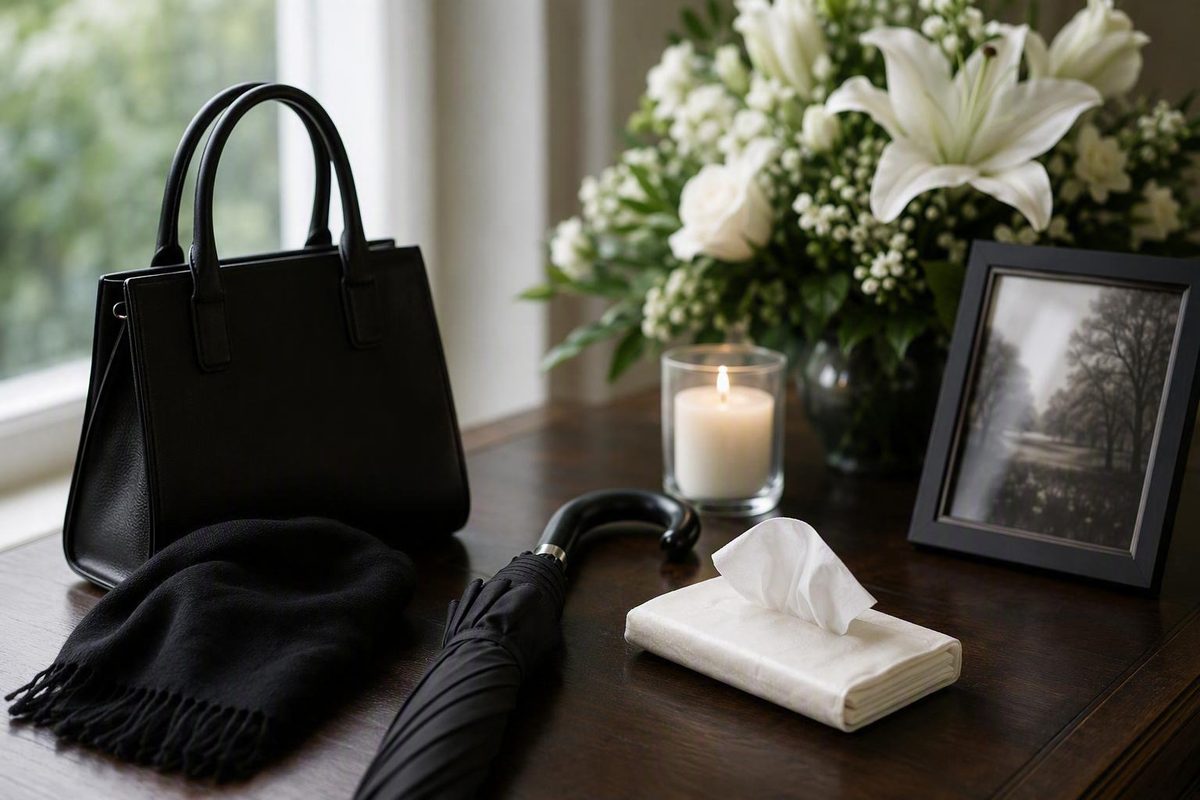
A respectful, low-pressure guide to arriving prepared
The short answer: you do not have to bring anything
You do not need to arrive at a funeral with a gift. Your attendance, quiet respect, and considerate support can be enough. General guidance from Roupp Funeral Home likewise emphasizes that supportive presence matters more than bringing something tangible (Roupp Funeral Home’s guest guidance).
If you would like to take something, a brief sympathy card or handwritten note is one of the safest optional choices. It is not an admission ticket, a social obligation, or the only correct way to express sympathy.
A useful way to decide what to take to a funeral is to place possible items into three categories:
| Category | Examples | What to do |
|---|---|---|
| Generally safe | Personal necessities, tissues, service details and an optional brief card | Carry them discreetly |
| Ask first or check instructions | Flowers, food, photographs, keepsakes, plants, candles, memorial donations or contributions to a display | Read the obituary or invitation and confirm the arrangements |
| Usually avoid | Conspicuous or expensive gifts, unapproved displays, difficult-to-transport items, unsolicited religious materials or alcohol that was not requested | Leave them at home unless the family specifically asks for them |
This distinction matters because something thoughtful in one setting can create work or discomfort in another. Food might be welcome at a reception but restricted in the ceremony room. A photograph might be ideal for an organized memory table but inappropriate to add without permission. Flowers might be encouraged, directed to a particular location or replaced by a request for memorial contributions.
None of these gestures has to involve spending money. If flowers or a donation are outside your budget—or simply do not feel appropriate—you might:
- Write down a warm memory of the person who died.
- Offer one specific form of practical help.
- Send a short note after the service.
- Check in with the bereaved person later, after the initial rush of contact.
- Attend, listen and avoid making additional demands on the family.
The value of your support is not measured by the cost of what you carry through the door.
Check these instructions before deciding what to take
Generic etiquette is only a starting point. The family’s published wishes and the practical rules of the service should guide your decision.
Use this sequence:
- Read the obituary, funeral notice or invitation in full. Look for instructions about flowers, donations, dress, attendance, children, photographs or contributions to a reception.
- Follow the family’s stated requests. If the notice names a memorial fund or asks guests to wear a particular color, that is more relevant than a general etiquette rule.
- Check the venue’s policies. Funeral homes, cemeteries, houses of worship, community venues and private homes may have different rules about food, drinks, flowers, candles, photography and displays.
- Consider the type of gathering. A visitation, wake, funeral, graveside committal, memorial service, reception and celebration of life may not have the same format or expectations.
- Confirm any applicable faith or cultural custom. Do not assume that every family within a religion, culture or community follows one universal practice.
Published information should come first. If the notice answers your question, avoid asking the immediate family to repeat it. If clarification is genuinely needed, contact the named organizer, funeral home, venue, officiant or faith community when practical. Burpee-Scott Memorial Chapel’s guest checklist similarly advises following family wishes and considering the service’s religious or cultural customs before bringing a tribute (Burpee-Scott Memorial Chapel’s guest checklist).
A tactful question is:
“I’d like to support the family. Would this be welcome, and where should it be delivered or placed?”
That wording asks whether the item is appropriate and how it should be handled. It does not presume that the family has room, needs food, wants a display altered or expects a gift.
If a notice describes the funeral as private or invitation only, the cautious approach is to honor the notice as written. Unless an organizer has independently invited questions, express your sympathy at another time rather than asking grieving relatives to decide whether to make an exception.
When instructions are unclear, keep your question narrow. “May I bring this photograph for the memory table?” is easier to answer than “What can I do?” Likewise, asking the funeral home whether water is permitted or where cards should be left avoids placing a logistical request on the family during an emotionally demanding period.
Personal essentials to carry discreetly
Personal supplies are different from gifts. They are meant to help you participate quietly, not to become part of the funeral or create an obligation for the family.
A compact personal checklist may include:
- Tissues or a handkerchief
- Water, if the venue permits it
- Necessary medication and ordinary personal necessities
- The service time, address, directions and contact details
- Parking, transportation or venue-access information
- A small umbrella, suitable layer or sun protection for an outdoor service
- Shoes appropriate for the weather and terrain
Plan around the expected duration and setting rather than packing for every possibility. A small, manageable bag is usually easier to keep unobtrusive than an oversized tote filled with snacks, gifts, spare clothing and items that may not be allowed.
For a graveside or outdoor service, check the forecast and consider conditions underfoot. Weather-appropriate clothing and terrain-suitable shoes may be more useful than a ceremonial gift; these are also among the preparations suggested in Chapels of Eden’s funeral guest guidance (Chapels of Eden’s preparation guidance).
Water and snacks require judgment. They may help during a long visitation, but some venues restrict them and their use may be distracting during a ceremony. Confirm the rules, keep permitted items out of sight and step away before eating when possible. Do not assume that bottled water is allowed simply because it appears on a general packing list.
Resolve access and transportation questions before leaving home. Consider:
- Where you are expected to park
- Whether a procession or second location is involved
- How far you may need to walk
- Whether you need to ask about seating or venue access
- Whether your transportation schedule allows enough time to arrive calmly
If you have a mobility, hearing, sensory or other access requirement, contact the venue in advance and ask what arrangements are available rather than assuming that every location has the same facilities.
Silence your phone before entering. If the service details are stored on it, take a screenshot or open the information in advance so that you do not have to search through messages in the room. Once seated, keep the phone put away unless it is needed for an urgent accessibility or caregiving purpose.
Clothing is a separate decision from what to carry. For a fuller discussion, see Mortuary Guide’s guide to whether you have to wear black to a funeral.
A sympathy card or written memory
A brief sympathy card is one of the simplest optional gestures you can take. It can be store-bought, handmade or a folded sheet of paper in an envelope. What matters is that the message is sincere and does not ask the family to respond.
A useful structure is:
- Acknowledge the death or loss.
- Express care for the bereaved person or family.
- If appropriate, add one concise memory or quality you admired.
- Sign your name clearly, including context if the family may not recognize it.
You do not have to include a religious message. Use one only when it reflects your relationship with the family and you have reason to believe it will be welcome. Avoid making confident statements about the deceased’s spiritual condition or telling someone how they should feel.
If you did not know the deceased well, you might write:
I am so sorry for your loss. I’m thinking of you and your family and sending my sincere condolences.
If you have a personal memory, you might write:
I’m so sorry for your loss. I will always remember Sam’s patience and the way he made new people feel welcome. I’m thinking of all of you.
A card can be taken to the funeral, mailed before the service or sent later. No single method is mandatory. Mailing it may be preferable if you are unsure where cards will be collected, cannot attend or want more time to gather your thoughts. Funeral-home guidance treats bringing a card, sending it with flowers and mailing it separately as available options (Hindman Funeral Homes’ card guidance).
If there is a clearly designated card basket, memorial table or collection area, use it. Not every venue provides one. If no location is obvious, ask an usher or funeral-home staff member:
“Could you please tell me where I should leave this card?”
That is usually less intrusive than seeking out a close family member during a receiving line or emotionally intense moment.
A printed photograph or brief written memory may accompany the card. Give it privately or ask where it belongs; do not add it to a public display without approval. The organizer may be working with limited space, a particular theme or digital copies rather than original photographs.
For additional wording help, see Mortuary Guide’s guidance on what to say at a funeral. If the note will accompany flowers, these funeral flower card messages offer examples that can be personalized.
Flowers or a memorial donation: follow the family’s preference
Flowers may be appropriate when the family has not discouraged them, but they are conditional rather than expected. Before buying or carrying flowers, read the obituary or announcement and check any instructions supplied by the funeral home.
Do not rely on a universal list of “correct” funeral flowers. The family’s preference, delivery arrangements, service setting and relevant customs matter more than the species or price.
Logistics also affect the choice. Larger wreaths, standing sprays and similar displays are commonly ordered and delivered ahead rather than carried into the service by a guest. If you are considering a smaller arrangement, ask whether it should go to the funeral home, house of worship, reception, cemetery or family home.
If the notice says “in lieu of flowers,” it generally communicates that the family prefers contributions to the named cause or memorial fund instead of floral arrangements. Respect that preference by not sending flowers anyway. The request does not make a donation compulsory, however; you may attend without donating and do not need to explain your finances (Funeral.com’s memorial-donation guidance).
When making a memorial donation:
- Use the charity, church, organization, memorial fund, fundraising page or obituary link named by the family.
- Include the deceased person’s name so the contribution can be attributed correctly.
- Provide family-notification details if the form offers that option.
- Keep the amount private unless there is an unusual reason to disclose it.
- Retain your confirmation if you need a personal record.
Some organizations offer in-memoriam forms and can notify the family without stating the amount. If no organization is named, avoid guessing at a cause based on limited knowledge. You can ask an appropriate organizer whether a fund has been selected, make a private charitable gift without presenting it as the family’s choice or make no donation.
You may mention the gesture in a card without naming the amount:
A memorial contribution has been made in Jordan’s memory to the organization named in the funeral notice.
Flowers and donations are both optional. Choosing neither is acceptable.
Food, photographs, keepsakes, and other contributions: ask first
Food, photographs, keepsakes, plants, candles and additions to memorial displays belong in the ask first category. They can be thoughtful, but each may create practical or emotional complications when brought without coordination.
Food
Food arrangements vary widely. A family may have a catered reception, a meal rota, dietary restrictions, limited refrigeration, no need for additional dishes or a venue that restricts food in particular areas. Ask before shopping or cooking.
A useful script is:
“I’d be glad to provide a meal or something for the reception. Would that be helpful, and if so, what and where should I deliver?”
If the answer is no, accept it. An offer is not a commitment the family must accommodate.
When food is welcome:
- Deliver it to the arranged reception or family home as instructed.
- Choose something that can be stored and reheated easily.
- Use disposable or clearly identified packaging when appropriate.
- Label the contents and relevant ingredients or allergens.
- Include simple storage or heating instructions if needed.
- Agree on a delivery time instead of arriving unexpectedly.
Disposable containers and labels identifying contents and allergens are practical precautions when providing food (Farewelling’s funeral guest guide).
Do not carry a casserole, dessert tray or snacks into the ceremony room or cemetery unless the organizer has specifically arranged it. Venue rules and family plans vary, which is why coordination matters.
Photographs and written memories
A cherished photograph or short written memory can be meaningful, especially when the organizer is collecting contributions for an album, board, slideshow or memory table. But a public display is curated space. The family may have requirements concerning size, subject matter, privacy, duplication or how the deceased is represented.
Ask:
“I have a photograph of Alex that I would be happy to share. Are you accepting photographs for the display, and would you prefer a print or a digital copy?”
Do not bring an irreplaceable original unless you have agreed on how it will be protected and returned. A copy is generally easier to handle.
If you discover a photograph at the last minute, place it inside a card or offer it privately later rather than attaching it to a board without permission.
Keepsakes, plants, and candles
A personalized keepsake can appear generous while unintentionally creating an obligation. The family may have to transport it, store it, display it, divide it among relatives or decide what to do with it after the service. Similar practical questions can apply to plants and candles.
Before ordering an engraved item, framed collage, memorial ornament, large plant or decorative candle, ask whether the family would welcome it. You might send a photograph or description of the proposed item rather than presenting it as a completed purchase that is difficult to decline.
The guiding question is not simply, “Is this sentimental?” It is, “Will this be welcome without creating more work?”
Adjust the checklist for the setting and your companions
The word “funeral” is often used broadly, but the gathering may be a wake, visitation, funeral ceremony, graveside service, memorial service, reception or celebration of life. These events do not have universally fixed rules.
A formal ceremony may offer few opportunities to deliver food or speak with the family. A visitation may have a longer arrival window. A reception may explicitly invite food contributions. A celebration of life may request photographs, colorful clothing or participation in an activity—but you should not assume that it operates like either a traditional funeral or a party.
Follow the announced tone and instructions for the particular event.
Graveside or outdoor services
For a graveside or outdoor service, focus on practical preparation:
- Weather protection
- A warm or rain-resistant layer when needed
- Sun protection in exposed conditions
- Shoes suitable for grass, gravel, mud, slopes or uneven ground
- Water, if permitted
- Necessary medication and personal supplies
- A plan for walking from the parking area
Keep umbrellas and bags compact enough that they do not obstruct other guests. If severe weather or access is a concern, contact the organizer or cemetery beforehand.
Longer visitations and services
For a long visitation or a service with several stages, plan discreetly for comfort. Eat beforehand if appropriate, bring required medication and confirm whether water or snacks are permitted.
Check whether you will move between a funeral home, house of worship, cemetery and reception so you can make realistic transportation plans. Carry only what you can manage without repeatedly leaving your seat, rustling through a bag or asking the family to store something.
Attending with a child
Do not assume that children are always welcome or always inappropriate. Confirm attendance when:
- The service is private or invitation only.
- The invitation is addressed to specific people.
- The venue has limited seating.
- The child’s attendance is not clearly covered by the notice.
- The organizer has provided special guidance.
If a child will attend, explain in age-appropriate terms what they may see, what the room may be like and what quiet behavior will be expected. Bring one silent activity or familiar comfort item rather than a bag of noisy toys. Sit where you can leave discreetly if the child needs a break.
Depending on the venue, a permitted drink or snack may be useful, but avoid opening it during the ceremony unless necessary.
Culture and faith
Faith and cultural traditions can shape clothing, flowers, food, seating, ritual participation, head coverings, photography and other expectations. Broad labels, however, do not establish exactly what a particular family observes.
Use instructions from the family, officiant or relevant faith community. If confirmation is needed, ask a specific question rather than relying on a generalized claim about an entire religion or culture.
What not to bring or do
Usually avoid anything likely to create work, an obligation, a distraction or a conflict with the family’s stated wishes.
That includes:
- Unapproved displays or decorations. Do not add photographs, candles, signs, flowers or other objects to a ceremony or memorial table without permission.
- Expensive or conspicuous gifts. A large presentation can draw attention away from the service and make the recipient feel obliged to respond.
- Highly perishable or difficult-to-transport items. The family may have no refrigeration, storage space, vehicle capacity or plan for taking them home.
- Unsolicited religious materials. A tract, book or devotional item may not reflect the family’s beliefs.
- Alcohol unless specifically requested. Do not assume it is suitable for the family, venue or occasion.
- Food carried into the ceremony or cemetery without coordination.
- Strong fragrances. Heavy perfume and strongly scented products may be distracting in a shared space.
- Anything that contradicts the obituary or invitation. This includes flowers when the family has asked for another form of remembrance.
- An item that requires an immediate emotional response. The funeral is not the time to press a bereaved person to open, admire, approve or discuss a gift.
Silence your phone before the service begins. Avoid calls, message alerts, scrolling, games and conspicuous device use. If you must remain reachable for an urgent reason, use silent settings and sit where you can step outside.
Do not photograph or record simply because the venue is open to guests. An open funeral is not automatic consent to document the deceased, mourners, rituals or private conversations. Ask permission and follow any announcement from the organizer or officiant. Do not post images online without separately considering the family’s privacy.
If you arrive with an appropriate card or previously approved item and there is no designated collection point, ask an usher or staff member where it belongs. Avoid placing a grieving relative in the position of carrying or managing it during a receiving line.
Before leaving home, use this pocket checklist:
- Instructions checked: I read the obituary or invitation.
- Arrival planned: I know the time, route, parking plan and locations.
- Phone silenced: Necessary service information remains accessible.
- Personal essentials packed: I have only what I need for the setting.
- Optional gesture confirmed: Flowers, food, photographs or other contributions are welcome and have a destination.
- No added burden: Nothing I am taking is likely to create work, pressure or distraction for the family.
The simplest rule is this: take what helps you attend quietly and supportively, and confirm anything intended for the family. Presence is enough. A brief card is optional. Flowers, food, donations, photographs and keepsakes should follow the family’s stated wishes. When the notice does not answer your question, ask the organizer or venue rather than relying on a supposedly universal funeral custom.
Frequently asked questions
Is it rude to go to a funeral without bringing anything?
No. Attending respectfully without a gift is acceptable. You are not expected to prove your support by spending money.
If you want to do something at no cost, write a short note, share a memory, offer specific practical help or check in after the funeral. These are options, not substitutes you are required to provide.
Should I bring a sympathy card to the funeral or mail it?
Either is appropriate. Bring it if you know there will be a designated place for cards or can ask staff where to leave it. Mail it if that is more convenient, if you are uncertain about the arrangements or if you would prefer to send your message later.
You do not have to hand the card directly to a family member. A designated collection point or guidance from an usher may make delivery easier for everyone.
What does “in lieu of flowers” mean, and is a donation required?
It generally means the family prefers a memorial contribution to the named charity, church, organization or fund instead of flowers. Follow the supplied instructions, identify the deceased and request family notification if that option is available.
A donation is not required. You may attend without flowers or a contribution. If you do donate, the amount generally does not need to be disclosed to the family (guidance on “in lieu of flowers” donations).
Can I take food to a funeral?
Only after checking. Food may be welcome at an arranged reception or the family’s home, but it may be unnecessary or restricted at the ceremony venue.
Ask what would help, where it should be delivered and when. If accepted, use practical packaging and label the contents and relevant ingredients or allergens (food-contribution guidance for funeral guests). Do not carry food into the ceremony room or cemetery without coordination.
What should I take to an outdoor funeral or graveside service?
Take weather protection, terrain-appropriate shoes, necessary medication, tissues and water if permitted. Depending on conditions, you may also need an umbrella, warm layer, rain protection, sun protection or sunglasses.
Check the forecast, parking arrangements, walking distance and venue access in advance. Keep your bag compact so that you can move and stand without obstructing other guests.