
6 min read ·
Subdued Colors Work Better Than Forcing Black
If the family says "wear blue," "bright colors welcome" or "no black," follow that over general etiquette. If there is no guidance, choose a dark or muted outfit.
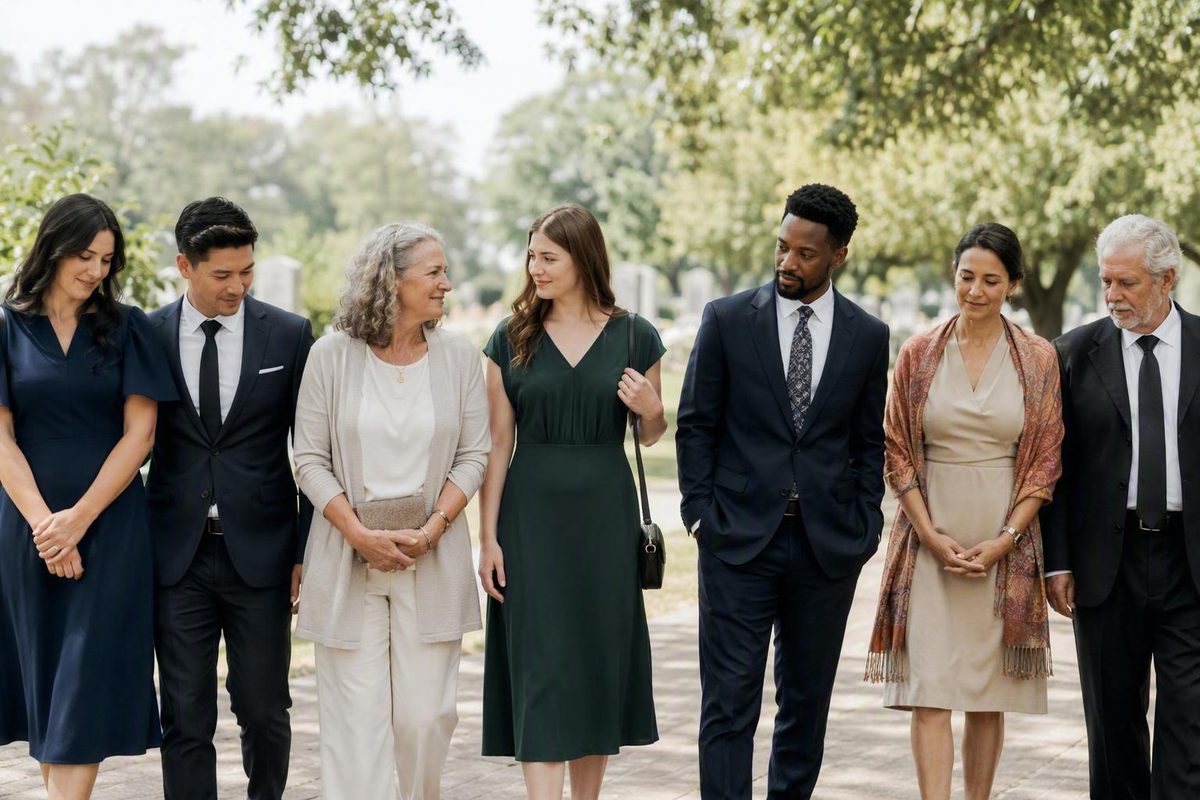
No, you do not always have to wear black to a funeral. Black remains a familiar and respectful choice for many formal Western funerals, but navy, charcoal, dark brown, deep green, and other subdued colors are often appropriate too. The most important guide is any request from the family, followed by the customs of the faith or culture and the formality of the service.
If no dress guidance is available, choose something clean, quiet, and comfortable that does not pull attention away from the person being remembered. You do not need to buy an entirely new black outfit just to show respect.
A simple way to decide what to wear
Work through these questions in order:
- Did the family specify a color or theme? Check the obituary, invitation, memorial website, funeral-home notice, or messages from the family. A request such as “wear blue,” “bright colors welcome,” or “no black” matters more than a general etiquette rule. Funeral Partners likewise recommends checking with the family when a dress code or particular color may be intended (Funeral Partners).
- Are there cultural or religious expectations? Mourning colors and standards of modesty are not universal. If you are unfamiliar with the tradition, ask the funeral home, place of worship, organizer, or a trusted person close to the family.
- How formal is the event? A traditional funeral in a place of worship may call for more formal clothing than a celebration of life, outdoor memorial, or informal gathering.
- What will the setting require? Consider heat, cold, rain, grass, gravel, stairs, and how long you may be standing. Practical clothing and safe footwear are respectful because they let you be present without distraction.
When you cannot get an answer before the service, a dark or muted outfit with simple accessories is a reliable default.
When black is the safest choice
Black is useful when the service is formal, the family is observing a traditional Western dress custom, or you simply want a choice that blends into the room. It can be an all-black outfit, but it does not have to be. A black jacket, trousers, skirt, dress, tie, sweater, or coat can anchor an outfit that also includes gray, navy, white, or another restrained shade.
The continuing association between black and formal mourning does not mean every attendee must dress identically. Miss Manners notes that funeral customs have become less strictly somber while black still carries traditional significance at highly formal services (Anchorage Daily News). That makes black a safe option, not a universal test of care or grief.
Appropriate colors other than black
Common alternatives include:
- navy or deep blue;
- charcoal, slate, or dark gray;
- dark brown or taupe;
- forest green or deep olive;
- burgundy, maroon, or muted plum;
- soft neutrals used with darker pieces.
Stark Funeral Professionals specifically identifies dark gray and deep blue as suitable alternatives and emphasizes smart, subdued clothing rather than an all-black requirement (Stark Funeral Professionals). Tindall Funeral Home also advises that subtle colors can work and that less formal locations, such as a garden or beach, may call for a different approach (Tindall Funeral Home).
Bright colors are not automatically disrespectful. They may be exactly right when the family asks guests to wear the deceased’s favorite color or frames the gathering as a colorful celebration of life. Without that invitation, a highly vivid color, large slogan, or bold pattern may draw more attention than intended. The distinction is context, not a blanket ban.
Practical funeral outfit examples
You can adapt what you already own. Aim for neatness, restraint, and enough comfort to sit, stand, greet people, and possibly walk outdoors.
More formal service
- A navy, charcoal, or black suit with a pale shirt or simple top
- Dark trousers with a blazer, cardigan, or structured jacket
- A knee-length or longer dress in a muted color, with a jacket or shawl if the venue calls for covered shoulders
- A dark skirt or tailored trousers with a plain blouse or sweater
- Clean, understated dress shoes, loafers, flats, or low heels
Smart-casual memorial or celebration of life
- Chinos or dark trousers with a collared shirt or fine-knit sweater
- A simple midi dress, jumpsuit, or skirt-and-top combination
- A plain blouse or button-down with a cardigan
- A requested color worn as a shirt, scarf, tie, pocket square, or other modest accent
Outdoor or graveside service
- Layers in dark or muted shades
- A weather-appropriate coat, rain layer, hat, or gloves
- Stable shoes for wet ground, gravel, or grass
- Clothing that will not require constant adjustment in wind, heat, or cold
McCafferty Funeral & Cremation’s attire guide also stresses adapting clothing to climate and choosing conservative, comfortable footwear and understated accessories (McCafferty Funeral & Cremation). Comfort is not at odds with respect; it helps you focus on supporting the people around you.
Children and teenagers
Children generally have more flexibility. Choose clean, comfortable, age-appropriate clothes in subdued colors when possible. A dark dress, trousers with a plain top, or a simple sweater can all work. Avoid making a child uncomfortable for the sake of perfect formality, especially during a long service.
Culture, faith, and family wishes come first
Black is not the mourning color in every community. Some traditions favor white or another color, and some services place more emphasis on modesty, head coverings, or particular garments than on color. Funeral Partners’ overview, for example, explains that funeral colors differ across cultures and lists gray, maroon, and navy as alternatives in settings where they are appropriate (Funeral Partners).
Avoid assuming that one description from the internet applies to every family within a religion or culture. Practices can vary by region, congregation, family, and the type of ceremony. A short question is usually best: “Is there anything guests should know about dress?”
If asking the bereaved directly feels intrusive, contact the funeral home or venue. Staff can often explain whether the service is formal, whether a color has been requested, and whether the setting has practical or modesty requirements.
What if you do not own formal or dark clothing?
Wear the most appropriate option you have. A clean pair of dark trousers with a plain shirt or sweater can be enough. If your only suitable clothing is lighter or more casual, choose the least distracting combination, make sure it is clean and in good repair, and attend.
Do not let anxiety about an imperfect wardrobe keep you from offering support. People usually remember that you came, listened, and treated the occasion with care—not whether every piece of your clothing matched a traditional mourning color.
If borrowing an item is easy, it can help, but buying a new suit or dress is rarely necessary unless the family or your role in the ceremony calls for a specific standard.
What should you avoid?
Unless the family’s instructions say otherwise, it is sensible to avoid clothing that is likely to distract, create discomfort, or clash with the venue. Examples include:
- clothing with offensive words, large logos, or attention-grabbing graphics;
- very loud patterns or neon shades at a traditional service;
- heavily distressed, dirty, or damaged clothing;
- outfits that conflict with stated modesty expectations at a place of worship;
- impractical footwear for a procession, cemetery, or outdoor service;
- anything you will need to keep adjusting throughout the ceremony.
These are practical guidelines, not a way to judge another mourner. Financial circumstances, disability, culture, age, travel, work, and the short notice of a death can all affect what someone is able to wear.
The respectful default
You do not have to wear black to a funeral unless the family or ceremony specifically expects it. Follow any stated request first. If there is no guidance, choose clean, subdued clothing that fits the setting; navy, charcoal, dark brown, and other muted colors are usually reasonable alternatives. When culture or faith may shape the dress code, ask rather than assume.
The goal is not to prove grief through clothing. It is to show up with care, avoid drawing focus from the memorial, and support the people who are saying goodbye.