
5 min read ·
Write Genuine Sympathy on Flower Cards Briefly
The best message is usually one or two sincere sentences with a clear signature. If you mainly know a grieving relative, direct your support to them.
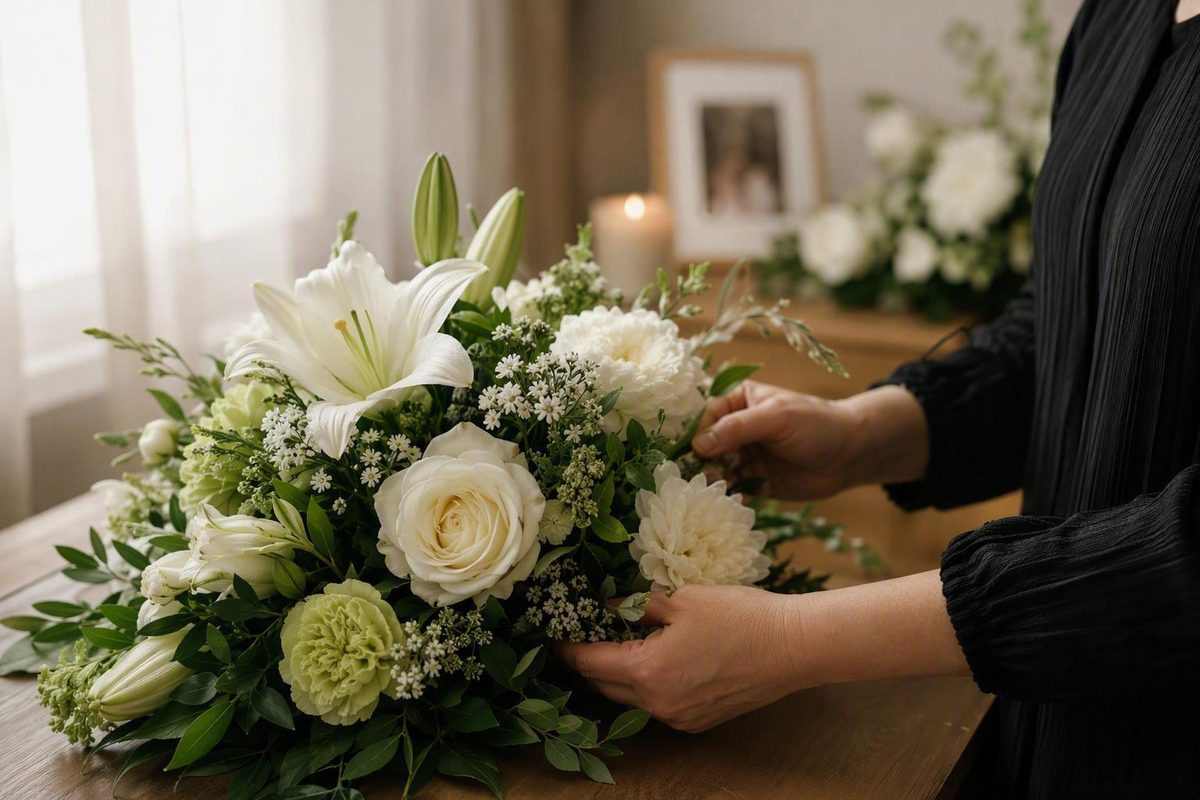
The best message for funeral flowers is usually one or two sincere sentences, followed by a clear signature. A simple formula is: acknowledge the loss or remember the person, offer care, then sign your name. For example: “Remembering Maria with great affection. With sympathy, Daniel and Priya.”
Choose words that fit your relationship. If you knew the person who died, you can name a quality or memory. If you mainly know a grieving relative, direct your support to them. Keep religious language for situations where you know it reflects the family’s beliefs.
A quick way to choose your message
Before writing, answer two questions:
- Who is the card for? It may speak to the person who died, to the bereaved family, or to both.
- What can you say honestly? Choose sympathy, remembrance, love, gratitude, or support rather than trying to explain the death.
Small florist cards reward brevity. Funeral Partners notes that a few words can be enough and that flower cards often have limited space. Write the message in your own voice; the examples below are starting points, not scripts you must copy.
If you knew the person who died
Mention their name and one genuine quality. This makes a short note feel personal without turning it into a full tribute.
- “Remembering Elena’s warmth and generous spirit.”
- “In loving memory of James. His kindness stays with us.”
- “With gratitude for every good memory of Amina.”
- “We will miss Theo’s humor and steady friendship.”
If you know the family better than the person who died
Address the people you are supporting. You do not need to imply a closeness you did not have.
- “Thinking of you and holding your family close in our hearts.”
- “With sincere sympathy to you and everyone who loved David.”
- “Sending care and strength as you remember your mother.”
- “We are so sorry for your loss. You are in our thoughts.”
If you are close family
A direct farewell can be warm and personal. Use the family name for the person—such as Mum, Grandpa, or Aunt Rosa—if that is how you naturally addressed them.
- “Mum, your love will guide us always.”
- “Grandpa, thank you for the stories, laughter, and love.”
- “For my dear sister, loved beyond words and missed every day.”
- “Dad, your patience and courage shaped our lives.”
If the flowers are from coworkers or a group
Keep the note collective and identify the group in the signature.
- “With heartfelt sympathy from everyone on the North Street team.”
- “We are thinking of you and your family. Your colleagues at Hartwell.”
- “Remembering Lee with respect and appreciation. From the Tuesday volunteers.”
- “Sending our condolences and support from all of us at Fielding House.”
Match the tone to the family
A flower note does not need to sound formal, but it should feel considerate. Dignity Funerals recommends keeping the message simple and heartfelt. These tones work in different situations:
- Gentle and traditional: “With deepest sympathy and caring thoughts.”
- Warm and personal: “Remembering Sam’s wonderful laugh with so much affection.”
- Quiet and supportive: “Thinking of you today and in the days ahead.”
- Grateful: “Thank you, Noor, for the love you gave so freely.”
- Religious, when you know it is welcome: “May your faith bring peace and comfort.”
Faith-specific wording should reflect what the deceased or family actually believed. Do not assume that a familiar prayer or reference will be comforting. Funeral customs—including whether flowers are welcome and how rituals are observed—vary among families, faith communities, cultures, venues, and locations.
How to sign the flower card
A clear signature matters because flower cards can become separated from delivery records. Use the version of your name the family will recognize.
- One sender: “With sympathy, Rachel Morgan.”
- A couple or family: “With love, Arun and Michael” or “The Chen family.”
- A workplace: “Your friends on the Westbridge care team.”
- A group with a shared connection: “The Lewis cousins” or “Friends from Oakview Choir.”
Add a surname, workplace, or relationship if your first name alone could be unclear. If the arrangement is sent on behalf of several people, confirm how everyone wants to be represented before placing the order.
What to avoid writing
The safest note acknowledges grief without defining it. Shiner Funeral Home advises against statements such as “I know how you feel” or explanations that try to give the death a reason. Avoid:
- explanations for why the death happened;
- claims that the loss was “for the best”;
- comparisons with your own bereavement;
- assumptions about the person’s faith or an afterlife;
- advice about how the family should grieve;
- promises of help you may not be able to keep;
- humor unless you know the family will understand it as affectionate.
You also do not need to make the message elaborate. Guidance from Send Smiles emphasizes acknowledging the loss rather than trying to fix or minimize grief. A plain, honest sentence is more useful than a polished phrase that does not sound like you.
Check the family’s wishes before sending flowers
Read the obituary, memorial notice, or funeral-home page before ordering. A family may request donations instead of flowers or provide delivery instructions. Customs around flowers can also differ. Shiner Funeral Home recommends checking the obituary and asking the family or funeral home when the instructions are unclear.
When ordering, give the florist the deceased’s full name, the correct venue, and the service or delivery details you were provided. Ask the florist to confirm the card’s space limit before finalizing your message. Timing, dress, procession practices, and other funeral customs vary by family, jurisdiction, faith community, and venue; follow the family’s notice and local guidance rather than assuming one custom applies everywhere.
A final check before you send
Read the note once as if you were receiving it. Then check:
- Is the person’s name spelled correctly?
- Does the tone fit your real relationship?
- Is the message short enough for the card?
- Have you avoided assumptions about faith, grief, or the cause of death?
- Will the family know who sent it?
- Are flowers welcome, and are the delivery details correct?
If all six answers are yes, the message is ready. It does not need to be profound. It only needs to be sincere, recognizable as yours, and considerate of the people receiving it.