
7 min read ·
Select Scripture That Expresses Your Message
Build a balanced sequence from approved passages. In Easter Time, the first reading is from the New Testament rather than the usual Old Testament list.
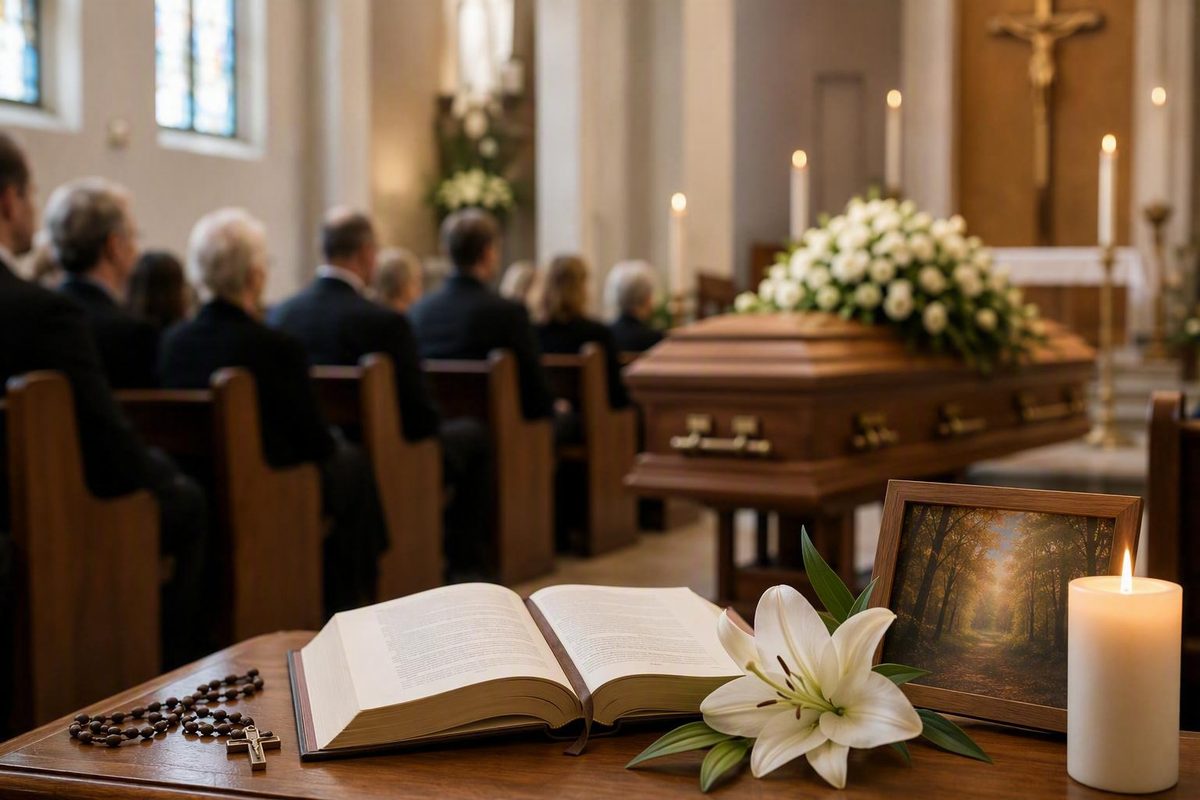
Catholic funeral Mass readings are chosen from the Church’s approved Scripture selections for Masses for the Dead. In a typical planning process, the family proposes a first reading, a responsorial psalm, a New Testament reading, and a Gospel; the parish or presider confirms the final selections and explains any local variation. During Easter Time, the first reading comes from designated New Testament passages rather than the usual Old Testament list.
The simplest way to choose is to identify the message the family most needs to hear—resurrection, trust, consolation, mercy, or Christian service—then read the complete passages and discuss a short list with the parish. A funeral Mass is an act of worship, not a biography of the person who died. The USCCB overview of Catholic funeral rites describes the funeral liturgy as the central celebration in which the Church commends the deceased to God’s mercy and seeks strength in the Paschal Mystery.
What readings are included in a Catholic funeral Mass?
The Liturgy of the Word generally follows this sequence:
- First reading: ordinarily selected from the approved Old Testament readings. During Easter Time, designated passages from Acts or Revelation are used instead. The USCCB first-reading list identifies the Easter-season options.
- Responsorial psalm: a psalm follows the first reading, with the assembly responding. The USCCB funeral psalm guidance says the psalms express grief, praise, trust, and hope and should be sung whenever possible.
- New Testament reading: a passage from an apostolic letter or Revelation may follow. Parish planning forms differ on whether this second reading is expected or optional, so confirm the local format. The USCCB New Testament list provides the approved references.
- Gospel: the Gospel is selected from the funeral Lectionary and proclaimed by a deacon or priest. The family may be invited to suggest a passage, but the celebrant confirms it. The USCCB Gospel list includes both full and short forms for some selections.
Some parishes describe this as “three readings” by counting the first reading, second reading, and Gospel, with the psalm treated separately. Others use one reading before the Gospel. This is why the parish’s current funeral-planning sheet is more useful than a generic online checklist.
Catholic funeral reading options by theme
The references below are a starting list, not a substitute for the parish’s Lectionary or planning booklet. Read each passage in full before choosing it.
First readings outside Easter Time
- Wisdom 3:1–9: confidence that the just remain in God’s care, even when death looks like defeat.
- Isaiah 25:6a, 7–9: God’s saving action and the promise that death will be overcome.
- Lamentations 3:17–26: honest sorrow joined to patience, mercy, and hope.
- Job 19:1, 23–27a: trust in a living redeemer in the midst of anguish.
- 2 Maccabees 12:43–46: prayer for the dead and hope in resurrection, expressed in a passage especially connected with Catholic teaching and practice.
First readings during Easter Time
The season changes the first-reading category, so do not simply carry over an Old Testament choice without asking the parish. Common Easter-time references include:
- Acts 10:34–43: the apostolic proclamation of Jesus’ ministry, death, resurrection, and forgiveness.
- Revelation 14:13: rest and blessedness for those who die in the Lord.
- Revelation 21:1–5a, 6b–7: the renewal of creation and an end to death and mourning.
New Testament readings
- Romans 6:3–9: baptism as participation in Christ’s death and the hope of living with him.
- Romans 8:31b–35, 37–39: assurance that suffering and death cannot separate the faithful from Christ’s love.
- 1 Corinthians 15:20–28: Christ’s resurrection as the beginning of the resurrection promised to others.
- 2 Corinthians 4:14–5:1: courage amid bodily decline and confidence in what is eternal.
- 1 Thessalonians 4:13–18: Christian grief shaped by hope rather than hopelessness.
- 1 John 3:1–2: the identity of believers as God’s children and the future not yet fully revealed.
Gospel readings
- John 11:17–27: Martha’s grief and the Christian confession of resurrection and life.
- John 14:1–6: comfort, trust, and the image of a place prepared with the Father.
- John 6:37–40: Christ’s welcome and the promise of resurrection on the last day.
- Matthew 11:25–30: rest for those carrying heavy burdens.
- Matthew 25:31–46: a demanding reflection on mercy, service, and final judgment.
- Luke 24:13–35: companions meeting the risen Christ through Scripture and the breaking of bread.
Five steps for choosing readings
1. Ask for the parish’s current planning materials
Begin with the parish where the funeral will be celebrated. Ask how many readings the liturgy will include, whether it is a Mass or a funeral liturgy outside Mass, which translation and short forms are used, and when selections are due. Customs can vary by parish, diocese, language, liturgical season, and the circumstances of the funeral.
2. Choose one central emphasis
Write down a short phrase such as “hope of resurrection,” “God’s presence in grief,” “rest after a long burden,” or “a life of mercy.” This keeps the selection focused on the faith proclaimed in the liturgy while still responding to the deceased, the family, and those attending. The General Instruction’s norms for Masses for the Dead specifically call for those pastoral considerations, including the needs of attendees who may not be practicing Catholics.
3. Read every candidate in context
Do not choose from a familiar one-line excerpt alone. Read the complete lection, including any short and long forms. A passage may contain lament, judgment, or unfamiliar imagery alongside its best-known words. Ask whether the whole reading can be heard clearly by this particular assembly.
4. Build a sequence, not three versions of the same idea
A balanced set can move from grief to promise and then to Christ’s words in the Gospel. For example, Lamentations 3 can acknowledge desolation, Romans 8 can offer assurance, and John 14 can close the sequence with trust. Repetition is not necessarily wrong, but distinct readings often give the homilist and assembly a fuller path through sorrow and hope.
5. Submit references for confirmation
Send the parish the exact book, chapter, verses, and desired long or short form. The presider has responsibility for the liturgy, and local staff can catch seasonal restrictions, translation differences, or a mismatch with the parish’s approved options. A parish example such as St. Jude’s funeral reading guide shows why the Gospel is a family request rather than an independent final decision.
Who reads at the funeral Mass?
Family members or friends may be invited to proclaim the readings before the Gospel if the parish considers them suitable and prepared. The General Instruction of the Roman Missal assigns the non-Gospel readings to the lector, the psalm to a psalmist or lector, and the Gospel to the deacon or, when needed, the priest. The celebrant or deacon also gives the homily; a funeral homily is distinct from a eulogy.
Ask potential readers whether they can speak slowly and clearly while grieving. Give them the parish’s approved text—not a different Bible translation or a page copied from an unverified website—and arrange a rehearsal at the ambo when possible. Confirm pronunciations, microphone placement, where to sit, and the cue to approach. It is entirely acceptable to use an experienced parish lector if relatives would rather participate in another way.
The responsorial psalm is fundamentally a sung response, not simply another family reading. Let the parish music minister decide whether a cantor or psalmist will lead it and which approved setting will be used.
Can a poem or favorite passage replace Scripture?
Usually, no. A poem, letter, song lyric, or non-biblical reflection does not replace a prescribed Scripture reading in the Liturgy of the Word. Sacred Heart Parish’s funeral reading guidance makes this distinction and advises that other Scripture suggestions be presented to the presider for approval.
A meaningful non-Scripture text may fit elsewhere—for example, at the vigil, reception, in a remembrance booklet, or at another moment approved by the parish. The USCCB overview notes that remembrances and eulogies are often encouraged during visitation or the vigil. Copyright also matters: use a title and author or obtain permission rather than copying a modern poem, song lyric, or protected Bible translation into a program.
Sample reading combinations to discuss with the parish
These combinations are conversation starters, not pre-approved sets for every date or community:
- Resurrection and baptism: Wisdom 3:1–9; Romans 6:3–9; John 11:17–27.
- Assurance in grief: Isaiah 25:6a, 7–9; Romans 8:31b–35, 37–39; John 14:1–6.
- Consolation after a difficult illness or long burden: Lamentations 3:17–26; 2 Corinthians 4:14–5:1; Matthew 11:25–30.
- A life remembered through mercy and service: Job 19:1, 23–27a; 1 John 3:1–2; Matthew 25:31–46.
- An Easter-time sequence: Acts 10:34–43; Romans 6:3–9; John 6:37–40.
Final checklist
Before sending selections to the parish, confirm:
- the celebration is a funeral Mass or a liturgy outside Mass;
- the date does not change the available first reading;
- every reference and short or long form is exact;
- the passages work together and suit the gathered community;
- the parish has approved the selections and the liturgical translation;
- lectors and the psalmist know their roles and have the approved text;
- poems, lyrics, and personal tributes are placed outside the Scripture readings.
Choosing Catholic funeral Mass readings is not about finding a perfect line that explains a person’s death. It is about hearing Scripture speak honestly to grief while proclaiming the Christian hope of resurrection. A short, thoughtful list—and an early conversation with the parish—usually makes that difficult decision more manageable.