
20 min read ·
How to Choose a Respectful Outfit for a Visitation
Without instructions, choose clean, modest business-casual clothes in a subdued color. Neat work clothes are preferable when changing is impractical.
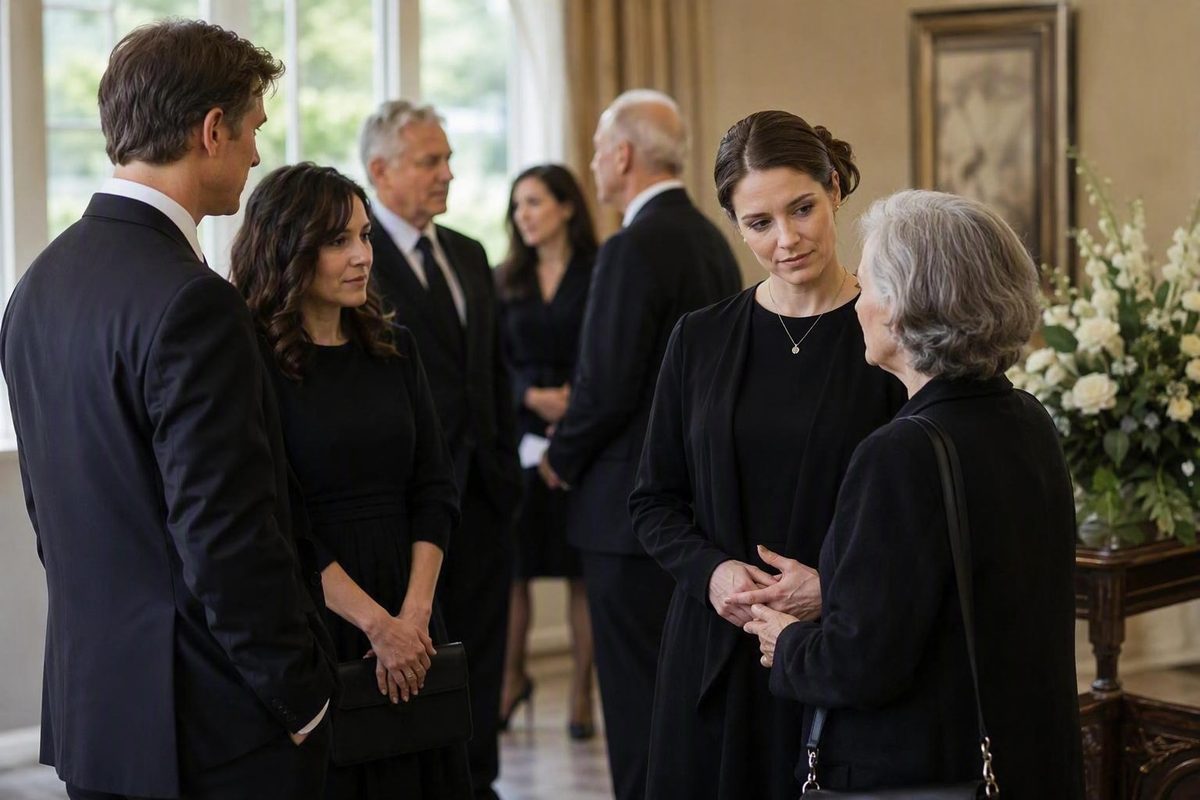
The quick answer: a safe outfit for most visitations
If you need to choose funeral visitation attire quickly, use this formula:
Wear clean, modest business-casual clothing in a subdued color with comfortable, presentable shoes.
That might mean:
- Dark trousers or chinos with a collared shirt, blouse, or simple knit top
- Dress pants or a modest skirt with a sweater or cardigan
- A simple, modest dress with an understated layer
- Charcoal or navy trousers with a neutral button-down shirt
- Clean, supportive shoes that look reasonably polished
The purpose is to appear respectful and understated—not to demonstrate wealth, fashion knowledge, or strict adherence to all-black mourning clothes. Funeral-home guidance commonly treats black as optional and recommends ordinary business or business-casual clothing for a visitation, especially when someone is attending after work (Homesteaders Life’s visitation attire guidance).
Visitations are often somewhat less formal than funeral services, but that is a tendency rather than a universal rule. A formal visitation in a house of worship may call for dressier clothing than an informal funeral or celebration of life. The event name alone does not determine the dress code.
Use this order of priority:
- Explicit family instructions. Follow any requested color, theme, uniform, or level of formality.
- Verified religious or cultural requirements. Confirm specific expectations rather than assuming broad customs apply to every family or congregation.
- Venue guidance and event formality. Consider whether the visitation is at a funeral home, house of worship, private home, workplace, community venue, or outdoor location.
- Weather, comfort, and accessibility. Account for standing, walking, outdoor conditions, supportive footwear, adaptive clothing, and mobility needs.
- General etiquette. When no more specific direction applies, choose something clean, modest, subdued, and presentable.
If you remain uncertain, select the cleaner, simpler, and slightly more formal of the outfits you already own. For example, choose plain navy trousers over faded jeans or a solid sweater over a graphic sweatshirt—provided the choice remains comfortable and practical for you.
There is normally no need to purchase special mourning clothes. A clean, restrained outfit assembled from ordinary wardrobe basics is usually enough. Your considerate presence matters more than achieving a perfect look.
How formal is a visitation compared with a funeral?
A visitation is a gathering where guests can offer condolences, support the bereaved, share memories, and pay respects. People may arrive at different times, wait to greet the family, and remain for different lengths of time. That format makes comfort and flexibility useful considerations.
Do not assume every event carrying one of these labels has the same structure or dress code.
In general, visitation attire falls somewhere between polished business casual and semi-formal. A structured funeral ceremony may feel somewhat dressier, particularly if it has a set program or takes place in a house of worship. Anthony Funeral Homes distinguishes modest visitation clothing from somewhat dressier funeral attire while emphasizing that family norms can range from highly formal to comfortable with jeans (guidance for visitations, funerals, and graveside services).
Labels are still only a starting point. A family may arrange a formal evening visitation, an informal gathering at home, a casual wake at a community hall, or a funeral that explicitly requests everyday clothes. Instructions and setting matter more than the event title.
A useful approach is to place the visitation in one of three categories.
Formal visitation
A formal visitation might call for:
- A navy, charcoal, or black suit
- A conservative dress
- Coordinated dress pants, blouse, and jacket
- A modest skirt with a polished top
- Dark trousers, a collared shirt, and an understated jacket
A tie can be appropriate, but it is not automatically required. The same is true of a blazer, heels, or an all-black outfit. Wear them when the venue, family, or surrounding ceremony supports a more formal approach.
Standard visitation
This is the safest category when no dress code has been given. Appropriate options include:
- Trousers or chinos with a collared shirt
- Dress pants with a blouse or fine-knit sweater
- A modest dress with a cardigan
- A skirt with a simple top
- Dark pants with a button-down and clean, understated shoes
In this context, business casual means polished and modest without necessarily wearing a suit, formal dress, tie, or heels.
Explicitly casual visitation
If the obituary says “casual dress,” the family requests everyday clothing, or the gathering clearly follows informal community norms, neat casual clothes may be appropriate. Options could include:
- Clean, dark jeans without distressing
- A plain polo, button-down shirt, sweater, or knit top
- Clean boots, supportive shoes, or understated sneakers
- Requested team apparel or clothing in a favorite color
“Casual” does not have to mean careless. Clothes can be comfortable and familiar while still being clean, in good repair, and appropriate for meeting a grieving family.
If one outfit must work for both the visitation and funeral, begin with a polished business-casual or semi-formal base. Dark trousers with a plain shirt, a simple dress, or coordinated separates can be dressed up with a cardigan, blazer, jacket, or restrained accessories. This avoids the need for two separate outfits while leaving room to adjust the formality.
Practical outfit formulas by level of formality
The easiest way to plan funeral visitation attire is to work from garments and formality rather than rigid gender categories. Choose the formula that best fits your wardrobe, comfort needs, and the event.
Standard business-casual formulas
For most visitations, try one of these combinations:
- Dark trousers + collared shirt + loafers or supportive dark shoes
- Chinos + fine-knit sweater + clean boots or dress shoes
- Dress pants + blouse + cardigan + flats
- Dark trousers + simple knit top + understated jacket
- Modest skirt + blouse or sweater + stable shoes
- Coordinated separates + plain outer layer + minimal accessories
Navy, charcoal, gray, deep brown, dark green, and muted neutrals are easy to combine. The pieces do not have to match perfectly. They simply need to look intentional, clean, and restrained.
Dress-based formula
A straightforward dress-based option is:
- A simple, modest dress
- A plain cardigan or understated jacket
- Stable flats, low heels, boots, or another supportive shoe
- Minimal, non-distracting accessories
The dress does not have to be black, expensive, or designed specifically for funerals. Avoid becoming preoccupied with exact hem lengths or hosiery rules. Consider whether the overall outfit is modest enough for the setting, comfortable to sit and stand in, and consistent with any family or venue instructions.
Skirt-based formula
Try:
- A modest skirt in a dark or muted color
- A blouse, knit top, sweater, or cardigan
- Comfortable, stable footwear
- A simple coat or jacket if needed
Before leaving, sit, walk, and reach in the outfit. This quick check can reveal whether a garment will be uncomfortable during movement or prolonged standing.
Gender-neutral formula
A flexible gender-neutral option is:
- Charcoal, navy, or dark brown trousers
- A neutral button-down shirt or fine-knit sweater
- A plain cardigan, overshirt, or jacket if desired
- Clean dark shoes
This formula works in many funeral homes, community spaces, workplaces, and less-formal houses of worship. Adjust it by adding or removing a jacket or choosing dressier or more practical footwear.
More-formal formulas
For a visitation with clearly formal expectations, consider:
- A navy, charcoal, or black suit with a neutral shirt
- A modest dark dress with an understated jacket
- Coordinated dress pants and a blazer
- A skirt suit or other matched separates
- Dark trousers, a collared shirt, and a restrained sport coat
A tie may complete a formal outfit, but it remains optional unless the instructions or setting suggest otherwise. Neither heels nor a dress are required simply because an event is formal.
Explicitly casual formulas
When casual clothing has been requested or clearly fits the family’s norms:
- Clean dark jeans + plain button-down shirt + neat shoes
- Undamaged jeans + solid sweater + clean boots
- Chinos + polo or knit top + practical shoes
- Requested team shirt + clean dark pants
- Favorite-color top + simple trousers or skirt
Avoid treating “casual” as permission to ignore the purpose of the gathering. A quiet, neat outfit is generally preferable to something dominated by slogans, conspicuous branding, or novelty details.
A limited-wardrobe formula
If you have few options, do not assume that you need to shop. Instead:
- Choose the cleanest clothes you own.
- Prefer pieces that fit comfortably and are in good repair.
- Select the least distracting combination.
- Cover or remove large graphics when reasonably possible.
- Remove flashy accessories that are not important to you.
- Add a plain sweater, cardigan, or jacket if it improves the outfit.
- Wear the shoes that best support your standing and walking needs.
Price, brand, and fashion currency are not useful measures of respect. Cleanliness, modesty, practicality, and attention to the family’s wishes matter more.
Do you have to wear black? A practical color guide
No. Black is not generally required for a funeral visitation. It is a traditional mourning color in many Western settings, but it is only one appropriate option.
Safe alternatives include:
- Navy
- Charcoal
- Medium or dark gray
- Deep brown
- Dark green
- Taupe
- Beige and other muted neutrals
The objective is not to enforce a fixed palette. It is to avoid drawing attention away from the family and the purpose of the gathering.
Guidance differs on how broad the acceptable color range may be. Anthony Funeral Homes says black is unnecessary for a visitation, while New Comer Funeral Home recommends dark or neutral, simple clothing. These positions can be reconciled: a broad range of colors may be suitable when the family has requested a celebratory tone or particular shade, while subdued colors remain the lower-risk default when no guidance is available (New Comer’s funeral and visitation clothing guidance).
A family request can appropriately override the conventional dark-color default. Examples include:
- The deceased’s favorite color
- A school or team color
- Team apparel
- A celebratory color theme
- A military uniform
- Faith-specific clothing
- A garment connected with a profession, hobby, or community
There is a difference between wearing a bright color because the family requested it and choosing an unrequested neon outfit mainly to attract notice. The first supports the family’s plans; the second may shift attention toward the wearer.
Simple patterns can also be appropriate. A subtle stripe, small check, muted floral, or low-contrast print is not automatically unsuitable. Evaluate the overall effect rather than assuming all prints are forbidden.
Mortuary Guide’s related article, “Do You Have to Wear Black to a Funeral?”, offers a fuller discussion of color at funeral services. Funeral and visitation expectations are not necessarily identical, but family, culture, faith, venue, and weather can inform both decisions.
Jeans, work clothes, and other borderline choices
Can you wear jeans?
Sometimes—but not in every setting.
Funeral-home recommendations differ on denim. Homesteaders Life discourages jeans unless casual attire has been requested, while Anthony Funeral Homes notes that some families are comfortable with jeans. New Comer Funeral Home also includes nice jeans among the potentially acceptable options for a funeral or visitation. The variation reflects the absence of a universal visitation dress code.
Clean, dark, undamaged jeans may be reasonable when:
- The invitation or obituary says the event is casual
- The family has requested everyday clothing
- You know the family’s norms support jeans
- The gathering is at an informal venue
- Jeans are the cleanest, most presentable option available
- Work, travel, financial, or practical circumstances limit your alternatives
There is a meaningful difference between neat dark jeans and denim that is ripped, faded, stained, heavily embellished, or deliberately distressed. If you have a reasonable alternative, the unadorned pair is usually the safer choice.
When expectations are unknown, trousers, chinos, or another business-casual pant remain more dependable. They are easier to adapt to either a standard or slightly formal visitation.
Can you arrive directly from work?
Yes. Clean, subdued work clothes are generally preferable to missing the visitation solely because changing is impractical. Your attendance supports the family; clothing should not become a barrier when time or circumstances make another outfit unavailable.
If you have a few minutes, use this rapid adjustment checklist:
- Remove a high-visibility vest, badge, or conspicuous branded layer if it is not required.
- Brush off visible dust or debris.
- Straighten the clothing if doing so improves its appearance and comfort.
- Remove flashy accessories when feasible.
- Add a plain cardigan, sweater, blazer, or dark jacket if one is available.
- Change the most conspicuous or soiled item rather than rebuilding the entire outfit.
- Check whether your footwear suits the venue and any outdoor portion.
Uniforms and necessary workwear should not be treated as inherently disrespectful. Medical uniforms, trade clothing, public-safety uniforms, military uniforms, and other professional garments may be the only practical choice. A uniform may also have personal or ceremonial meaning.
If workwear is heavily soiled, hazardous, or likely to disrupt the setting, change or clean what you reasonably can. The standard should be practical consideration, not embarrassment about the type or cost of your clothes.
What if your only options are casual?
Choose the outfit that is:
- Cleanest
- In the best repair
- Most modest
- Least graphic or attention-grabbing
- Most comfortable for standing
- Most suitable for the weather
A plain T-shirt under a cardigan may be more appropriate than a stained dress shirt. Clean supportive sneakers may be a better practical choice than badly damaged formal shoes. Context and the complete outfit matter more than a single garment category.
Shoes, layers, weather, and practical comfort
Visitation guests may stand in line, move through several rooms, or remain on their feet longer than expected. Comfortable, stable footwear is therefore a practical part of the outfit. Anthony Funeral Homes specifically recommends comfortable shoes because attendance may involve waiting in line (practical visitation footwear advice).
Possible choices include:
- Loafers
- Flats
- Low or block heels
- Understated dress shoes
- Supportive dark shoes
- Clean practical boots
- Simple sneakers when appropriate to the setting or needed for comfort
- Medical or orthopedic footwear
A useful default is footwear that is clean, reasonably quiet, stable, and comfortable. This is not a universal ban on sneakers, sandals, boots, or other categories. Climate, venue, family instructions, and individual needs all matter.
As inclusive practical guidance, supportive shoes, medical footwear, braces, mobility equipment, adaptive clothing, and other necessary accommodations should take priority over optional style preferences. Use what allows you to attend comfortably and participate in the gathering.
Bring a simple layer
Indoor temperatures can be unpredictable, so consider bringing:
- A plain sweater
- A cardigan
- A blazer
- An understated jacket
- A wrap or another comfortable layer
A layer can also help someone arriving from work make an outfit feel more subdued. It does not have to match perfectly or be formal.
Dressing for warm weather
In hot conditions, favor:
- Breathable fabrics
- Lightweight trousers or chinos
- A simple knit top or collared shirt
- A modest, breathable dress
- A lightweight skirt and blouse
- Stable shoes suitable for walking
You can remain polished without wearing heavy fabrics or several formal layers.
Dressing for rain, cold, or snow
Practical outerwear is appropriate when conditions require it. Consider:
- A weather-resistant coat
- Warm but removable layers
- Gloves or a scarf
- An umbrella
- Boots with useful traction
- An extra pair of indoor shoes, if convenient
Your coat does not need to be black. A clean, functional coat in a reasonably subdued color is usually preferable to outerwear that does not suit the weather.
If a graveside service may follow
Plan for:
- Grass
- Mud
- Gravel
- Uneven terrain
- Wind
- Rain or snow
- Prolonged outdoor standing
- The distance between parking and the grave
Narrow heels or delicate shoes may be impractical on grass or uneven cemetery ground; Anthony Funeral Homes specifically advises considering terrain and avoiding slim heels in those conditions. Practical boots, flats, loafers, low heels, or supportive shoes may work better, but no single shoe type is mandatory.
Consider scent restraint
In a crowded indoor space, restrained use of perfume or cologne can be a courtesy. New Comer Funeral Home presents avoiding fragrance as a consideration because scented products may affect some attendees, rather than as a universal rule (guidance on simple clothing and fragrance).
What to reconsider—and the exceptions that matter
The following table offers practical guidance, not a binding dress code. Individual circumstances and explicit family instructions can change what is appropriate.
| Usually a safe choice | Reconsider when reasonable alternatives are available |
|---|---|
| Clean trousers or chinos | Torn, stained, or heavily distressed garments |
| A collared shirt, blouse, or simple knit top | Conspicuous slogans or large graphics |
| A modest dress or skirt | Clubwear or highly revealing clothing |
| A plain sweater, cardigan, or jacket | Neon colors chosen mainly to attract notice |
| Clean, dark jeans at an explicitly casual event | Faded, ripped, embellished, or dirty jeans |
| Stable, comfortable shoes | Flip-flops or impractical shoes where more polish is expected |
| Weather-appropriate boots | Delicate shoes unsuitable for the expected terrain |
| Requested colors, themes, or team apparel | Unrequested novelty clothing |
| Restrained accessories | Noisy or attention-grabbing accessories |
| Neat casual clothes approved by the family | Shorts or athletic wear when more suitable options are readily available |
The principle is simple: the outfit should not intentionally shift attention toward the wearer. That does not mean casual clothing is morally disrespectful, and no one should be shamed for having limited options. Ordinary, inexpensive, adaptive, work-related, or well-worn clothing can still be presented with care.
Family instructions come first
Follow the family’s request if it calls for:
- Casual clothes
- Bright colors
- A favorite or team color
- Team apparel
- A themed shirt
- A professional or service uniform
- Another item associated with the deceased
A requested bright shirt is not an etiquette mistake merely because a general guide prefers dark colors. The family’s intentions provide the relevant context.
Verify religious and cultural expectations
Verified religious, cultural, and military customs take priority over generic Western etiquette. Depending on the family and tradition, expectations may involve particular colors, degrees of modesty, head coverings, uniforms, or ceremonial garments.
Broad online summaries cannot establish what every religion, denomination, cultural group, congregation, or family expects. If a specific requirement may apply, verify it with:
- The family
- The event organizer
- The funeral home
- The house of worship
- A member of the relevant faith community
- The obituary or invitation
A tactful question is better than guessing based on stereotypes.
Practical needs are not violations
As a matter of inclusive practical guidance, necessary medical garments, adaptive clothing, supportive footwear, uniforms, and mobility aids should not be treated as etiquette failures. The same principle can be applied when choosing clothing around pregnancy, injury, sensory comfort, temperature needs, disability, or caregiving responsibilities.
General recommendations should bend to human needs. If a garment or device helps you attend and participate, use it.
Behavior communicates respect more directly than clothing alone. Listening, offering brief and sincere condolences, following the family’s lead, and avoiding unnecessary disruption matter more than whether your trousers are the ideal shade of charcoal.
A final decision checklist when the dress code is unclear
Use this decision tree before getting dressed.
1. Read the obituary, invitation, or event page
Look for:
- “Casual attire”
- “Wear bright colors”
- A favorite or team color
- Team apparel
- A theme
- A military or professional uniform request
- Guidance from a faith community
- A request to avoid a particular color
- Information about an outdoor or graveside portion
Do not replace explicit instructions with generic etiquette. If the family asks for yellow, wear yellow if you can. If it asks for casual clothes, you do not need to arrive in formal mourning wear.
2. Consider the venue
A visitation at a house of worship may have different expectations from one held at:
- A funeral home
- A private residence
- A workplace
- A community center
- A social club
- An outdoor location
- A sports venue
Consider both formality and practical requirements. A house of worship may have local modesty expectations, while a home or outdoor gathering may favor less formal clothing.
3. Determine what follows
Ask whether you will also attend:
- A formal funeral ceremony
- A religious service
- A procession
- A graveside committal
- A reception
- Another visitation session
If your outfit must cover several events, choose a polished business-casual or semi-formal base. Bring a layer that can make it dressier, and select footwear for the least predictable part of the day.
4. Check weather and accessibility
Consider:
- Indoor and outdoor temperatures
- Rain, snow, heat, or wind
- Grass and uneven ground
- Time spent standing
- Walking distance
- Seating availability
- Mobility and medical needs
- Sensory comfort
- Whether garments are easy to manage throughout the visit
These considerations help you remain comfortable and focus on supporting the family.
5. Apply the default
If no special instructions apply, wear:
- Clean, modest business-casual clothing
- A subdued color
- Comfortable, presentable shoes
- A simple weather-appropriate layer
When choosing between two outfits, pick the cleaner, simpler, and slightly more formal one—unless the other is substantially more comfortable or better suited to your needs.
6. Ask without burdening the family
When possible, contact the funeral home or event organizer before asking an immediately bereaved family member. Homesteaders Life recommends checking with the hosting funeral home when the family’s preferences are uncertain (advice on confirming visitation attire).
Use this script:
“Has the family requested a particular color, theme, or level of formality for the visitation?”
It is specific, easy to answer, and does not ask someone else to plan your entire outfit.
7. Do a final mirror check
Ask:
- Is everything clean and in good repair?
- Is the outfit modest enough for this setting?
- Can I stand, sit, and walk comfortably?
- Are the shoes stable and practical?
- Does the outfit work for the weather?
- Have I removed unnecessary attention-grabbing details?
- Does it follow the family’s stated wishes?
- Do I have an appropriate layer if the room is cold?
- Will the outfit work if I need to go outside?
Then stop adjusting. An outfit that passes this check is likely sufficient.
Before entering, silence your phone. Keep condolences brief and sincere, and allow others space to greet the family. Stuhr Funeral Home’s etiquette guidance emphasizes supportive presence rather than finding perfect words or turning the gathering into an extended social conversation (visitation etiquette guidance).
These recommendations are flexible etiquette guidance, not a universal or enforceable dress code. Families, communities, venues, faiths, weather conditions, and individual needs differ.
Frequently asked questions about funeral visitation attire
Do I have to wear black to a funeral visitation?
No. Black is traditional in many Western settings, but it is generally not required for a visitation. Navy, charcoal, gray, deep brown, dark green, and muted neutral colors are practical alternatives.
Follow any family request first. A favorite color, team color, celebratory theme, uniform, or verified faith-specific garment can be more appropriate than conventional black. If no instructions are available, subdued colors are the safest default.
Can I wear clean, dark jeans to a visitation?
Clean, dark, undamaged jeans can be appropriate when the family requests casual clothing, you know the family’s norms support denim, or the venue is clearly informal.
When expectations are unknown, trousers or chinos are safer. Jeans are neither universally acceptable nor universally disrespectful; their condition and the event context matter.
Is a suit, tie, or dress required for a funeral visitation?
Usually not. A standard visitation often calls for business-casual or semi-formal clothing rather than full formalwear.
A suit, tie, or conservative dress may suit a formal visitation, but other polished combinations work well: trousers with a collared shirt, dress pants with a blouse, a skirt with a sweater, or a simple knit top with a cardigan. Follow the family’s instructions and the setting rather than treating one garment as mandatory.
Can I attend a visitation in my work clothes if I cannot change?
Yes. Neat work clothes are generally preferable to missing the visitation because changing is impractical.
If possible, remove conspicuous branded or flashy items, tidy the outfit, and add a plain sweater, cardigan, or dark jacket. Uniforms and necessary workwear are not inherently disrespectful. If your clothes are heavily soiled or hazardous, clean or change what you reasonably can.
Who should I ask if the visitation dress code is unclear?
First check the obituary, invitation, memorial page, or message from the organizer. If no guidance appears, contact the funeral home or event organizer before asking an immediately bereaved family member.
Ask: “Has the family requested a particular color, theme, or level of formality for the visitation?” If no answer is available, choose the cleanest, simplest business-casual outfit you own in a subdued color, with comfortable shoes and a weather-appropriate layer.
The compact rule is: follow family instructions and verified faith-specific requests first; otherwise, wear clean, simple business-casual clothing in a subdued color, add comfortable shoes and practical layers, and avoid details designed to attract attention. A sincere, considerate presence matters more than wearing black or owning formal mourning clothes.