
17 min read ·
Dressing Respectfully for a Celebration of Life: Flexible Guidelines Beyond Funeral Black
Black is not always mandatory. Family wishes, culture, venue and weather often matter more than a blanket rule.
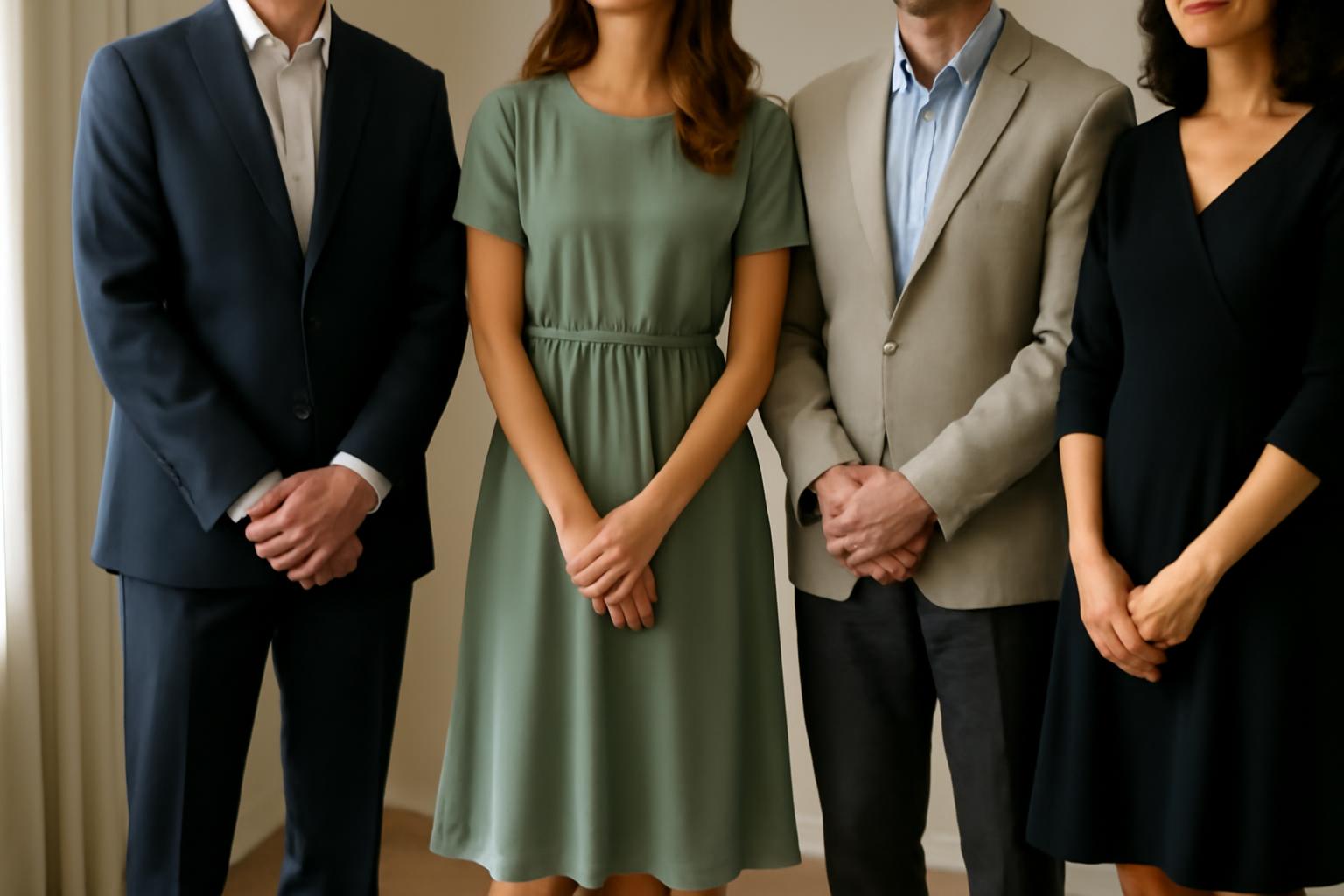
A celebration of life dress code is usually more flexible than funeral attire, but that flexibility can make getting dressed feel harder, not easier. When you are grieving, the last thing you need is to second-guess whether your outfit will seem too formal, too casual, too dark, or too cheerful.
The clearest rule is also the simplest: follow the family’s guidance first. If the invitation, obituary, host, or organizer requests certain colors, a theme, or a casual style, that instruction matters more than any general etiquette article.
When there is no guidance, a practical fallback works in most settings: smart casual to semi-formal clothing in muted or neutral colors, chosen for respect, comfort, and the venue. Think polished rather than stiff, thoughtful rather than flashy.
A useful way to decide is:
- Family request
- Cultural or religious expectations
- Venue and planned activities
- Weather and terrain
- Conservative smart-casual default if you still are not sure
That approach helps you focus on why you are there: to support the living and honor the person being remembered.
Celebration of Life vs. Traditional Funeral Attire
A traditional funeral usually carries clearer expectations: darker colors, more formal clothing, and a more somber tone. A celebration of life often shifts the emphasis toward the person’s personality, memories, interests, and the joy they brought to others. That change in tone is why the dress code is usually looser.
In practice, that means a celebration of life often allows:
- softer colors instead of strict black
- smart casual instead of full formalwear
- small personal touches that reflect the honoree
- venue-based flexibility, such as restaurant, park, beach, backyard, or community hall attire
By contrast, funeral attire is more often associated with dark suits, conservative dresses, and a visibly subdued look.
Still, “less formal” does not mean “anything goes.” Most guidance lands in roughly the same place: a celebration of life is usually respectful, tidy, and a little relaxed, not sloppy or attention-seeking. A blazer may replace a full suit. A midi dress or blouse and slacks may replace a classic black funeral dress. A collared shirt may be enough where a tie once felt expected.
Black is still acceptable. It is simply not required. That matters because many people worry they must either wear black or deliberately avoid it. Neither is universally true. In fact, even broader funeral-attire guidance increasingly recognizes that black is not always mandatory; family wishes, culture, venue, and weather often matter more than a blanket rule.
The biggest difference, then, is not one exact outfit. It is the mindset:
- Funeral: more formal, more traditional, more visibly mournful
- Celebration of life: more personalized, more flexible, often more uplifting in tone
If you remember only one point from this section, let it be this: a celebration of life usually invites more freedom than a funeral, but respect still sets the boundaries.
Step 1: Check the Invitation and Family Guidance
Before choosing colors, shoes, or formality, check the invitation, obituary, memorial website, text thread, or event listing. If the family has said anything about attire, that instruction overrides general advice.
Common requests include:
- “Please wear bright colors”
- “Casual attire welcome”
- “Wear his favorite team’s jersey”
- “Beach attire”
- “No black, please”
- “Garden party colors”
- “Please dress as she would have loved to see you”
Those requests are not side notes. They are the dress code.
This matters because celebration of life events vary widely. One family may want muted business-casual clothing in a church hall. Another may want floral prints at a botanical garden. Another may ask guests to wear baseball caps or a school color in tribute. The event may be deeply traditional, gently relaxed, or highly personal.
If the guidance is unclear, it is appropriate to ask. A short, polite question is considerate, not intrusive. For example:
“I wanted to check whether the family has a preferred color or level of formality for the celebration.”
Or:
“Would it be more appropriate to dress church-polished, or is smart casual okay?”
If you are not close to the family, ask the organizer, host, or a mutual friend rather than burdening an immediate family member during an especially busy moment.
When you ask, keep the question narrow. Do not make the family solve your whole outfit. Ask for one practical point of clarification:
- color
- formality
- shoes for the venue
- whether the theme is literal or subtle
If no guidance is given at all, fall back to conservative smart casual. That is safer than assuming the “celebration” in the name means fully casual or festive.
A good default in the absence of instructions is:
- muted or neutral colors
- clean, presentable clothing
- comfortable but polished shoes
- no ripped, loud, or athletic items
- layers if weather or venue may shift
The simplest mistake to avoid is ignoring a stated theme because it feels unfamiliar. If the family requests color, casual wear, or a specific tribute item, following that request is usually the most respectful thing you can do.
General Dress Code: Smart Casual Default
If there is no stated celebration of life dress code, smart casual to semi-formal is the safest range.
That phrase can feel vague, so here is what it usually means in real life: clothing that is neat, intentional, and respectful, without requiring full funeral formality.
Think of the outfit you might wear to:
- a nice lunch or dinner
- a respectful workplace event
- a non-black-tie religious or family gathering
Not jeans and sneakers by default. Not eveningwear. Not gym clothes. Not an outfit that demands attention.
A smart-casual default works because celebrations of life often involve standing, walking, hugging, talking, and lingering. You may move between a service, a reception, outdoor space, slideshow, meal, or memory-sharing gathering. Clothing that is both polished and comfortable is usually the best fit.
A few practical principles help:
- Choose clean, well-maintained pieces. Wrinkled or visibly worn clothing can read as careless even if the event is casual.
- Aim for intention, not perfection. You do not need a new outfit. You do need one that looks chosen with care.
- Respect beats trendiness. This is not the moment for statement fashion.
- Comfort matters. If you will be adjusting, tugging, or limping, your attention leaves the purpose of the event.
- Slightly overdressed is usually safer than underdressed. A blazer you take off is easier to manage than wishing you had worn one.
Relationship can shape how polished you go. If you were very close to the person, part of the immediate circle, or expect to be visible in photos or speaking, dressing a notch more polished is often sensible. But even then, the invitation and venue matter more than old funeral rules.
If you truly cannot read the room, a simple smart-casual formula works well:
- collared shirt or polished blouse
- slacks, chinos, or modest skirt
- simple dress or jumpsuit
- loafers, flats, low heels, or dress shoes
- optional cardigan, blazer, or sweater
The broader consensus across memorial etiquette guidance is reassuring on one point: your presence and support matter more than getting every detail exactly right. That does not mean attire is irrelevant. It means the goal is respectful appropriateness, not outfit perfection.
Recommended Colors and What to Avoid
For most celebration of life events, the safest colors are muted neutrals, earth tones, and soft pastels.
Good default options include:
- navy
- gray
- charcoal
- taupe
- beige
- brown
- forest green
- muted burgundy
- dusty lavender
- muted blue
These shades feel calm and respectful without forcing a fully mournful look.
Black is also fine. It remains a common and acceptable choice for memorial events. The nuance is that it is optional, not mandatory. If black makes you feel appropriately dressed and less anxious, wear it. If the event seems lighter in tone and you prefer navy, gray, soft green, or taupe, that is often equally appropriate.
Brighter colors are where judgment matters most. They can be right when:
- the family specifically asks for color
- the honoree loved a particular color
- the event is clearly themed
- the venue and tone support a more expressive look
They are less safe when you are simply guessing.
That is why a restrained palette is the best default. You can still honor the person without becoming the visual center of the room.
As a general rule, avoid:
- neon or fluorescent colors
- very bold, loud prints
- distracting graphics
- large logos
- flashy sequins or clubwear styling
- all-white outfits unless specifically requested
All-white deserves its own note. Some guidance warns against it unless the family asks for it, while some cultural or religious traditions may use white as a mourning color. So white is not universally wrong, but it is not a universal default either. If you are considering an all-white look, it is wise to have a clear reason for it.
Subtle patterns can work. Examples include:
- a muted floral
- a fine stripe
- a quiet geometric print
- a soft plaid or textured fabric
The test is simple: if someone would notice your pattern before they notice your presence, it is probably too much.
Tasteful personal touches can also work, especially when they connect to the person being honored. Examples might include:
- a tie in their favorite color
- a scarf with a soft floral motif for a gardener
- understated jewelry with symbolic meaning
- a pocket square or pin that nods to a hobby or school color
The safest version of personal expression is subtle tribute, not costume.
Outfit Ideas for Men
For men, the most reliable celebration of life dress code formula is:
dress slacks or chinos + collared shirt + polished shoes
That combination works for many venues and can easily be adjusted up or down.
Safe outfit choices include:
- navy or charcoal slacks with a button-down shirt
- chinos with a collared shirt or polished polo
- loafers, oxfords, or other simple dress shoes
- a blazer if the venue is formal or you want a more polished look
- a sweater layered over a collared shirt for a quieter indoor gathering or cool weather
A tie is usually optional unless:
- the invitation suggests formal attire
- the service is in a church or similarly formal venue
- you are part of the immediate family or speaking
- you know the family prefers a more traditional tone
A full suit can be a strong choice for formal indoor venues such as a place of worship, banquet room, funeral home chapel, or structured memorial program. In those settings, a dark or muted suit in charcoal, navy, or gray fits well even without a tie.
For more relaxed settings, such as a restaurant, backyard, or community room, you can often step down to smart casual:
- khakis or chinos
- collared polo or button-down
- sweater or casual blazer
- loafers or clean leather shoes
For outdoor events, practical details matter:
- breathable fabrics in warm weather
- a light jacket or extra layer if temperatures may drop
- shoes that can handle grass, gravel, or uneven ground
- sun protection if appropriate
What to avoid for men in most cases:
- t-shirts
- athletic shoes
- hoodies
- shorts
- distressed or ripped denim
- graphic prints
- bold logos
- baseball caps indoors unless specifically part of the tribute
Jeans are a gray area. Some guidance allows dark, clean jeans for very casual celebrations, but the safer rule is to avoid them unless the family clearly signals a casual dress code. If jeans are acceptable, choose dark, non-distressed denim and pair it with a collared shirt and polished shoes.
Three easy examples:
Most situations: Charcoal chinos, light blue button-down, brown loafers
More formal indoor service: Navy suit, white or muted shirt, no tie or simple tie, dress shoes
Casual outdoor gathering: Khakis, muted polo, lightweight sweater or blazer, practical leather shoes
The goal is not to look stern. It is to look thoughtful and put-together.
Outfit Ideas for Women
For women, the safest choices usually fall into three categories:
- a knee-length or midi dress
- a blouse with slacks or a modest skirt
- a simple jumpsuit with a cardigan or blazer
Muted tones, soft colors, and understated styling are usually the easiest way to strike the right balance between warmth and respect.
Reliable outfit options include:
- a midi dress in navy, gray, taupe, muted floral, or soft blue
- tailored trousers with a blouse and structured cardigan or blazer
- a modest skirt with a knit top
- a jumpsuit in a subdued color with simple flats or low heels
- loafers, flats, pumps, or other comfortable polished shoes
Coverage matters more than strict formality. Most guidance leans toward modest necklines, hemlines around the knee or midi length, and silhouettes that do not feel overly revealing. That does not mean old-fashioned or severe. It just means your outfit should not pull focus.
Helpful details:
- layers are useful for changing weather, air-conditioning, or religious venues
- a cardigan or blazer can make a simple dress feel more polished
- closed-toe shoes are often easiest, but tasteful open-toe shoes may work in less formal warm-weather settings
- pantyhose are optional, not a universal requirement
Accessories should stay understated. A small necklace, simple earrings, a scarf, or a bracelet can be enough. Personal tribute items can also be appropriate if done gently, such as a brooch, scarf color, or piece of jewelry that reminds you of the deceased.
Makeup and fragrance deserve a quick mention. Most etiquette guidance leans toward minimal fragrance and understated makeup, especially because attendees may be in close quarters, emotional, or sensitive to strong scents.
What to avoid for women in most settings:
- very low-cut or very short garments
- bodycon or nightlife styling
- extremely high heels if the terrain is uncertain
- neon or glitter-heavy looks
- oversized bold patterns
- distressed denim
- graphic tops
- athletic wear
Versatile combinations that usually work:
Simple and polished: Navy midi dress, cardigan, flats
Tailored and comfortable: Charcoal trousers, soft blouse, low heels or loafers
Indoor-outdoor adaptable: Muted jumpsuit, light blazer, flats, small jewelry
If you do not dress within traditional women’s categories, the same principles still apply: choose polished, comfortable clothes with modest coverage, subdued color, and venue-appropriate shoes.
Attire for Children and Venue-Specific Tips
Children usually have a little more flexibility than adults, but the safest approach is still clean, comfortable, presentable clothing.
Good choices for children include:
- collared shirts
- simple dresses
- neat pants or chinos
- cardigans or sweaters
- comfortable, practical shoes
- layers for changing weather
Subdued tones are usually easiest unless the family has requested a brighter color or theme. Avoid loud graphics, slogans, or clothes that feel more like playwear, sports practice, or sleepwear.
The goal is not to make children look formal at all costs. It is to help them look tidy and respectful while staying comfortable enough to participate calmly.
Venue can change the dress code more than the event title does.
Church or religious venue: Lean more polished and conservative. This may mean fuller coverage, quieter colors, and more traditional shoes.
Funeral home, chapel, banquet hall, or formal indoor setting: Smart casual to semi-formal is usually appropriate. Structured layers, dress shoes, and muted colors fit well.
Restaurant, private home, backyard, or community room: Tidy smart casual is often enough. You can usually relax the formality slightly without looking careless.
Outdoor park, garden, graveside, or beach setting: Breathable fabrics, weather planning, and practical footwear become essential. Grass, sand, gravel, and uneven ground can make delicate shoes a bad choice. Flip-flops are usually best avoided unless the family has clearly set a beach or similar theme.
Weather deserves real attention because memorials often include standing outdoors, walking between locations, or gathering before and after the main service.
For warm weather:
- choose breathable fabrics
- avoid heavy layers
- bring sunglasses only if appropriate and remove them during key moments
- think about sun exposure
For cool weather:
- bring a jacket, wrap, or sweater
- wear layers you can keep on without looking too casual
- choose shoes that work if the ground is wet
Cultural and religious customs can also change what is appropriate. In some traditions, white rather than black may be associated with mourning. Some faith settings may expect head coverings, shoulder coverage, or generally more modest clothing. Because there is no global rule, it is best to research the custom if you know the service will reflect a specific faith or culture.
When cultural expectations and general celebration-of-life advice seem to conflict, defer to:
- the family
- the faith or cultural setting
- the venue
That matters more than generic internet advice.
Themed Events, Accessories, and Common Mistakes
Themed celebrations of life are common enough that they deserve separate thought. A family may ask guests to wear:
- a favorite color
- floral prints
- beach attire
- sports team apparel
- military-formal clothing
- something connected to a hobby, club, or profession
The safest way to interpret a theme is literally enough to honor it, but not so aggressively that you look like you are in costume—unless the family clearly wants that.
For example:
- If asked to wear a team jersey, wear the jersey cleanly with dark pants and simple shoes.
- If the event has a garden or floral theme, a subdued floral tie, scarf, or dress can be appropriate.
- If the person loved the beach, light fabrics and relaxed but tidy pieces may fit better than standard funeral black.
- If the theme is unclear, ask whether the family means “subtle nod” or “go all in.”
Accessories should usually stay understated. That includes:
- jewelry
- scarves
- pocket squares
- handbags
- belts
- hats
Tasteful hats can be fine outdoors, especially for sun or weather, but hats are less common indoors unless culture, religion, or the theme makes them appropriate.
Advice on tattoos and piercings is inconsistent. A practical middle ground is this: use discretion based on the family, venue, and formality. In a conservative religious setting, toning things down may be wise. In a casual backyard memorial, it may matter far less. There is no universal rule that everyone must cover tattoos or remove piercings, but it is reasonable to consider whether your presentation could distract in that particular setting.
Common mistakes to avoid include:
- ripped jeans
- shorts
- graphic tees
- gym clothes
- leggings used as pants in a casual way
- flip-flops outside of a clearly beach-themed event
- very loud logos
- neon colors
- strong perfume or cologne
- overly glamorous or revealing styling
- dressing so casually that it reads as indifference
Another common mistake is confusing “celebration” with “party.” A celebration of life may include laughter, favorite songs, or bright flowers, but it is still a memorial gathering. The best outfits acknowledge both sides of the event: warmth and grief, personality and respect.
If you are torn between two outfits, choose the one that is:
- cleaner
- quieter
- more comfortable
- easier for the venue
- slightly more polished
That choice is rarely wrong.
Is black required for a celebration of life?
No. Black is generally acceptable, but it is not required.
Many celebration of life dress code guides treat black as a safe option because it is respectful and familiar. The difference from a traditional funeral is that you often have more flexibility to wear navy, gray, taupe, earth tones, or soft pastels instead.
The exception is when the family requests something specific, such as bright colors, a favorite color, or even no black. In that case, follow the family’s request over generic etiquette.
Can I wear jeans to a celebration of life?
Usually, jeans are best avoided unless the event is clearly casual or the family indicates they are fine.
This is one of the more disputed areas of memorial attire. Some guidance allows dark jeans for relaxed celebrations, especially outdoors or in private homes. But the more cautious rule is to skip them unless you have a reason to believe they fit the event.
If jeans are acceptable, choose:
- dark wash
- no rips or distressing
- no sagging or oversized fit
- a collared shirt, blouse, blazer, or other polished top
- shoes that look intentional, not athletic
What if the event is outdoors or themed?
Let the setting and request shape your outfit.
For outdoor events, prioritize breathable fabrics, layers, and shoes that work for grass, sand, gravel, or uneven ground. A perfectly formal shoe that sinks into a lawn is not more respectful than a polished practical one.
For themed events, follow the invitation. If the family asks for favorite colors, sports gear, floral attire, or beachwear, honor that request. If you are unsure how literal to be, a subtle nod is safer than turning up in costume unless the family clearly encourages that level of participation.
Are there cultural differences in attire?
Yes. Cultural and religious customs can change expectations around color, modesty, head coverings, and formality.
For example, some traditions associate white with mourning rather than black. Some religious settings may expect more conservative coverage. Others may welcome brighter colors for a life-centered memorial.
Because there is no universal rule across cultures and faiths, it is wise to check the invitation, ask the organizer, or research the custom if the service reflects a tradition you do not know well. When in doubt, defer to the family and the setting.
What matters most if I’m unsure about my outfit?
What matters most is showing up with care, support, and respect.
Practically, if you are unsure, wear something slightly more conservative and polished rather than too casual. Smart casual in muted tones is a dependable fallback for many celebrations of life.
And emotionally, remember this: your outfit matters far less than your presence. The point is not to get memorial fashion exactly right. It is to be there for the people who are grieving and to honor the person being remembered.
If you have no guidance at all, choose smart casual in muted tones, keep accessories understated, and dress for the venue and weather. That will fit most celebration of life dress code situations well.
Above all, check family guidance first, then adapt to culture, venue, and theme. Your presence honors the deceased more than any single outfit choice. This is general information, not professional advice; if expectations seem unclear or sensitive, ask the family or a funeral director, since customs vary by location and community.