
17 min read ·
How to Choose a Respectful Outfit Without Overthinking It
A requested sports jersey, Hawaiian shirt, bright color or personal item overrides the usual advice to avoid attention-catching clothing.
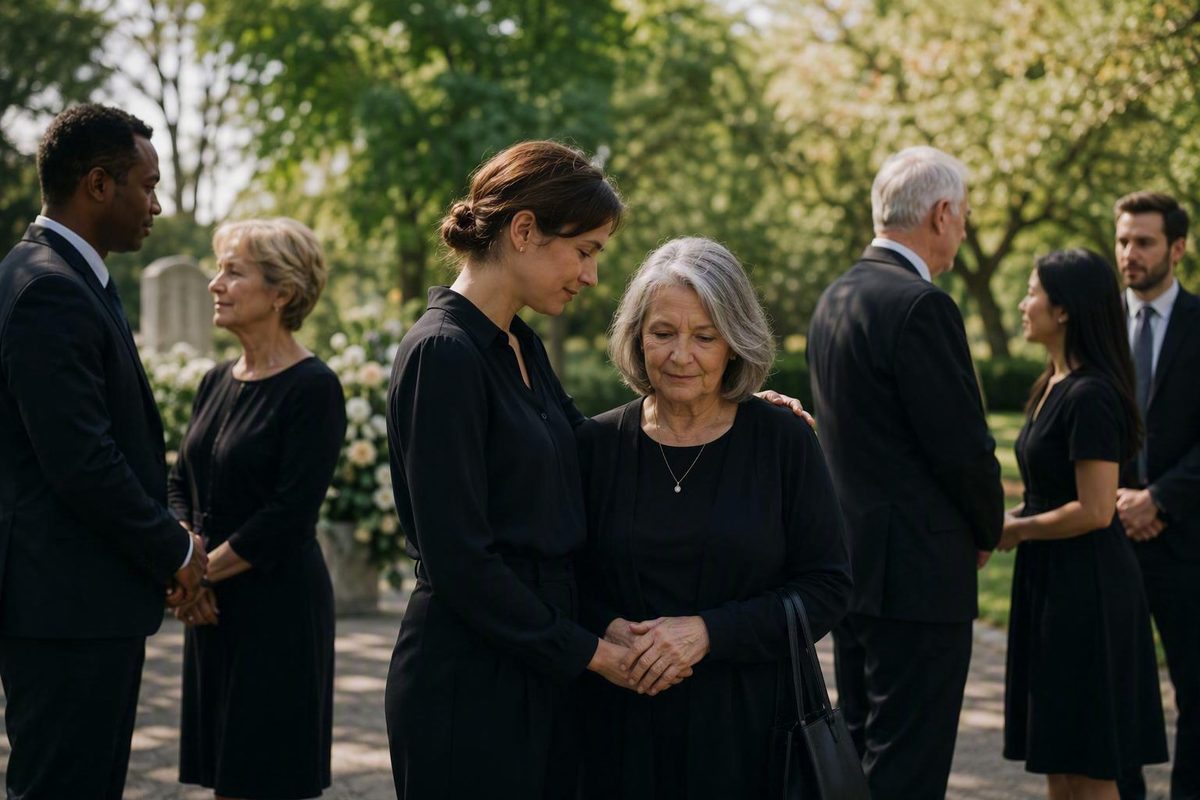
The short answer: what to wear when no dress code is given
Quick answer: Follow stated instructions; otherwise wear clean, modest clothing in a subdued color at a level of formality appropriate to the setting.
A dependable fallback is:
- Dark or muted trousers, a modest skirt, or a simple dress
- A plain shirt, blouse, sweater, cardigan, or jacket
- Clean, comfortable shoes appropriate for the venue and terrain
Black is conventional in many Western mourning settings, but it is not universally required. Navy, charcoal, gray, brown, deep green, burgundy, and other muted shades can be equally suitable. Funeral-service guides commonly recommend understated, polished clothing when no dress code is provided. These are etiquette conventions, however, rather than mandatory standards for every family or community. Gallagher Funeral Home’s memorial-attire guidance, for example, identifies navy, dark gray, and muted tones as alternatives to black.
Use this decision order:
- Follow explicit family or organizer instructions.
- Confirm relevant cultural or religious expectations.
- Match the service’s tone and venue.
- Account for weather, terrain, mobility, and personal needs.
- If nothing else is known, choose a subdued, polished default.
Neatness matters more than owning a particular garment. You do not need to buy a suit, formal dress, tie, skirt, or expensive shoes simply to attend. Clothing that is clean, comfortable, well fitting, and unlikely to distract is generally a better choice than unfamiliar formalwear that makes it difficult to sit, stand, walk, or focus on the service.
The purpose of memorial service attire is not to prove how much you cared or how deeply you are grieving. It is to help you participate without drawing unnecessary attention away from the gathering.
Read the invitation, tone, and venue before choosing an outfit
The word “memorial” does not establish a dress code by itself. Memorial services can take place in places of worship, funeral homes, restaurants, gardens, private homes, backyards, community halls, beaches, or online. They can be highly formal, quietly informal, religious, secular, or organized around a distinctive part of the person’s life.
Some guides describe memorials as less formal than funerals, while others recommend traditional funeral-level clothing unless the family indicates otherwise. Neither position is a universal rule. The announcement, venue, stated tone, and family’s preferences are more useful than assumptions based on the event’s label.
How to interpret common invitation language
- Formal: Begin with a dark suit, tailored separates, a pantsuit, or a modest dress. Add a conservative shirt or top, an optional understated tie, and polished shoes.
- Business casual: Choose tailored trousers, chinos, or a modest skirt with a collared shirt, blouse, plain knit top, sweater, blazer, or cardigan.
- Smart casual: Wear relaxed but polished separates, such as dark trousers with a plain shirt or knit top, or a simple dress with a practical layer.
- Colorful or bright colors encouraged: Follow the request rather than automatically defaulting to black.
- Themed: Incorporate the requested color, motif, team item, or meaningful accessory in a way that suits the venue.
- Come as you are: Formalwear is not expected. Clean, presentable clothing remains a thoughtful choice unless the organizers indicate otherwise.
Use the venue as a starting point, not an absolute rule
A place of worship generally justifies more conservative coverage until local expectations are confirmed. A funeral home or restaurant commonly suits business-casual or smart-casual clothing. A private home or backyard may be more relaxed, while a beach, cemetery, garden, or graveside gathering requires particular attention to weather, walking conditions, and footwear.
A reception may take place somewhere less formal than the service. You usually do not need two outfits. A removable jacket, cardigan, tie, scarf, or other layer can make one outfit work in both environments.
Follow this compact decision tree:
- Check the announcement: Is a dress code, color, or theme stated?
- Identify the setting: Is it a place of worship, funeral home, home, restaurant, outdoor site, or virtual gathering?
- Assess the tone: Does the wording suggest solemn, formal, relaxed, colorful, or celebratory?
- Check the conditions: Will you encounter heat, cold, rain, grass, gravel, stairs, or a long walk?
- Choose the least distracting suitable option: If two outfits work, select the one that is neat, comfortable, and better matched to the setting.
If the message remains ambiguous, ask rather than guess. An organizer, funeral director, officiant, venue contact, or informed attendee may be able to clarify the dress code without burdening the closest bereaved relative.
Complete outfit formulas from formal to smart casual
It is more useful to organize memorial service attire by formality than by rigid rules for men and women. Anyone can wear trousers, tailored separates, knitwear, a jacket, or a dress if the combination suits the service and the person wearing it.
Formal outfit formula
- Dark suit or tailored jacket with matching or coordinating trousers
- Plain shirt, blouse, shell, or knit top in a subdued color
- Optional simple tie
- Polished loafers, flats, boots, or other understated closed-toe shoes
Black, charcoal, navy, and deep gray are straightforward choices. A white, cream, pale blue, or muted gray shirt can work beneath a darker jacket. Keep ties and pocket squares plain or subtly patterned.
Alternative formal formula
- A simple knee-length-or-longer dress; or
- A modest skirt and blouse; or
- A pantsuit; or
- Tailored trousers with a conservative top
- Optional blazer, cardigan, or structured jacket
- Stable, understated shoes
“Knee-length-or-longer” is a common conventional recommendation, not a universal measurement of respect. The practical objective is an outfit that provides suitable coverage for the setting and remains comfortable while sitting or moving.
Business-casual formula
- Chinos, tailored trousers, or a modest skirt
- Collared shirt, plain polo, blouse, sweater, or knit top
- Optional blazer or cardigan
- Clean loafers, flats, boots, or similarly understated shoes
This is often a useful middle ground for a funeral home, restaurant, reception space, or service whose announcement does not suggest full formality. A dark trouser-and-cardigan combination can also move easily between indoor and outdoor portions of the gathering.
Smart-casual formula
- Neat neutral separates
- Plain polo or short-sleeved collared shirt where appropriate
- Simple dress with a cardigan or lightweight jacket
- Clean, practical shoes
Smart casual should look intentional rather than improvised. Clothing can be relaxed without being torn, heavily branded, or designed primarily for exercise.
Gender-neutral combinations
- Dark trousers, button-down shirt, and cardigan
- Tailored separates, plain knit top, and jacket
- Chinos, subdued collared shirt, and loafers
- Dark trousers, simple sweater, and clean boots
- Monochrome or tonal separates with minimal accessories
A tie, skirt, dress, or high heel is not intrinsically required. The pieces should fit the service and the wearer rather than enforce a gender rule.
Limited-wardrobe formula
If formal clothing is not available, wear the cleanest suitable combination you own:
- Plain dark trousers—or dark, undistressed jeans if that is your best available option
- A clean, logo-free shirt, blouse, polo, knit top, or sweater
- Clean, supportive shoes
- A simple jacket or cardigan if available
Denim is not the conventional first choice for a formal or unspecified memorial. Even so, clean dark jeans can be more appropriate than missing the service because you do not own tailored trousers. They may also fit an explicitly casual backyard or outdoor gathering.
Before buying anything, improve the presentation of what you already have. Launder the outfit, press or steam it, remove lint and pet hair, clean the shoes, replace a missing button if possible, and keep styling simple. These small steps can make ordinary wardrobe basics look polished enough for the occasion.
Colors, shoes, accessories, and commonly questioned items
Black is not mandatory unless the organizers or a verified custom specifically calls for it. Subdued blues, grays, browns, greens, burgundy, and other quiet neutrals are common alternatives because they are less likely to dominate the room. Williams Funeral Home’s attire overview, for example, lists black, dark gray, deep blue, brown, lighter gray, and earthy shades among conventional choices.
Bright colors and white are contextual. Either may be appropriate when requested by the family, connected to a theme, or customary within the community. Neither should be declared universally correct or disrespectful without knowing the circumstances.
When no other guidance is available, commonly discouraged choices include:
- Large slogans or prominent logos
- Highly distracting prints
- Torn or heavily distressed garments
- Flashy sequins
- Very revealing cuts
- Clothing designed primarily for workouts, swimming, or sleeping when it does not fit the setting
These are fallback conventions. An invitation requesting a sports jersey, Hawaiian shirt, bright color, or other personal item overrides the usual advice to avoid attention-catching clothing.
Jeans: Clean, dark, undistressed jeans may suit an explicitly casual memorial or may be the most presentable option available. Tailored trousers remain the safer default for a formal or unspecified service.
Sneakers: Conventional attire guides often favor loafers, flats, boots, or dress shoes. Clean sneakers may nevertheless suit a casual gathering or be the appropriate choice for someone who uses supportive or medical footwear. You are not expected to replace necessary footwear solely to satisfy an etiquette convention.
Sandals: Simple sandals may work at a beach, garden, or hot-weather service if they suit the ground and level of formality. They are less predictable at a formal indoor gathering. For grass, gravel, mud, or uneven paths, choose footwear you can manage comfortably.
Patterns: A subtle stripe, small check, muted floral, or low-contrast texture can be unobtrusive. Large graphics, neon patterns, and novelty prints are riskier unless they are part of a requested tribute.
Jewelry and accessories: Choose simple pieces that do not make noise or require continual adjustment. A meaningful pin, piece of jewelry, military insignia, team item, or personal memento can be fitting when requested or clearly connected to the tribute.
Use fragrance sparingly. Attendees may be seated close together, so restraint is considerate without turning fragrance into an absolute prohibition.
Visible tattoos, piercings, makeup, facial hair, and hairstyles are best considered through the same broad principle: aim for a neat presentation that does not intentionally shift focus toward your appearance. There is no universal rule requiring a person to conceal every tattoo, remove every piercing, wear makeup, or adopt a particular hairstyle.
| Usually safe without instructions | Check the context | Generally avoid when neither requested nor practically necessary |
|---|---|---|
| Black, navy, charcoal, gray, brown, or deep green | White or bright colors | Neon or highly attention-grabbing colors |
| Tailored trousers or modest skirt | Dark, undistressed jeans | Torn or heavily distressed clothing |
| Plain shirt, blouse, sweater, or knit top | Polo or short-sleeved collared shirt | Large slogans and prominent logos |
| Simple dress or tailored separates | Sports jersey or themed garment | Flashy sequins or novelty prints |
| Cardigan, blazer, or plain jacket | Sandals, sneakers, or athletic garments suited to practical needs | Clothing that is conspicuously casual for the stated setting |
| Clean, stable shoes | Meaningful pins, insignia, or team items | Noisy or excessively conspicuous accessories |
| Simple jewelry | Cultural or traditional clothing | Revealing clothing unsuited to the venue |
Celebrations of life, requested colors, and themed clothing
“Celebration of life” does not establish one standard dress code. One gathering may resemble a formal memorial; another may be held in a garden, favorite restaurant, sports club, or family backyard. Some are solemn and structured. Others include music, food, personal stories, or a theme associated with the person who died.
Treat the family’s instructions as decisive. If guests are asked to wear a favorite color, Hawaiian shirt, sports jersey, military pin, uniform, floral print, or another meaningful item, participating is generally more responsive than ignoring the request in favor of conventional black.
Gallagher Funeral Home reports coordinating a service at which the family requested colorful Hawaiian shirts to reflect the deceased’s love of tropical vacations. This is one funeral home’s example rather than evidence of a universal trend, but it illustrates why personalized instructions can appropriately replace traditional dark clothing.
You do not have to buy an entire themed outfit. If the requested item is not in your wardrobe, participate in a smaller way:
- A scarf, tie, pocket square, or cardigan in the requested color
- A pin, ribbon, brooch, or simple piece of jewelry
- A plain shirt that picks up the requested color palette
- Team colors rather than a specific jersey
- A small floral or tropical accessory rather than a full printed outfit
“Themed” does not necessarily mean costume-like. You can honor the request with a neat version appropriate to the venue. A sports jersey might be paired with clean dark trousers; a Hawaiian shirt can be clean and pressed; a bright scarf can add the requested color to otherwise subdued clothing.
If the invitation says “bright colors encouraged,” take that wording seriously. Wearing all black despite a clear request is not automatically more respectful.
If the announcement merely uses warm or celebratory language but says nothing about clothing, do not assume it permits beachwear, ripped denim, graphic T-shirts, or gym clothes. Ask an informed contact or choose polished smart-casual clothing. The goal is to participate in the family’s chosen form of remembrance, not to judge whether its style follows traditional etiquette.
Outdoor weather, terrain, comfort, and accessibility
Clothing should let you attend and participate comfortably. Weather protection, stable footing, mobility, and personal requirements matter more than preserving a perfectly formal silhouette.
For hot weather
Choose breathable, lightweight fabrics and avoid unnecessary layers. Modest short sleeves can be appropriate, particularly outdoors. Bring a light cardigan or jacket if part of the service or reception will take place in an air-conditioned building. A simple venue-appropriate hat or shaded umbrella may also be useful when the gathering is outdoors.
Example: lightweight dark trousers with a short-sleeved collared shirt and loafers, or a breathable simple dress with stable flats and a light cardigan.
For cold weather
Build warmth through neutral layers rather than expecting a thin suit or dress to do everything. Wear a weather-appropriate coat, warm socks, gloves, and boots suitable for the conditions. A practical winter coat does not need to match the outfit perfectly.
Example: dark trousers, a plain knit top, cardigan or jacket, warm coat, and clean weather-resistant boots.
For rain or wind
Bring a simple rain layer and understated umbrella. Secure loose scarves, wraps, and garments. Choose shoes suited to wet conditions rather than delicate footwear that will be difficult to manage.
Example: tailored trousers, a plain top, water-resistant coat, and clean low-profile boots.
For a graveside, cemetery, or garden
Expect grass, gravel, mud, slopes, or uneven paths. Stable flats, loafers, boots, low heels, or supportive shoes are generally more practical than thin heels or smooth soles. Ocean County Cremation Service’s venue-based guidance likewise recommends adapting layers and footwear to outdoor weather and uneven ground.
Example: dark trousers or a simple midi dress, a removable layer, and stable flats or boots.
Comfort becomes especially important when the schedule includes prolonged sitting, standing, walking, or movement between indoor and outdoor locations. Check whether there will be a procession, graveside committal, reception, or long walk from parking.
Mobility aids, adaptive garments, medical footwear, braces, pregnancy-related clothing, sensory-friendly fabrics, and caregiving needs can be incorporated without apology. This is practical, inclusive guidance rather than a formal etiquette rule: use the clothing and equipment you need, then make the rest of the outfit as neat and setting-appropriate as reasonably possible.
Clean, practical shoes suited to the actual conditions are a better choice than formal shoes you cannot comfortably manage.
Religious and cultural expectations: verify rather than assume
Mourning colors, standards of coverage, head coverings, footwear practices, and other clothing customs vary among religions, denominations, communities, observances, and individual families. Broad online summaries cannot reliably establish what every Christian, Jewish, Muslim, Hindu, Buddhist, or other service requires.
Qualified examples show why verification matters:
- Some services or worship spaces may use head coverings.
- Some communities may request greater coverage of the arms, shoulders, or legs.
- Some traditions or families may favor white rather than Western-style black.
- Traditional cultural garments may be welcomed or expected in one community but optional in another.
Provider guides sometimes mention head coverings at certain Jewish or Muslim services and white clothing in some Hindu observances. Barlow Bonsall’s overview of religious-service attire also recommends checking with the family; its broad examples should not be treated as rules for every congregation or tradition.
The type of gathering matters too. A memorial service, funeral, visitation, wake, shiva call, graveside committal, and other mourning gathering should not be treated as interchangeable. Expectations may differ even within the same family.
Use this order for clarification:
- Read the announcement, obituary, and memorial website.
- Look for instructions from the family or service organizer.
- Contact the funeral home, officiant, venue, or place of worship.
- Ask a knowledgeable attendee or community member.
- If possible, avoid directing an easily answered clothing question to the closest bereaved relative.
A tactful question is:
“Is there a preferred level of formality, color, head covering, or other cultural dress expectation for guests?”
If reliable guidance is unavailable, choose modest coverage, subdued clothing, and an easily removable layer. Remain attentive to any instructions given by the organizer or venue.
Family- and community-specific direction outranks generalized internet etiquette.
Children, teenagers, virtual guests, and the final check
Children can wear simple, neat clothing that allows them to sit, move, and use the restroom comfortably. Suitable combinations include:
- Trousers with a collared or plain shirt
- A simple dress or skirt
- A sweater with polished separates
- Chinos with a plain knit top
- Clean, comfortable shoes suited to the venue
Children do not need uncomfortable miniature versions of adult formalwear. Familiar fabrics, flexible waistbands, removable layers, and practical shoes may make it easier for them to participate. Bring a spare layer or change of clothing when age, weather, travel, or caregiving needs make that sensible.
Teenagers can use the same decision process as adults: follow stated instructions, consider the setting, verify cultural expectations, and choose a neat, subdued outfit when uncertain. A parent, organizer, or trusted attendee can help if the teenager is unfamiliar with the event. Turrentine Jackson Morrow’s etiquette guide likewise advises uncertain teenagers and young adults to ask someone they trust and reminds attendees to silence and put away phones during the service.
For virtual attendance, choose a neat, subdued camera-visible shirt, blouse, sweater, jacket, or dress and attend to basic grooming. The organizers’ instructions still control, especially for a themed service. There is no need to invent a requirement for an elaborate full outfit that will not be visible, although dressing completely may help you feel prepared and avoid awkwardness if you need to stand.
Before leaving—or joining online—complete this final check:
- Re-read the announcement.
- Confirm any theme, requested color, or faith-specific guidance.
- Check the venue and weather forecast.
- Choose clean, well-fitting clothes.
- Inspect shoes for the expected terrain.
- Simplify distracting accessories.
- Pack a removable layer.
- Silence the phone.
Mortuary Guide’s related funeral-attire guide also identifies family wishes, culture, faith, venue, and weather as relevant considerations. Because that coverage concerns funeral attire, it should be treated as related background rather than a dress code for every memorial service.
This article provides general guidance. Organizers, funeral professionals, officiants, and faith-community contacts can clarify expectations for a particular service. Mortuary Guide similarly describes its material as general information rather than professional advice in its terms.
Attending in the best suitable clothing available is generally more supportive than staying away because you lack a supposedly perfect outfit.
Do you have to wear black to a memorial service?
No. Black is a conventional, unobtrusive option in many Western mourning settings, but it is not universally required. If no dress code is given, navy, charcoal, gray, brown, deep green, burgundy, and other subdued tones can also work.
Follow the family’s request or a verified community custom if either calls for black, white, bright colors, or themed clothing.
Can you wear jeans or sneakers to a memorial service?
Sometimes. Clean, dark, undistressed jeans may suit an explicitly casual gathering or may be the best available option. Tailored trousers are the safer default for a formal or unspecified service.
Clean sneakers can work for a casual setting or practical footwear needs. Match the shoes to the venue, terrain, and your own requirements rather than following a rigid rule.
What should you wear to a celebration of life?
Read the invitation first. If it gives no clothing guidance, polished smart-casual attire is a reasonable starting point.
If the family requests bright colors, Hawaiian shirts, sports jerseys, uniforms, or meaningful accessories, follow that request. A small color-coordinated accessory can acknowledge the theme without requiring a new outfit.
What should children and teenagers wear to a memorial service?
Children and teenagers can wear neat, comfortable clothing suited to the venue and weather. They do not need uncomfortable versions of adult formalwear.
When uncertain, use the same hierarchy as for adults: follow the announcement, verify relevant customs, consider the setting, and ask an organizer, parent, or trusted attendee.
Who should you ask when religious, cultural, or family dress expectations are unclear?
Start with the announcement, obituary, or memorial website. If the answer is not there, ask the organizer, funeral home, officiant, venue, place of worship, or a knowledgeable attendee.
A concise script is: “Is there a preferred level of formality, color, head covering, or other cultural dress expectation for guests?”
In the end, use four checks: follow the family’s instructions, respect verified community customs, dress for the actual venue and conditions, and otherwise choose the cleanest modest outfit available in a subdued color. Thoughtful presence and support matter more than purchasing formal clothing or obeying an inflexible rule about black.