
18 min read ·
How to Dress Respectfully Without Overthinking Your Outfit
With no guidance, choose conservative business-casual clothing. Family requests come first, while footwear can adapt to terrain, mobility and access needs.
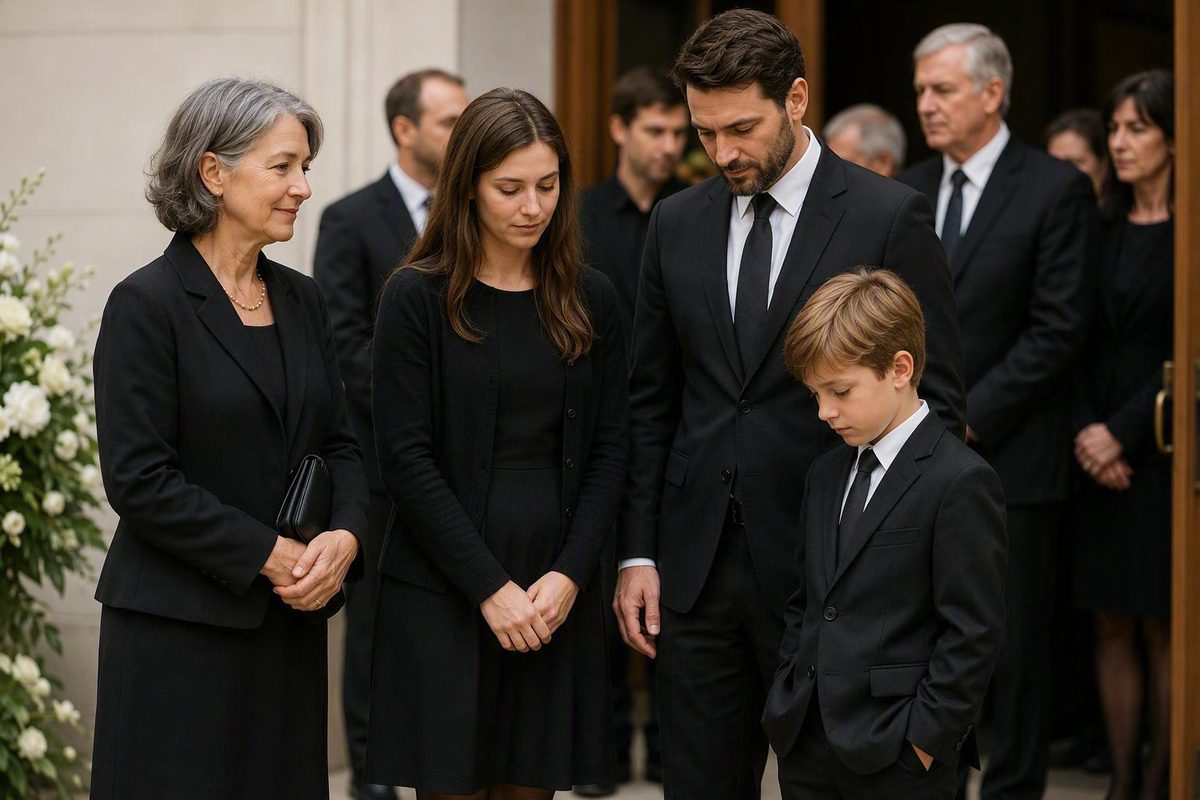
The short answer: follow the family, then choose a quiet and polished default
If you need a dependable answer now, wear clean, modest, understated clothing that does not make you the visual focus. Aim for a neat, conservative appearance rather than either extreme formality or everyday errand wear.
Use this decision order:
- Follow an explicit request from the family or host.
- Observe any clothing customs communicated by the religious community or venue.
- Match the tone and location of the service.
- Account for weather, terrain, comfort, mobility, and accessibility.
- If nothing else is known, choose conservative business-casual clothing.
A practical, gender-inclusive formula is:
Dark or muted trousers, a skirt, or a subdued dress, paired with a plain shirt, blouse, sweater, cardigan, or blazer and clean, practical shoes.
Black is safe, particularly for a traditional service, but it is not mandatory. Navy, charcoal, gray, dark brown, and other muted shades can be equally suitable. Gallagher Funeral Home likewise recommends following the family’s instructions first and suggests subdued alternatives when no dress code is given in its memorial-attire guidance.
You do not need to own a suit, formal dress, tie, or expensive shoes to attend respectfully. Clothing that is clean, in good repair, comfortable enough for the service, and suitable for the setting matters more than the garment’s label or price.
These are common etiquette guidelines, not binding or universal rules. Families, faith communities, cultures, climates, and individual services differ. When specific instructions conflict with a conventional default, follow the instructions.
Read the invitation and setting before deciding how formal to be
The words “memorial service” do not establish a single dress code. A memorial may take place in a place of worship, funeral home, private residence, garden, restaurant, park, community center, or another location meaningful to the person who died. Its structure and tone may be traditional, informal, religious, secular, or highly personalized.
Start with the invitation, memorial webpage, obituary, or message from the organizer. Wording such as the following can help:
- “Traditional memorial service” suggests subdued, polished clothing.
- “Celebration of life” may indicate a more personalized gathering.
- “Come as you are” supports a less-formal outfit.
- “Bright colors encouraged” means conventional black is not the preferred default.
- “Wear your team colors” or a named theme invites clothing connected to the person being remembered.
- “Outdoor service” signals a need to plan for temperature, weather, and terrain.
Casual wording does not require careless clothing. A clean, comfortable outfit can honor a relaxed request without looking neglected.
For a traditional ceremony in a funeral home or formal religious setting, a dark suit, subdued dress, tailored separates, or polished business attire may fit well. At a home, park, restaurant, or garden, the range may be broader—but do not infer the dress code from the venue alone. A backyard gathering can still be formal, while an event in an elegant space may be intentionally relaxed.
Celebrations of life are often more personalized than traditional services, but the label is not conclusive. Families use these terms differently, and funeral-home comparisons emphasize that individual services vary. The invitation and the family’s instructions are therefore more reliable than the event name alone, as this comparison of funerals, memorial services, and celebrations of life illustrates.
If the day has multiple parts, dress for the most formal portion and use removable layers. For example, you might wear a blazer or cardigan during an indoor ceremony and remove it at a casual outdoor reception. Practical shoes and weather-ready outerwear can accompany a polished base outfit.
| Type of gathering | Useful default | What to confirm |
|---|---|---|
| Traditional memorial | Dark or muted tailored clothing; polished business attire | Whether the family or setting expects greater formality |
| Explicitly casual memorial | Clean chinos, dark trousers, simple knitwear, or another neat casual outfit | Whether dark denim or athletic footwear fits the host’s request |
| Themed celebration of life | Requested color, print, jersey, or meaningful item | Whether the theme applies to the whole outfit or one element |
| Religious venue | Subdued clothing with adaptable layers or coverage | Any head-covering, footwear, or garment customs |
| Mixed indoor-outdoor event | Polished base outfit with removable layers and practical shoes | Weather, terrain, walking distance, and the most formal segment |
When the invitation provides no clues, it is reasonable to ask. A short question can prevent unnecessary worry and is more reliable than making assumptions based on the venue or event label.
Outfit formulas for formal, semiformal, and casual memorials
Memorial-service clothing is easier to choose when organized by formality rather than by separate rules for men and women. Select the formula closest to the invitation and setting, then adapt it to your wardrobe, comfort, body, and customary style.
Traditional or formal service
Possible combinations include:
- A dark or coordinated suit with a plain shirt
- A subdued dress in a conventional, comfortable cut
- A skirt with a plain top and cardigan or jacket
- Tailored trousers with a blouse or collared shirt
- Tailored trousers with a fine-knit top and blazer
- A subdued jumpsuit with a structured jacket or cardigan
- Coordinated separates in navy, charcoal, black, gray, or deep brown
A tie can complete a traditional outfit, but it is not automatically compulsory. If you are uncertain, bringing a simple tie gives you the option to add it after seeing the setting.
Semiformal service
For a service that calls for polish without full formalwear, consider:
- Dark trousers with a plain collared shirt
- Chinos with a blouse or fine-knit sweater
- Tailored trousers with a cardigan
- A simple dress with a blazer
- A subdued skirt with an unbranded top
- Coordinated separates with clean loafers, flats, boots, or other practical shoes
- A structured knit layer over a plain shirt
These combinations can be adapted to a funeral home, community space, restaurant, or private residence. The invitation and host’s expectations should still determine the final level of formality.
Explicitly casual service
When the invitation or organizer clearly supports casual dress, reasonable choices may include:
- Clean chinos with a simple knit or collared top
- Dark trousers with a sweater or cardigan
- Clean, dark, non-ripped jeans with a plain shirt
- Dark denim with a polished sweater or neutral jacket
- A simple casual dress or jumpsuit
- A requested jersey, floral shirt, or other tribute item
- Neat, supportive casual shoes
“Casual” still leaves room for care. Ideally, clothing should be clean, intact, and free from distracting messages unless a particular image or message is part of the family’s requested tribute.
Across all levels of formality, fit and condition matter more than rigid garment categories. Choose clothes that let you sit, stand, walk, greet people, and participate without continual adjustment. A familiar outfit that fits comfortably is often a better choice than unfamiliar formalwear that pinches, slips, or feels unlike you.
Use what you already own. Common wardrobe basics can usually be combined into something neat and understated. Ocean County Cremation Service’s memorial-attire overview similarly recommends adapting clothing to the service’s tone, setting, family requests, and practical conditions.
If you are coming directly from work, school, or travel, make reasonable adjustments rather than deciding you cannot attend. Where practical:
- Remove conspicuous or noisy accessories.
- Take off heavily branded outerwear indoors.
- Add a neutral cardigan, jacket, scarf, or coat.
- Straighten the clothing you are wearing.
- Clean or wipe down your shoes if needed.
- Keep an unavoidable uniform or travel outfit neat.
- Silence your phone before entering.
The goal is not to disguise your circumstances. It is simply to make the clothing available to you as tidy and unobtrusive as reasonably possible.
Black is optional: how to choose colors, patterns, and accessories
Black is traditional and dependable in many Western settings, but it is not universally required. Navy, charcoal, dark gray, deep brown, and other muted shades are common alternatives. Navy trousers with a gray sweater, for example, can be as understated as an all-black outfit.
Color does not have to be extremely dark. Restrained jewel tones, soft neutrals, muted greens, subdued burgundy, dusty blue, and subtle patterns may work when they fit the service’s tone. The principle is not that all color is disrespectful. It is that an outfit generally should not distract from the gathering.
There is an important difference between bright clothing requested by the family and attention-grabbing clothing chosen without context. If the invitation asks guests to wear orange, tropical prints, a favorite sports team’s colors, or cheerful clothing, following that request is respectful. There is no need to dilute the theme by defaulting to conventional black.
If you do not own a complete outfit in a requested color, you might include it through one manageable element:
- Tie
- Scarf
- Pin or brooch
- Pocket square
- Jewelry
- Cardigan
- Socks
- Hair accessory
- Shirt beneath a neutral layer
This can help you participate without buying an entirely new outfit. Funeral.com’s memorial and celebration-of-life attire guide also presents a small accessory as one option for incorporating a requested color.
Simple jewelry and restrained accessories are easy defaults. That does not mean jewelry, makeup, fragrance, or a particular color is inherently disrespectful. Consider the overall effect, the closeness of the gathering, and whether an item makes noise, carries an unrelated message, or demands attention.
Without an invitation-based reason, use caution with:
- Neon colors
- Very loud or oversized patterns
- Conspicuous sparkle
- Jokes or graphic slogans
- Political messages
- Prominent commercial branding
- Accessories likely to make noise during the ceremony
Any of these choices may be suitable when they are part of a requested tribute. A graphic shirt showing the person’s favorite band, for example, could be exactly what the family wants. Context determines whether an item is meaningful or distracting.
The aim is not to enforce an inflexible mourning palette. It is to keep the visual emphasis on the person being remembered and the people gathered to honor them.
Jeans, sneakers, sandals, and other context-dependent choices
Published etiquette guidance does not take a single position on jeans, sneakers, sandals, open-toe shoes, and other casual items. Some funeral providers recommend avoiding them, while more flexible guides allow neat casual clothing when the family has established an informal tone. No single garment is universally disrespectful in every family, climate, culture, or venue.
When you do not know the tone, tailored trousers or chinos are safer than jeans. If the invitation says “casual,” “come as you are,” or otherwise confirms a relaxed service, clean, dark, non-ripped jeans may be reasonable. Pairing them with a plain collared shirt, blouse, sweater, cardigan, blazer, or dark coat creates a more polished result.
Where another option is readily available, avoid distressed denim, gym-like athleisure, stained or torn clothing, and dirty footwear. Flip-flops chosen only for convenience may feel too informal for an unknown setting, but sandals can be practical in hot weather or appropriate within a particular community.
Turrentine Jackson Morrow represents the conservative end of published funeral etiquette, advising against jeans, casual tennis shoes, and flip-flops in its funeral and memorial-service guidance. Treat that as one provider’s cautious default rather than a universal rule.
More flexible guidance allows dark, clean denim at a clearly casual gathering while recommending chinos or tailored trousers when the tone is uncertain. That distinction appears in Funeral.com’s guide to common attire mistakes and alternatives.
Footwear also deserves flexibility. Sneakers, sandals, orthopedic shoes, and other supportive options may be appropriate because of the weather, terrain, comfort, mobility, or personal access needs. Adapt general etiquette to your own circumstances rather than wearing shoes that prevent you from participating comfortably.
Look for footwear that is:
- Clean to the extent reasonably possible
- Appropriate for the expected surface
- Comfortable for the likely standing and walking
- Secure enough for stairs, grass, gravel, or wet ground
- Compatible with any personal mobility or access requirements
| Safe by default when the tone is unknown | Check the context |
|---|---|
| Tailored trousers or chinos | Jeans |
| Plain shirt, blouse, sweater, or knit top | Athletic shoes |
| Subdued dress or coordinated separates | Sandals or open-toe shoes |
| Clean, practical footwear | Bright prints |
| Neutral cardigan, blazer, or jacket | Sleeveless garments |
| Small, restrained accessories | Jerseys, themed shirts, or tribute pieces |
“Check the context” does not mean “inappropriate.” It means looking for guidance from the host, venue, weather, customs, and practical demands before deciding.
Family themes and religious or cultural expectations take priority
If the family requests bright colors, jerseys, floral prints, Hawaiian shirts, western clothing, pins, costumes, or another meaningful form of dress, follow the request as fully as you comfortably can. A theme is part of how the family has chosen to remember the person—not an etiquette error that needs to be corrected with black clothing.
For example, a family might ask guests to wear:
- A favorite color
- Clothing from a beloved sports team
- Floral or tropical prints
- Western shirts or boots
- Band shirts
- A commemorative pin
- Clothing associated with a profession, hobby, or community
- Festive rather than somber colors
If you do not own the exact item, participate in a manageable way or ask whether a smaller themed element would fit the family’s plans. What matters is acknowledging the intent without assuming that every theme works the same way.
Religious and cultural customs require particular care because expectations may affect color, coverage, footwear, head coverings, or other garments. Avoid relying on broad claims about what every member of a religion or culture wears. Practices can differ among communities, congregations, regions, families, and individual ceremonies.
Instead, verify expectations locally. Appropriate contacts may include:
- The service organizer
- Funeral home
- Officiant
- Place of worship
- Venue coordinator
- Knowledgeable friend or attendee
A concise question is enough:
“I want to dress appropriately—has the family shared any preferences for colors or formality?”
For a religious venue, ask:
“Are there any clothing, head-covering, or footwear customs guests should know before arriving?”
Where possible, contact an organizer or venue rather than asking an immediate family member to handle a nonurgent question during an intense period. The invitation may identify a funeral-home representative, celebrant, or event contact who can answer.
McCafferty Funeral & Cremation’s attire guide likewise places family instructions and locally applicable religious or cultural expectations above generic Western conventions.
Family and community instructions override every default wardrobe suggestion in this article.
Dress for the weather, terrain, and full schedule
Before selecting shoes or outerwear, determine what the day includes. A memorial might involve an indoor religious ceremony, reception, graveside component, procession, garden gathering, or a prolonged period of standing. The main room may be climate-controlled even when another part of the gathering is outdoors.
For grass, gravel, slopes, or uneven ground, choose footwear you can use comfortably on that surface. Low heels, flats, boots, supportive sneakers, or other secure shoes may be more practical than footwear likely to sink or become uncomfortable. If you prefer a dressier appearance indoors, you can bring a second pair, but changing shoes is optional.
For warm weather:
- Choose breathable fabrics.
- Consider restrained lighter colors if they fit the service.
- Bring suitable sun protection.
- Carry water if the venue permits it.
- Add a light cardigan, jacket, or scarf for an air-conditioned room.
- Avoid layers that will become intolerable during a prolonged outdoor portion.
For cold or wet weather:
- Wear insulating layers.
- Choose a subdued weather-resistant coat if one is available.
- Bring an umbrella.
- Use shoes or boots appropriate for the expected surface.
- Pack gloves, a hat, or a scarf if the outdoor portion may be lengthy.
Weather, standing, walking, and terrain are legitimate parts of outfit planning. Life Remembered’s memorial-attire overview similarly recommends adapting clothing and footwear to the venue, conditions, and expected length of the service.
Wear familiar clothing and broken-in shoes whenever possible. A memorial is not an ideal occasion to test footwear that may blister or garments that pinch, ride up, gap, slip, or require repeated adjustment. Practical menswear guidance also recommends avoiding substantial new clothing for a long or multi-setting service in this discussion of funeral clothing and comfort.
For a mixed schedule, adaptable pieces make transitions easier. A blazer, cardigan, scarf, tie, or coat can be added for a formal ceremony and removed during a warmer or more casual reception.
Personal health and access needs are valid reasons to modify any general outfit formula. Adaptive clothing, supportive footwear, mobility aids, temperature-sensitive clothing, sensory-comfort choices, and visible medical equipment do not need to be hidden to satisfy an etiquette convention. The practical goal is to participate as comfortably as your circumstances allow while keeping the rest of the outfit neat where feasible.
Before leaving, check:
- Forecast: Temperature, precipitation, wind, and sun
- Terrain: Pavement, stairs, grass, gravel, mud, or slopes
- Walking distance: Parking, procession, graveside, or reception route
- Service length: Likely time seated, standing, or outdoors
- Layers: Indoor climate and outdoor conditions
- Rain plan: Umbrella or weather-resistant outerwear
- Footwear: Comfort and suitability for the setting
An outfit that supports comfortable participation is a better practical choice than one that matches a formal ideal but makes the service difficult to attend.
Children, teenagers, limited wardrobes, and last-minute attendance
For children, prioritize clean, simple, comfortable clothing that allows them to sit, move, use the restroom, and remain comfortable throughout the gathering. Children are not generally expected to reproduce adult formality perfectly.
Possible outfits include:
- Dark or neutral trousers with a plain top
- A simple dress with a cardigan
- Chinos with a polo or collared shirt
- A skirt with a sweater
- Clean, quiet sneakers or supportive shoes
- Familiar, comfortable clothing in subdued colors
Avoid putting a child into unfamiliar clothing that is so restrictive, scratchy, or fragile that it creates unnecessary distress. Bring a spare layer or change of clothes if age, weather, or travel makes that useful.
Teenagers can use the same decision process as adults: begin with the family’s request, consider the setting, and then choose the neatest understated option available. If this is their first memorial service, a parent, guardian, relative, or trusted friend can help them interpret the invitation. Turrentine Jackson Morrow’s etiquette guide also suggests that teenagers unfamiliar with these gatherings seek help from a trusted adult.
A limited wardrobe is not a reason to stay home. No-purchase combinations might include:
- Dark trousers and a plain sweater
- A simple dress and cardigan
- Chinos and a collared shirt
- A subdued skirt and unbranded top
- Clean work trousers with a neutral shirt
- Dark jeans and a sweater for an explicitly casual service
- A plain jumpsuit with a cardigan or jacket
The absence of a suit, dress, tie, or formal shoes should not keep you from attending and offering support. Clean, well-maintained clothing already in your wardrobe is enough in many circumstances.
If you are arriving from work, school, military duty, religious activities, or travel, make whatever adjustments are practical. An unavoidable uniform or travel outfit is not evidence of indifference. Remove unnecessary branded layers, straighten your clothing, and add a neutral piece if one is available—but do not miss the service because you cannot produce a perfect outfit.
For a virtual memorial, a simple practical approach is enough:
- Wear a neat, subdued top visible on camera.
- Use a non-distracting background where possible.
- Position the camera before the service begins.
- Silence notifications and other devices.
- Follow any instructions from the host.
Before leaving or signing in, use this final checklist:
- Family or host request checked
- Religious or venue customs confirmed if relevant
- Clothing clean and in reasonable repair
- Colors, branding, and messages not unintentionally distracting
- Footwear practical for the setting
- Layers suitable for the forecast and schedule
- Personal comfort and access needs accommodated
- Phone and notifications silenced
Considerate behavior and supportive presence carry more weight than wardrobe perfection.
Frequently asked questions
Do you have to wear black to a memorial service?
No. Black is a traditional and dependable choice in many settings, but it is not mandatory. Navy, charcoal, gray, dark brown, and other subdued colors are common alternatives. Tharp Funeral Home, for example, explicitly says black is not required and suggests muted neutrals in its funeral-attire etiquette guidance.
If the family requests a bright color or theme, follow that request rather than automatically wearing black. When no guidance is available, choose a quiet color that works with the cleanest, most polished clothing you already own.
Can you wear jeans to a memorial service or celebration of life?
Sometimes. Clean, dark, non-ripped jeans may be appropriate for an explicitly casual memorial, a “come as you are” gathering, or a celebration of life where the host confirms relaxed clothing. Pair them with a plain shirt, sweater, cardigan, blazer, or polished jacket.
When the tone is unknown, chinos or tailored trousers are safer. Do not assume jeans are appropriate simply because the event is called a celebration of life, but do not treat denim as inherently disrespectful in every family or venue.
Is a suit or formal dress required for a memorial service?
A suit or subdued formal dress can be appropriate for a traditional service, but polished business-casual clothing is adequate for many memorials.
Dark trousers with a plain shirt or sweater, a simple dress with a cardigan, or coordinated separates can all work. The best choice is generally clean, understated, comfortable clothing appropriate to the setting—not a new outfit purchased solely to satisfy an assumed rule.
What should you wear to an outdoor memorial service in summer or winter?
In summer, choose breathable fabrics, practical sun protection, and shoes suited to grass, gravel, or the expected walking. Restrained lighter colors may be reasonable when they fit the event. Bring a light layer for an indoor, air-conditioned portion.
In winter, wear layers, a weather-resistant coat, and footwear appropriate for wet or uneven ground. Bring an umbrella for rain and cold-weather accessories when needed. Adapt these suggestions to your own health, comfort, and mobility needs.
How can you ask about the memorial service dress code politely?
Keep the question short and practical:
“I want to dress appropriately—has the family shared any preferences for colors or formality?”
For a service in a place of worship, ask:
“Are there any clothing, head-covering, or footwear customs guests should know before arriving?”
Contact the organizer, funeral home, officiant, venue, or a knowledgeable attendee when possible, so the immediate family does not have to answer a nonurgent question.
The calmest rule is also the most reliable: follow the family’s request, verify religious or venue-specific customs, and otherwise wear the cleanest, quietest, most practical outfit already available. Black and formalwear can be appropriate, but respect is communicated more clearly through consideration, comfort, and supportive presence than through any single garment.