
18 min read ·
Dressing Respectfully for Memorial Services: Key Guidelines by Tone, Venue, and Tradition
With no guidance, choose black, navy, charcoal or gray. Black is not required, and the family's requested color or theme takes priority.
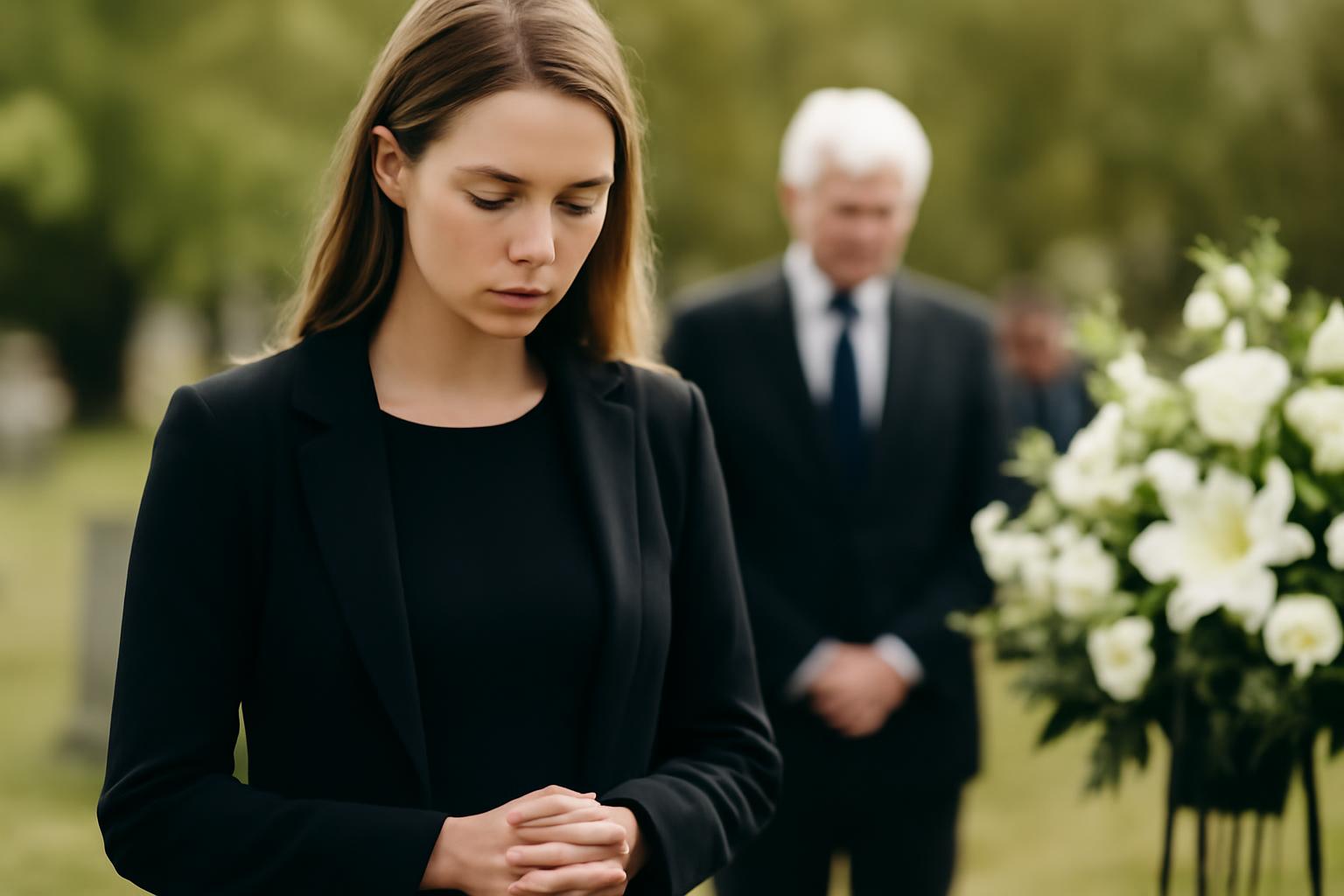
If you are unsure what to wear to a memorial service, the safest approach is simple: dress in a subdued, conservative way that shows respect and does not draw attention to you. That usually means dark or muted colors, modest cuts, clean shoes, and a polished overall look.
The complication is that memorial services are not all alike. Some are traditional church gatherings. Others are held weeks later in a park, private home, restaurant, or community room. Some families want formal black clothing; others ask guests to wear a favorite color, a sports jersey, or something cheerful for a celebration of life. The right outfit depends less on one rigid rule than on the family’s wishes, the venue, the traditions involved, and the tone of the event.
This guide walks through those variables so you can choose respectfully and confidently.
Understanding Memorial Service Attire Basics
Memorial services have become more varied than many people expect. Unlike a traditional funeral, a memorial service is often held after cremation or private burial and may take place days, weeks, or even longer after the death. Because of that timing, memorials are often more personalized in both setting and tone.
A memorial might be:
- a formal service in a church, synagogue, mosque, or funeral home
- a semi-formal gathering in a reception hall or community space
- an outdoor service at a cemetery, beach, park, or backyard
- a celebration of life with a more relaxed or themed dress code
That variety is why there is no single universal answer to what to wear to a memorial service. Still, a few factors consistently matter most.
The main things to consider are:
- Any stated dress code: Check the invitation, obituary, online service page, or family announcement first.
- Family wishes: If the family has requested colors, team apparel, or a more casual tone, that takes priority.
- Venue type: A church or formal funeral home generally calls for more formal clothing than a backyard or restaurant gathering.
- Cultural or religious traditions: Some services have specific expectations around color, coverage, or head coverings.
- Season and weather: Outdoor summer and winter services require different fabrics, layers, and footwear.
When none of those factors are clear, the safest default is conservative, subdued clothing in dark neutrals such as black, navy, charcoal, or gray. The purpose is not to meet a fashion standard. It is to show care for the occasion and keep the focus on the person being remembered.
That said, it is worth remembering one of the most humane truths behind memorial etiquette: your presence matters more than a perfect outfit. If you are grieving, traveling, or attending on short notice, do the best you can with what you have. A neat, respectful, understated outfit is enough. When in doubt, err slightly more conservative rather than more casual.
How to Determine the Dress Code
The easiest way to answer what to wear to a memorial service is to look for instructions before you open your closet.
Start with the written materials connected to the service:
- the invitation
- the obituary
- the funeral home or memorial website
- a service announcement email or text
- the family’s social media post, if they shared one
Families sometimes include direct guidance such as:
- “Please wear bright colors.”
- “Casual attire is welcome.”
- “The family invites guests to wear blue.”
- “Hawaiian shirts encouraged.”
- “Business attire requested.”
- “Outdoor service; wear practical shoes.”
If there is an explicit request, follow it. Memorial attire rules shift when the family has deliberately set a tone.
If nothing is specified, it is appropriate to ask. You do not need to guess. A polite, low-pressure question can save stress for everyone. If you are close enough to contact the family, keep it brief and practical. If you would rather not burden them, ask the funeral home, event coordinator, clergy office, or another organizer.
A simple message works well:
“I wanted to make sure I dress appropriately. Is there any specific attire or color the family would prefer?”
If no guidance is available, default to business-like, conservative, church-appropriate clothing in dark or muted colors. Think of the level of polish you would use for a serious professional setting: pressed clothing, restrained color, modest cuts, and simple shoes.
Venue can also help you judge the likely formality:
- Church, synagogue, mosque, temple, or formal funeral home: lean formal
- Community center, reception room, or indoor gathering space: usually formal to semi-formal
- Backyard, beach, park, restaurant, or informal celebration of life venue: often semi-formal or respectful casual, unless the family says otherwise
A useful rule is that being slightly overdressed is usually safer than being underdressed. A blazer, dark slacks, simple dress, or modest pantsuit rarely looks out of place. Torn denim, loud sneakers, or an eye-catching party outfit can.
If you are trying to decide between two outfits, choose the one that is cleaner, quieter, and more conservative.
Traditional and Formal Memorial Attire
For a formal or traditional memorial service, the safest palette is dark and muted. Black is common, but it is not the only respectful option. Dark navy, charcoal, dark gray, and similar neutrals are widely appropriate. Some guides also allow deep muted shades such as burgundy, forest green, or dark purple when the garment remains understated and formal.
A traditional memorial outfit should look calm rather than expressive. That usually means:
- modest silhouettes
- little or no shine
- minimal pattern
- fabric and fit that feel polished, not trendy
- coverage that does not call attention to shoulders, chest, or upper legs
For many attendees, that translates to clothing such as:
- a dark suit
- dark dress pants with a dress shirt and blazer
- a knee-length or longer dress
- a skirt with a modest blouse
- a pantsuit
- a conservative sweater or cardigan layered over a simple outfit
For more formal settings, knee-length or longer is a reliable benchmark for dresses and skirts. Covered shoulders are often a good idea, especially in religious spaces. If your top is sleeveless or lower-cut, adding a blazer, cardigan, or light jacket makes it more appropriate.
Patterns should be minimal if worn at all. A subtle texture or muted pattern may be fine, but bold florals, loud stripes, animal prints, sequins, or novelty prints are not a safe choice for a traditional service.
Footwear should be polished, comfortable, and easy to walk or stand in. Closed-toe dress shoes are the most consistently recommended option for formal memorials. Good choices include:
- simple flats
- loafers
- low heels
- dress shoes
- polished ankle boots in cold weather
Comfort matters more than people sometimes realize. Memorials can involve standing in receiving lines, walking across parking lots or cemetery grounds, and moving between a service and reception. Shoes that are clean, understated, and comfortable are better than shoes that look formal but make you unstable or distracted.
Accessories should stay simple. Think understated rather than decorative:
- small earrings or a simple watch
- a plain necklace
- a small handbag or clutch
- a modest belt
- a conservative tie
Avoid anything flashy, noisy, oversized, or attention-grabbing. The more formal the service, the more helpful it is to think in terms of restraint.
If you want a reliable mental picture of formal memorial attire, think: quiet colors, modest shape, polished fabric, simple shoes, minimal extras.
Outfits for Men and Gender-Neutral Options
For men and for anyone who prefers tailored or gender-neutral clothing, memorial attire is usually straightforward: build from dark trousers and a clean, structured top, then adjust formality based on the setting.
For a formal or traditional memorial, a strong default is:
- dark suit
- collared dress shirt
- tie
- dark dress shoes
Black, navy, charcoal, and dark gray are the safest suit colors. A white or light blue shirt is usually appropriate. A tie is widely suitable for traditional services, especially in churches, funeral homes, and other formal settings.
For a semi-formal memorial or less traditional indoor gathering, you can step down slightly while staying respectful:
- dress pants or chinos
- collared shirt or neat polo
- optional tie
- blazer or sport coat
- loafers or simple dress shoes
This kind of outfit often works well for memorials in restaurants, community rooms, or homes where the tone is serious but not rigidly formal.
For a gender-neutral base outfit, a useful formula is:
- dark tailored trousers
- a button-up shirt, fine-gauge knit, or simple blouse-style top
- an understated jacket, cardigan, or blazer
- polished, simple shoes
That formula allows flexibility without requiring a strongly gendered presentation. The goal is the same either way: modesty, subdued color, clean lines, and a respectful tone. If you are unsure how formal the service will feel, add a blazer or jacket. It is easier to remove a layer later than to wish you had one.
Layering is especially helpful if:
- the service includes both indoors and outdoors
- the weather is unpredictable
- the building may be cool
- there will be a graveside portion after the main service
Men and nonbinary attendees alike should generally avoid the common casual items most guidance warns against unless the family has clearly requested them:
- jeans
- athletic wear
- hoodies
- clothing with large logos, slogans, or graphics
- baseball caps, unless customary or specifically appropriate
- sneakers
- distressed or overly casual fabrics
There can be exceptions at very casual celebrations of life, but those should come from the family’s direction, not from guesswork.
If you need the shortest possible answer for this category, it is this: dark trousers, a collared or otherwise tailored top, a simple jacket, and polished shoes will rarely miss the mark.
Outfits for Women and Children
For women, the safest memorial attire is modest, subdued, and polished. Traditional choices include:
- a knee-length or longer dress
- a skirt with a modest blouse
- dress pants with a blouse or sweater
- a pantsuit
- a cardigan or blazer layered over a simple dress or top
Dark neutrals are the easiest choice: black, navy, charcoal, gray, and similar muted shades. Deep, subdued tones can work in some settings, but the overall look should still feel restrained.
A good memorial outfit for women often includes:
- modest neckline
- covered shoulders or a layer for coverage
- hemline around the knee or longer
- fabric that is not sheer, clingy, glittery, or overly bright
- minimal jewelry
- closed-toe flats or low heels
If you do not own a black dress, do not panic. A navy dress with a cardigan, charcoal trousers with a muted blouse, or a dark skirt and sweater can all be appropriate. What matters most is the overall effect: respectful rather than expressive.
For children, expectations are usually more flexible. Most guidance agrees that neatness and effort matter more than adult-level formality. A child does not need to be dressed as formally as an adult to be appropriately dressed for a memorial service.
Simple options include:
- dark or subdued pants and a collared shirt
- a simple dress or skirt with a sweater
- neat flats, loafers, or other clean shoes
- layers for warmth or comfort
Comfort matters, especially for younger children who may need to sit, stand, walk, or move between parts of the event. A neat, comfortable outfit in a subdued color is usually enough.
For both women and children, a few principles help:
- choose clean, pressed clothes
- keep coverage modest
- avoid flashy patterns or sequins
- add layers if the service may be long or the weather may shift
If a child only has one reasonably dressy outfit and it is not perfectly formal, that is usually fine. A clean sweater, neat pants, and sensible shoes are better than forcing a child into uncomfortable clothing that becomes a distraction.
In practice, memorial attire for women and children comes down to the same core idea as everyone else’s: quiet colors, modest cuts, and a cared-for appearance.
Casual, Celebration of Life, and Themed Services
Not every memorial service is meant to feel somber in the traditional sense. Many families now hold celebrations of life that are warmer, more personal, and less formal. Some specifically ask attendees to wear a favorite color, sports apparel, floral shirts, or other items connected to the person being remembered.
If the family has made a request, follow it. A memorial is one of the clearest situations where the host family’s wishes should outweigh generic etiquette rules.
Examples of requests that may be appropriate when explicitly invited include:
- bright colors
- Hawaiian shirts
- team jerseys or sports colors
- favorite-color clothing
- themed accessories
- more casual dress
The key is that the request should come from the family or organizers, not from your assumption that “memorial” means casual.
Even at a relaxed celebration of life, a respectful base still helps. Good options often include:
- khakis or chinos with a collared shirt
- dark trousers with an open-collar shirt and blazer
- a modest knee-length dress
- dressy pants with a blouse
- a cardigan over a simple top
- subdued shoes that are neat and practical
If brighter colors are welcome, you do not necessarily need to dress head-to-toe in something loud unless that is clearly what the family wants. In many cases, the most respectful approach is to keep the outfit conservative in shape and fit, then use the requested color or theme within that framework.
For example:
- a dark suit with a bright tie in the deceased’s favorite color
- a navy dress with a colorful scarf
- khakis and a Hawaiian shirt if that was specifically requested
- a simple outfit with team colors in a sweater, blouse, or accessory
That balance matters because a themed memorial is still a memorial. It should not read like beachwear, game-day clothing, gym clothing, or party attire unless the invitation clearly says otherwise.
Even in casual settings, it is still best to avoid:
- revealing outfits
- distressed or ripped clothing
- gym wear
- flip-flops
- very short hemlines
- slogan-heavy shirts
- anything that feels intentionally attention-seeking
In short: follow the family’s tone, but keep your style modest and considerate. Think “respectful casual” rather than “anything goes.”
Cultural, Religious, and Venue Adjustments
Cultural and religious customs can change memorial attire expectations significantly. When a service is tied to a particular faith or tradition, it is wise to verify expectations with the family, clergy, or organizer rather than relying on assumptions.
A few broad examples appear consistently in memorial and funeral etiquette guidance:
- Jewish settings: dark, modest clothing is commonly appropriate, and men may wear a kippah or yarmulke where customary.
- Muslim settings: modest coverage is especially important; loose, long-sleeved clothing is often appropriate, and women may wear a headscarf if customary in that setting.
- Hindu settings: in some Hindu traditions, white rather than black may be customary and associated with purity and peace.
- Christian services: conservative, modest, darker clothing is often appropriate, especially in more traditional churches.
These are examples, not universal rules. Practice can vary by congregation, denomination, family background, and local custom. When attending outside your own tradition, asking respectfully is the best choice.
Venue also matters.
For outdoor memorials or graveside services, practical planning becomes part of respectful dressing. You may be walking on:
- grass
- gravel
- uneven ground
- mud
- wet pavement
That makes stable shoes and weather-appropriate layers important. A good outdoor outfit might include:
- breathable fabrics in warm weather
- a neutral coat in cold weather
- closed-toe shoes or low boots with grip
- an umbrella or rain layer if needed
- a jacket or wrap for temperature changes
For summer memorials, lighter fabrics can help, but keep the look modest. Choose breathable materials rather than very casual cuts. Lightweight trousers, modest dresses, and short-sleeve or long-sleeve tops in muted colors are usually better than tank tops or beachwear.
For winter memorials, layers are the priority. A dark or neutral coat, sweater, tights, scarf, or gloves may be necessary, especially if the service includes a cemetery portion. It is better to arrive in a respectful coat than to wear formal clothing that leaves you visibly cold and uncomfortable.
For rainy weather, plan ahead. Wet grass and umbrellas can make a service harder if your shoes are slippery or your clothing is too delicate. Choose practical fabrics and shoes that still look polished.
For virtual memorial attendance, dress more neatly than you would for an ordinary video call. You do not usually need full formal wear from head to toe, but you should appear respectful on camera.
Good virtual choices include:
- a neat top or blouse
- a collared shirt
- a sweater or jacket in a solid dark or muted color
- minimal jewelry
- simple grooming
Avoid:
- distracting patterns
- shiny fabrics
- bright neon colors
- casual graphic tees
- anything that reads sloppy on camera
A memorial attended online still deserves visual respect, even if the formality is lighter than in person.
What to Avoid and Common Mistakes
Most memorial attire mistakes come from one problem: the outfit pulls focus toward the attendee instead of keeping attention on the service.
As a general rule, avoid clothing that is too bright, too casual, too revealing, too noisy, or too damaged.
Items commonly discouraged for memorial services include:
- bright or neon colors
- loud prints
- graphic logos or slogans
- ripped or distressed jeans
- shorts
- tank tops
- athletic wear
- leggings worn as pants in a formal setting
- flip-flops
- casual sneakers
- clubwear
- very short hemlines
- plunging necklines
- glittery or sparkly pieces
Even when a service is casual, these are not safe defaults unless the family has clearly said they are welcome.
Accessories can also become a problem if they are too noticeable. Try to avoid:
- oversized or flashy jewelry
- noisy bangles or earrings
- oversized handbags
- excessive sparkle
- very strong fragrance
Fragrance is not a moral rule, but it is often wise to keep it light or skip it entirely. Memorials involve close shared spaces, hugs, and emotionally intense moments, and strong scent can be distracting or unpleasant for others.
Condition matters too. Even a conservative outfit can look disrespectful if it is not cared for. Avoid clothing that is:
- stained
- wrinkled
- torn
- frayed
- missing buttons
- visibly dirty or scuffed beyond reason
Clean, pressed, modest clothing is almost always better than a more fashionable choice that looks neglected.
A few common judgment errors are worth calling out:
- Assuming “memorial” automatically means casual. It may not.
- Assuming black is required in every case. It is not.
- Ignoring a family request for color or theme. That can be more disrespectful than not wearing black.
- Dressing for comfort alone without considering tone. Comfort matters, but so does context.
- Going too literal with a theme. Even themed services still call for restraint unless the invitation says otherwise.
- Choosing impractical shoes for outdoor services. A graceful, stable shoe is better than an elegant but unwearable one.
Exceptions do exist, but they are usually driven by explicit family wishes, cultural custom, or the realities of the venue. If none of those apply, the best principle is still the simplest one: choose something clean, modest, subdued, and slightly more formal than casual.
Do I have to wear black to a memorial service?
No. Black is a traditional and very safe choice, but it is not strictly required for most memorial services. Dark neutrals such as navy, charcoal, gray, and similar muted tones are widely appropriate. Some guidance also treats deep subdued shades like burgundy or forest green as acceptable when the outfit is otherwise conservative.
The better rule is not “wear black” but “avoid drawing attention to yourself.” If the family has requested another color or the service follows a tradition where white or other colors are customary, those instructions should take precedence.
Is it okay to wear jeans or sneakers?
Usually not as a default. For most memorial services, jeans and sneakers read too casual, especially if the service is in a church, funeral home, or other formal setting. The safer choice is dress pants, chinos, a modest dress or skirt, and polished shoes.
There can be exceptions if the family has explicitly requested casual dress or the memorial is unusually informal. But if no one has said jeans or sneakers are welcome, do not assume they are. When in doubt, choose the dressier option.
What if the family requests bright colors or a theme?
Follow the request. If the family asks guests to wear bright colors, Hawaiian shirts, sports gear, or the deceased’s favorite color, doing so is usually the most respectful choice because it reflects how they want their loved one remembered.
The best way to handle it is to keep the overall outfit modest and neat, even if the color is brighter or the theme is more playful. A themed memorial is still a memorial, so aim for a respectful version of the requested look rather than something flashy or costume-like unless the family clearly intends that tone.
How should I dress for a religious memorial service?
Start by checking with the family, clergy, or organizer, because expectations vary by faith community and local custom. In general, religious memorial services tend to favor modest, conservative clothing.
Common examples include:
- dark, modest clothing for many Christian and Jewish services
- a kippah for men in some Jewish settings
- loose, modest clothing with more coverage for Muslim services, with a headscarf for women where customary
- white rather than black in some Hindu traditions
Because practice is not identical everywhere, confirmation is better than guesswork.
What to wear if attending virtually?
Dress as though you are attending a serious, respectful event, even if only the upper half of your outfit will be visible. A neat blouse, collared shirt, sweater, or jacket in a solid, subdued color is usually appropriate.
Avoid bright prints, shiny fabrics, graphic T-shirts, and anything visually distracting on camera. You generally do not need full formal attire head-to-toe, but you should look polished, calm, and respectful on screen.
Respectful memorial service attire is less about following a rigid uniform than about honoring the moment without becoming the focus of it. In most cases, subdued, modest clothing in dark neutrals will serve you well. From there, adjust for the family’s wishes, the venue, the traditions involved, and the weather.
If you are still unsure what to wear to a memorial service, ask the organizer or funeral home when possible, and choose the more conservative option when you cannot. Your thoughtful presence and support matter most, and local customs can vary.