
7 min read ·
Choose a Gospel Song for Each Funeral Moment
Compare 13 gospel funeral songs by message, service moment and performer, from reflective solos to congregational hymns and hopeful recessionals.
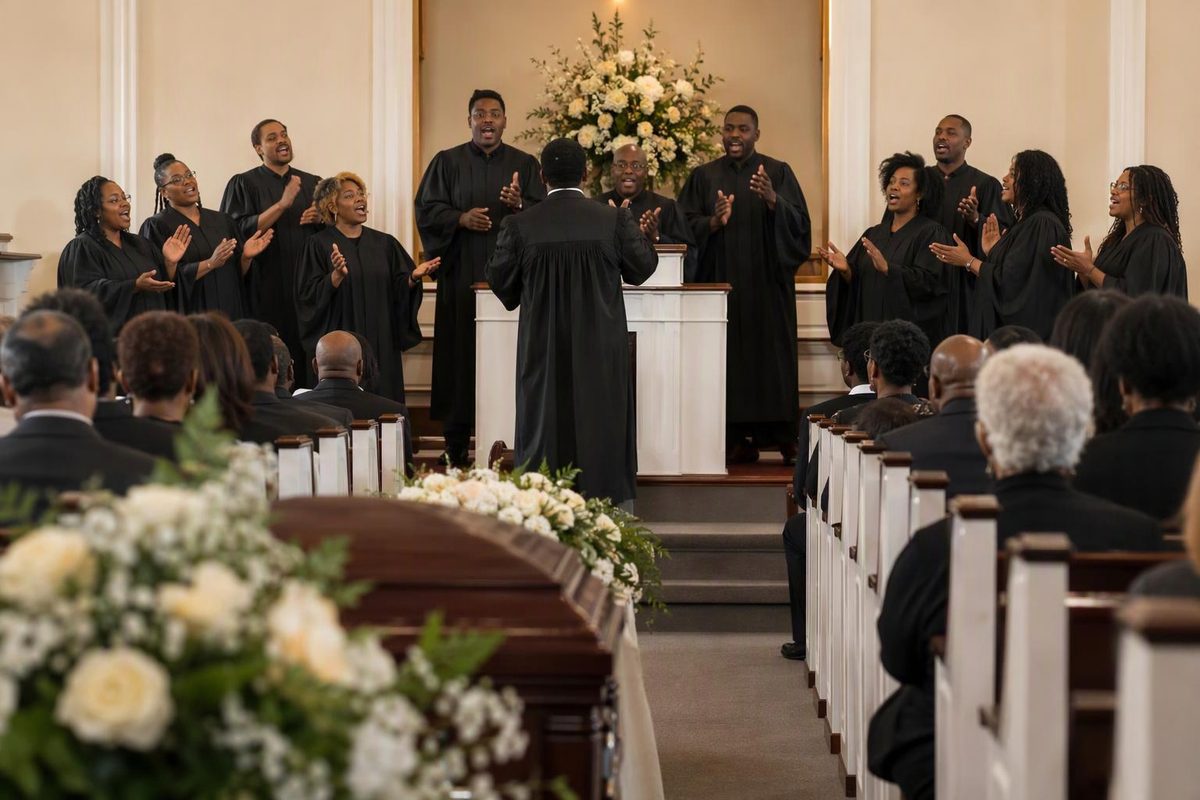
Choose gospel music funeral songs by matching the message to the moment: a prayerful song such as “Precious Lord, Take My Hand” for grief, “Amazing Grace” or “Great Is Thy Faithfulness” for assurance, and “Soon and Very Soon” or “I’ll Fly Away” for a hopeful departure. The right choice should also reflect the person who died, the family’s beliefs and the musicians available.
For a funeral or memorial service with a flexible format, a practical plan is quiet music as people enter, a reflective solo or choir selection after a reading or tribute, and a hopeful congregational song or recording for the recessional. A church with a prescribed order of worship may assign music to different places or require approval.
Choose the service moment, performer and tone; the tool will suggest the closest matches.
Gospel Funeral Song Picker
The default choice is for gathering music performed by a soloist with a reflective, comforting tone.
A prayerful choice for gathering music, a soloist and reflective comfort. It acknowledges pain without rushing past it.
Also consider: “Safe in His Arms”; “It Is Well with My Soul”
Source note: Song placements and caveats are drawn from the article’s cited hymn, denominational and funeral-industry sources. Arrangement lengths vary, so no running times are shown.
Gospel Songs That Make Room for Grief
1. “Precious Lord, Take My Hand”
Best for: Opening music, a solo after a tribute or a quiet closing
Thomas A. Dorsey wrote this prayerful gospel hymn in 1932 after the deaths of his wife and infant son. Its movement from weariness and darkness toward guidance and home fits a family that wants to acknowledge pain rather than rush past it.
It works with a soloist, choir or congregation. Discipleship Ministries documents the song’s origin and its place in Black gospel history.
2. “His Eye Is on the Sparrow”
Best for: A featured solo or music during reflection
This song concerns divine attention and care rather than offering a direct farewell to the person who died. Its verses require more vocal storytelling than many congregations can comfortably manage, so it is often strongest as a solo. The familiar refrain still gives listeners a point of connection.
Hymnal records associate the text with Matthew 10:29–31 and themes including comfort, encouragement and providence. Hymnary also documents its use for funerals.
3. “Safe in His Arms” — Rev. Milton Brunson and the Thompson Community Singers
Best for: Choir selection, solo or recorded prelude
“Safe in His Arms” expresses security in God’s care. A capable choir can build the song gradually; a recording may be more practical if rehearsal time is limited. Confirm the exact version because arrangements and running times differ.
4. “Take Me to the King” — Tamela Mann
Best for: A strong solo during reflection
This contemporary gospel song gives voice to weariness and the need to come before God without pretense. It can suit a service that leaves space for lament. Its emotional arc depends heavily on the singer and arrangement, so it is not an unobtrusive background selection.
5. “It Is Well with My Soul”
Best for: Congregational singing or a measured solo
The hymn holds sorrow and trust together. Its opening stanza recognizes overwhelming grief before answering it with spiritual peace. Hymnary describes it as a testimony of faith amid tragedy and loss.
Use it thoughtfully. “It is well” may reassure one family but sound too resolved to another in the first days after a death. Read the full text before selecting it.
Songs That Emphasize Assurance and Praise
6. “Great Is Thy Faithfulness”
Best for: An opening hymn, congregational response or choir anthem
Rather than speaking directly about death, this hymn centers on God’s constancy, daily mercy and strength for what lies ahead. It can support mourners without putting words into the deceased person’s mouth.
The song adapts to traditional hymn, piano-led and gospel arrangements. Hymnary notes its use at funerals and its appeal across different musical styles.
7. “Total Praise” — Richard Smallwood
Best for: Choir anthem or climactic response
Drawing on Psalm 121, “Total Praise” moves from seeking help to praise. Its harmonies need confident singers. Published guidance says it may be sung congregationally or as a four-part anthem, but a choir is usually more practical unless the congregation knows it well. Hymnary identifies Richard Smallwood as author and composer and describes the performance options.
8. “Never Would Have Made It” — Marvin Sapp
Best for: Solo, testimony or recorded reflection
This song speaks from a survivor’s perspective about enduring through divine help. It may fit when a spouse, child or friend wants to acknowledge both the loss and the strength that carried the family through hardship.
It is less suited to a moment intended to describe the deceased person’s own journey. Decide whose perspective the song is meant to represent before including it.
9. “Amazing Grace”
Best for: Congregational hymn, graveside singing or instrumental music
Its familiar melody and short stanzas make “Amazing Grace” accessible for group singing. Gospel, a cappella, organ, brass and simple piano arrangements can all work. The text moves through danger and difficulty toward grace leading the believer home; Hymnary notes its frequent use for comfort and assurance at funerals.
Confirm which stanzas and arrangement the musicians will use. Hymnals and recordings do not always include the same verses in the same order.
Gospel Songs for a Hopeful Farewell
10. “Goin’ Up Yonder” — Walter Hawkins, Widely Known Through Tramaine Hawkins
Best for: Featured solo, choir selection or recessional recording
This homegoing standard speaks in the first person about going to be with the Lord. That direct voice can be meaningful when it reflects the deceased person’s expressed faith. It may be too definite for a family with mixed beliefs, so listen to the complete song together before approving it.
A Harvard-hosted resource describes its significance in Black Protestant funerals and homegoing services, where it makes room for sorrow while affirming a heavenly destination. Read its commentary on “Goin’ Up Yonder” and loss.
11. “Soon and Very Soon” — Andraé Crouch
Best for: Congregational closing or upbeat recessional
The repeated structure is relatively easy to learn, while the text looks toward seeing the King and an end to crying and death. Hymnal records connect it with Revelation 21 and 22 and classify it under subjects including funerals, grief, heaven and hope. Hymnary documents its gospel and funeral use.
12. “I’ll Fly Away” — Albert E. Brumley
Best for: Recessional, graveside conclusion or celebration-of-life gathering
This is a buoyant choice rather than a solemn one. It works particularly well when the person who died loved quartet music, country gospel or lively congregational singing. The refrain is accessible even to attendees who do not know every verse.
13. “Oh Happy Day” — Edwin Hawkins Singers
Best for: Closing music or a reception playlist
Its exuberance can send people out with gratitude and energy. Because its message centers on salvation rather than death or remembrance, it generally fits better near the end than during the most reflective part of a funeral.
A full recording may be longer than the recessional. Ask whether it will continue as guests leave or be faded at a planned point.
Confirm the Exact Version Before the Service
Give the funeral director, clergy member or music leader the exact artist and version you want. “Amazing Grace,” for example, could mean an unaccompanied hymn, a slow gospel solo or a full choir recording. Provide a link or audio file, identify any desired start and stop points, and specify whether the selection will be live or recorded.
Ask the Venue to Approve the Music
A church may require approval from its pastor, music director or organist. In a Catholic parish, music must serve the liturgy rather than function simply as a preferred playlist. This guide to Catholic funeral songs by part of the service explains that distinction.
Match the Arrangement to the Musicians
A simple, well-rehearsed song is preferable to a demanding arrangement that the soloist or choir cannot prepare. Songs such as “Total Praise” may require confident harmony, while familiar refrains such as “Amazing Grace” or “I’ll Fly Away” are generally easier for a congregation to join.
Time the actual recording rather than relying on the title alone. Recorded gospel performances may include extended introductions, spoken passages or repeated vamps that do not fit the allotted part of the service.
Read First-Person Lyrics Carefully
A song about entering heaven can sound as though the deceased person is speaking. A survivor’s testimony may instead represent the spouse, child or friend who remains. Read the complete lyrics and decide whether that voice matches what the family intends to say.
Check Livestream and Lyric Permissions
Permission to perform music in the room does not automatically cover a livestream or music synchronized to a tribute video. NFDA explains the separate performance, livestreaming and synchronization permissions.
Printing or projecting copyrighted lyrics may also require permission. CCLI describes the lyric-reproduction uses covered by its church license. Ask the funeral home or place of worship what its licenses cover.
Three or four carefully placed selections are usually enough: one that permits grief, one that expresses faith and one that offers a hopeful departure.