
3 min read ·
Interment Usually Means Burial, but the Exact Placement Matters
Interment means placing remains in a grave, crypt or niche. See how it differs from burial, inurnment, entombment and a committal service.
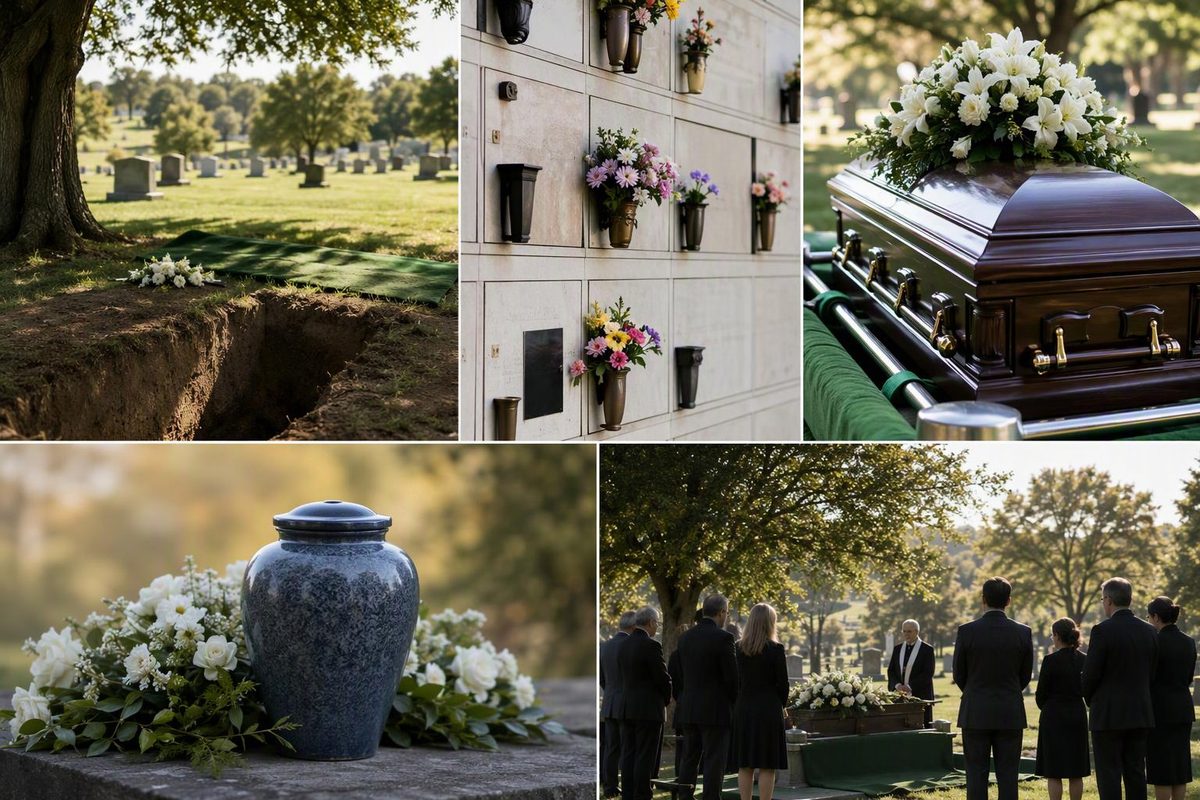
Interment means placing a person’s body or cremated remains in a grave, crypt or niche. In an obituary or funeral notice, it most often means burial in a grave. In cemetery rules, contracts and laws, however, interment may also include entombment in a mausoleum or placement of cremated remains in a columbarium.
The practical question is not just whether an interment will occur, but where the remains will be placed, when it will happen and who may attend.
Interment vs. burial
In everyday funeral language, interment and burial are often used interchangeably for placement in the ground. Maplewood Cemetery, for example, defines burial as earth burial and notes that it is also called interment (Maplewood Cemetery).
Formal definitions can use interment more broadly. Federal regulations for certain national-cemetery matters define it as burial or entombment of casketed or cremated remains, including placement of cremated remains in a columbarium niche (38 CFR § 38.600). A cemetery contract may define the term differently, so check the document when arranging or buying cemetery space.
| Term | Usual meaning |
|---|---|
| Interment | Placement of a body or cremated remains in a grave, crypt or niche; often used to mean ground burial |
| Burial | Placement of a body or cremated remains in the ground, although some organizations use the word more broadly |
| Inurnment | Placement of cremated remains in an urn, or placement of that urn in a grave or niche; usage varies |
| Entombment | Placement of remains in a crypt or mausoleum |
| Committal | The ceremony at which remains are formally committed to their resting place |
Cremation itself is not interment. Cremation is the process that reduces the body to cremated remains. Interment or inurnment describes a possible later placement of those remains.
What “interment to follow” means
When a funeral notice says “interment to follow,” the burial or other placement is scheduled after the funeral service, usually as the next part of the day’s arrangements. The notice may refer to:
- a cemetery burial after a procession from the funeral home or place of worship;
- a short graveside or committal service;
- placement in a mausoleum or columbarium; or
- a private interment limited to family or invited guests.
The wording does not necessarily mean everyone attending the funeral is invited to the cemetery. If the notice does not give a cemetery name, time or invitation, ask the funeral home or family contact: “Is the interment open to everyone attending the service, and where will it take place?”
A funeral and an interment are not the same event. The funeral is a ceremony honoring the person who died; the interment is the placement of the remains. A committal service is the ceremony connected with that placement, but the physical burial may occur afterward. At VA national cemeteries, for example, the committal service takes place at a shelter and burial follows later (U.S. Department of Veterans Affairs).
What “interment rights” mean
Buying interment rights commonly gives someone the right to designate who may be placed in a particular grave, crypt or niche. It does not necessarily transfer ownership of the cemetery land. Davis Cemetery District, for example, retains ownership of its land while selling the right to determine who may be interred in a space, subject to its rules (Davis Cemetery District).
Before purchasing cemetery space, ask for written answers to these questions:
- Is the space for a casket, an urn or either?
- How many interments may it hold?
- Who controls or inherits the interment right?
- Is a liner or burial vault required?
- What monument or marker restrictions apply?
- Which charges are due now, and which will be due at interment?
The plot, crypt or niche price may not include every required cemetery charge. The FTC advises buyers to clarify opening and closing charges, grave-liner requirements, endowment or perpetual-care fees, and other services. It also notes that the federal Funeral Rule generally does not cover cemeteries and mausoleums unless they sell both funeral goods and funeral services (FTC cemetery guidance).
For an in-ground burial, compare the interment fee with the separate burial-plot cost. Ask the cemetery: “What is the total cost for this placement, including every required fee?”