
21 min read ·
What a Committal Ceremony Is and How the Final Farewell Works
Committal service meaning in plain language
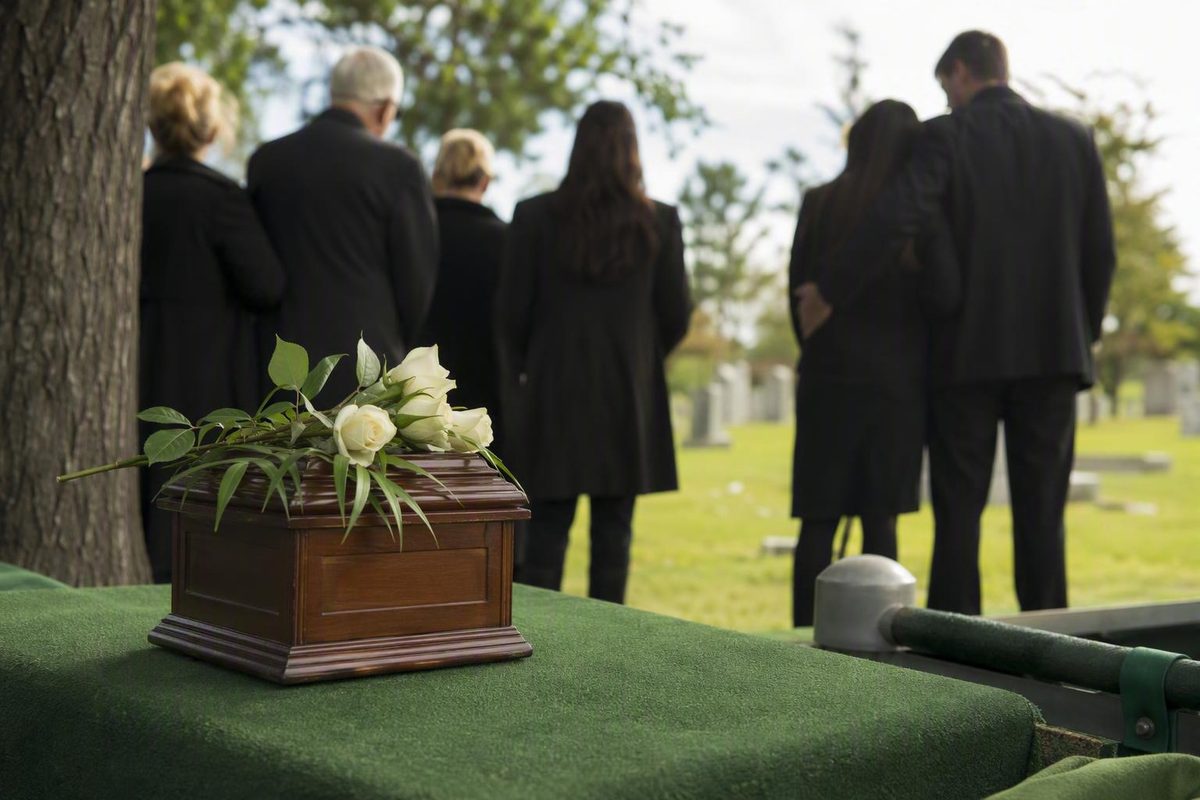
A committal service is a ceremony centered on formally committing a body or cremated remains to a final resting place. The word committal can refer narrowly to the formal words or act of final placement, or more broadly to the short ceremony surrounding that act.
The ceremony usually provides a structured opportunity for family and friends to say a final farewell. It may include readings, prayers, reflections, music, silence, brief remarks, or a blessing.
This distinction matters because an officiant or funeral director might refer to “the committal” as one moment within a larger graveside ceremony. In other arrangements, “committal service” is the name for the entire gathering.
A committal commonly serves as the final part of funeral proceedings. A funeral at a church or funeral home may be followed by a procession to a cemetery and then a short committal. However, the committal may instead take place at a later date or serve as the family’s only formal ceremony.
The final resting place is not necessarily a ground grave. Depending on the form of disposition, a committal may occur at:
- A cemetery grave
- A mausoleum crypt
- A columbarium niche
- A crematorium
- Another permitted place of disposition or interment
A committal can involve either a casket or cremated remains. A family might gather as a casket is committed for burial, an urn is buried in an urn grave, or an urn is placed in a columbarium niche. The defining feature is the ceremonial act of entrusting the remains to their resting place, rather than ground burial alone, as this overview of graveside and committal services explains.
Its purpose is both practical and ceremonial: it marks the formal commitment of the body or ashes and creates a defined occasion for final words, silence, prayer, remembrance, or another form of farewell. People respond to that occasion differently, so a committal should not be expected to produce closure, peace, healing, or any other particular emotional outcome.
Committal service vs. graveside service, funeral, memorial, and interment
Funeral-planning terms often overlap. One set of arrangements might include a visitation, funeral, procession, graveside service, committal, burial, and reception. Another family may choose only one gathering. Neither sequence is universal.
| Term | Primary focus | Usual relationship to the remains | Typical timing |
|---|---|---|---|
| Funeral | Remembrance, tribute, worship, or ceremony after a death | The body is often present, although usage and customs vary | Commonly before burial, cremation, or another final disposition |
| Memorial service | Remembrance of the person who died | The body is generally not present; cremated remains may sometimes be present | May occur before or after disposition, including weeks or months later |
| Graveside service | The complete ceremony held at a grave or burial site | Usually associated with burial of a casket or urn | May follow another funeral or serve as the main ceremony |
| Committal service | Formal entrusting or placement of the body or cremated remains | Closely connected to burial, inurnment, entombment, or another form of disposition | May follow a funeral, occur later, or stand alone |
| Burial or interment | Physical placement of remains | The body or urn is placed in a grave, crypt, niche, or other interment space | May occur during the ceremony or be completed afterward |
| Inurnment | Placement of cremated remains | An urn is placed in a grave, niche, or another designated space | Usually occurs after cremation |
| Entombment | Placement within a mausoleum or similar structure | Usually involves a casket placed in a crypt, although terminology varies | Often follows a ceremony near the crypt |
A funeral is the broader ceremony of remembrance or worship. It may include music, readings, a eulogy, religious rites, or opportunities to support the family. It often occurs before final disposition, although the timing and presence of the body depend on the arrangements and traditions involved.
A memorial service is also centered on remembrance, but it may take place without the body present. Cremated remains may be present, but they do not have to be. A memorial can therefore occur before or after ashes have been buried, placed, retained, or otherwise handled.
A graveside service is a ceremony held at a burial site. In everyday planning, “graveside service” and “committal service” are often used interchangeably.
There is nevertheless a useful distinction. A graveside service can refer to the entire event at the grave, including opening remarks, readings, tributes, music, silence, and closing words. The committal can refer more precisely to the words and act through which the body or ashes are formally entrusted to the grave. In that sense, the committal is the defining moment within the broader graveside ceremony.
Burial and interment refer primarily to physical disposition, not necessarily to the ceremony. Cemetery staff may complete the physical interment after the family’s ceremony has ended. Conversely, a family may call the gathering a “burial service” even though the grave is closed later.
Inurnment generally means placing cremated remains in a grave, columbarium niche, or another designated interment space. Entombment generally means placing remains in a mausoleum crypt. Providers and facilities may use these words differently, so ask what each term means in the specific cemetery or mausoleum paperwork.
One arrangement might include an evening visitation, a funeral the next morning, a procession to the cemetery, a committal at the grave, and a reception afterward. Another might consist solely of a brief graveside committal. Funeral-service descriptions recognize that a committal may be combined with other events or used as the entire ceremony rather than following one mandatory sequence (overview of funeral service types).
When and where a committal service takes place
A committal does not always happen immediately after a funeral, and it does not have to occur beside a ground grave. Three timing patterns are common:
- Immediately after the main funeral. Guests may travel in a procession from a funeral home, place of worship, or another venue to the cemetery.
- At a later time. The funeral or memorial may occur first, with the committal scheduled when the family, venue, grave, crypt, niche, or urn is ready.
- As a standalone ceremony. The committal may be the only formal gathering, with no separate funeral or memorial service.
A cemetery grave is the most familiar setting, particularly when a casket will be buried. Mourners may gather beside the prepared grave, sometimes under a shelter, while an officiant or another chosen leader conducts the service.
Other possible settings include:
- Near a mausoleum crypt
- In or beside a columbarium
- At a crematorium
- At an urn burial site
- At another permitted disposition location
An urn committal takes place after cremation. It may occur when the urn is buried in a cemetery grave or placed in a columbarium niche. The gathering can be held soon after cremation or later, depending on family, travel, venue, and interment arrangements.
The word has a different emphasis in some crematorium settings. In funeral-service materials from the United Kingdom, for example, “the committal” may mean the final farewell before the coffin is removed from view. In other contexts, a cremation committal means a later ceremony at which the cremated remains are buried or placed. Guidance distinguishing a burial committal from a crematorium committal illustrates this regional variation.
For that reason, the phrase “committal after cremation” is not contradictory. One family might have a final farewell at the crematorium without a later service. Another might hold a memorial after cremation and arrange a separate urn committal at a cemetery.
Attendance also varies. Everyone who attended the main funeral may be invited to continue to the committal, or the family may limit the gathering to relatives and close friends. The ceremony may be public, invitation-only, or private.
Do not assume that a public funeral announcement includes access to a later committal. Phrases such as “private interment,” “family committal,” or “burial at a later date” may indicate limits on attendance or separate scheduling.
The timing, location, and attendance may depend on:
- Family preferences
- Cemetery, crematorium, officiant, and funeral-staff availability
- Religious or cultural practices
- Preparation of the grave, crypt, or niche
- Transportation between venues
- Venue procedures
- Property rules and local requirements
These considerations can also affect what guests see during the service. Ask the funeral provider or venue whether physical placement will occur in view of mourners rather than assuming the procedure will resemble another funeral.
What usually happens during a committal service
There is no mandatory order for every committal. A simple illustrative sequence is:
- Gathering and opening words
- A reading, prayer, reflection, or period of silence
- Brief remarks, memories, or a tribute
- Formal words of committal
- An optional physical or symbolic gesture
- Closing words, a blessing, or music
The service begins as guests gather at a grave, mausoleum, columbarium, or crematorium. Staff may direct people to the ceremonial area. The leader welcomes those present, acknowledges the purpose of the gathering, and may briefly explain what will happen.
The content depends heavily on the family’s beliefs and preferences. A religious committal may include scripture, prayer, congregational responses, or a blessing. A secular service might use a poem, favorite piece of music, personal reflection, memory, moment of silence, or words about the person’s life. A blended service may combine personal and religious elements when appropriate.
Brief remarks can come from the officiant, relatives, or friends. They do not have to amount to a full eulogy. A speaker might share one memory, read a prepared passage, or explain the significance of a selected song. Spoken tributes may also be omitted entirely.
The defining moment is the formal committal. The leader uses words acknowledging that the body or cremated remains are being entrusted to the chosen resting place. Religious wording may refer to God, resurrection, or the beliefs of a particular tradition. Secular wording may simply recognize that the person’s remains are now being laid to rest.
The formal words may coincide with an action such as:
- Lowering or beginning to lower a casket
- Placing an urn in an urn grave
- Placing an urn in a columbarium niche
- Closing a curtain or otherwise removing a coffin from view at a crematorium
- Preparing for entombment in a mausoleum
Guests do not always watch the casket or urn enter its final position. Cemetery or facility staff may complete the burial, niche placement, or entombment after the ceremony and after mourners have left. One funeral-home overview notes that cemetery staff ordinarily complete burial or interment after the service, which is why families should ask what will be visible (committal-service overview).
An optional gesture may follow. Where permitted, participants might place flowers or petals near the casket or urn or add a small amount of soil at a grave. Because venue rules vary, no guest should assume that placing an object at the site is allowed.
Family members and friends may participate by:
- Giving a reading
- Sharing a memory
- Offering a prayer
- Speaking brief words of tribute
- Helping select music
- Taking part in an approved symbolic gesture
Participation is optional. Guests should not assume they are expected to approach the grave, touch the casket, place soil, speak, pray aloud, or perform another action. The leader or funeral staff should explain any invitation to participate, and guests may remain quietly in place.
The service may end with a blessing, final reading, expression of thanks, music, or silence. Guests may then offer condolences or leave as directed.
A reception can follow, particularly if the committal is the last part of a longer funeral sequence. Condolences may also be exchanged at the cemetery, funeral home, place of worship, or reception. Neither a reception nor a formal condolence line is required as part of the committal itself.
How burial, cremation, mausoleum, and columbarium committals differ
The central meaning remains the same across forms of disposition, but the setting and physical process change. These four scenarios make the differences clearer.
1. Casket burial at a cemetery
Mourners gather at the grave after a funeral or arrive directly for a standalone ceremony. A leader offers opening words, a reading, prayer or reflection, and perhaps a brief tribute. Formal committal words acknowledge that the body is being entrusted to the grave.
The casket may remain in its ceremonial position throughout the service. It may be lowered while guests are present, partially lowered during the committal words, or left for cemetery staff to lower afterward. Venue procedure, family choices, and local requirements affect what occurs.
Where permitted, guests may place a flower, petals, or a small amount of soil. Participation is not required.
2. Urn burial
An urn burial can resemble a casket committal, but the ceremony centers on cremated remains. The urn may be displayed on a stand or positioned near the urn grave. Readings, prayer, silence, memories, music, and formal committal words may all be included.
The urn may be placed in the grave during the service, or cemetery staff may complete the burial later. Cremation does not prevent a family from holding a subsequent memorial, committal, or interment ceremony. Funeral guidance recognizes urn burial and columbarium inurnment as forms of committal for cremated remains.
Families still deciding between the main forms of disposition may also want to compare cremation and burial arrangements before planning the ceremony.
3. Columbarium placement
At a columbarium, the family gathers near the niche where the urn will be placed. The service may include a welcome, a poem or scripture passage, a brief reflection, silence, and words acknowledging the final placement.
The urn may be placed in the niche while the family watches. In other cases, facility staff complete the placement after guests leave. Ask beforehand whether the ceremonial placement and final facility work occur at the same time.
4. Mausoleum entombment
For mausoleum entombment, the ceremony may occur near the crypt or in a facility chapel. The casket may be present while the leader conducts the service.
Formal committal words mark the entrusting of the body to the crypt. Facility staff then complete the physical entombment according to the mausoleum’s procedure, either in view of guests or afterward.
A related regional use occurs at a crematorium, where “committal” can describe the final part of the funeral before the coffin is removed from view. Because the exact transition is venue-specific, ask the crematorium what its committal procedure includes.
Some providers also use “committal” for a ceremony involving the scattering of ashes. This is better understood as a possible local or provider usage, not the defining meaning of the term. Before planning a scattering ceremony, ask the property owner or manager whether permission is needed and confirm applicable requirements with the venue and relevant local authority. Provider examples show how broadly the word may be used across burial, cremation, urn placement, and scattering.
Religious, secular, and personalized forms of committal
A committal service does not have to be religious, and it does not always have to be led by clergy.
Depending on the family, venue, and relevant religious requirements, the leader may be:
- A clergy member
- A funeral celebrant
- A family member
- A friend
- Another appropriate community or ceremonial representative
A religious committal follows the beliefs and practices of the relevant faith community. A Christian service, for example, may combine commending the deceased to God with physically committing the body or ashes to a resting place. It may include scripture, prayer, a blessing, and traditional wording such as “earth to earth, ashes to ashes, dust to dust.”
That language is familiar, but it is not required for every Christian service and does not define all committals. Denominations may have their own authorized texts, leadership requirements, beliefs, and pastoral practices.
The United Methodist order provides one clearly attributable example. It includes scripture, prayer, words of committal, prayers for those gathered, and a blessing. The order is intended primarily for ground burial but may be adapted for cremation or interment of ashes, above-ground burial, burial at sea, or donation of the body for medical purposes. It also directs that the pastor preside. These are features of the United Methodist Service of Committal, not a universal Christian template.
A secular committal might follow this illustrative order:
- A welcome and acknowledgment of the gathering
- A short reflection or poem
- A personal memory or concise tribute
- A moment of silence
- Words acknowledging the final placement of the body or ashes
- Optional music or flowers, where permitted
- Closing remarks and thanks
Secular wording can be direct without being impersonal. It may acknowledge the death, the reason for gathering, the final placement of the remains, and the relationships that continue through memory. It does not need to make claims about an afterlife or use religious language the person or family did not hold.
Personalization is optional. Possible choices include:
- A favorite poem or prose passage
- Sacred or nonreligious music
- A short recording, if permitted
- Family remarks
- Silent reflection
- Flowers or petals, where permitted
- A traditional congregational response
- A passage selected by the person before death
- No readings or music
Before finalizing these choices, ask the venue what is permitted and whether the faith community has requirements concerning leadership, wording, prayers, or additions.
For denominational or cultural practices, consult the family’s faith leader or community directly. General funeral articles can describe common patterns, but they should not be used to infer the requirements of a specific religious or cultural tradition.
Duration, attendance, and what guests can expect
A committal commonly lasts approximately 10 to 30 minutes, but this is a broad estimate rather than a rule. One provider describes most committals as lasting about 10 to 20 minutes, while another gives a typical range of 15 to 30 minutes.
A service may be shorter if it includes only opening words, one reading, formal committal wording, and a closing. It may take longer when it includes:
- Several readings or prayers
- A fuller religious rite
- Family remarks
- Music
- Military honors
- Movement within a cemetery or facility
- Additional venue procedures
Attendance may range from a few immediate relatives to everyone who attended the main funeral. The family may choose a public gathering, invitation-only ceremony, or private committal.
Guests should follow the obituary, invitation, family instructions, and directions from the officiant, funeral provider, or cemetery staff. If an announcement says the interment is private, attend only if invited.
Practical preparation may include:
- Confirming the exact cemetery, mausoleum, columbarium, or crematorium
- Checking whether the committal follows another event or begins separately
- Allowing sufficient travel time between venues
- Asking where guests should meet or park
- Preparing for weather and uneven terrain if the ceremony is outdoors
- Asking about seating, shelter, or accessibility when these are important
Seating at a graveside may be limited, and customs concerning who sits or stands are not universal. Ask the funeral provider what will be available rather than assuming chairs or shelter are included.
Guests are generally free to remain quiet. You do not need to volunteer a memory, pray aloud, approach the grave, touch the casket, place a flower, or join a symbolic act. Participate only when invited and only to the extent that you are comfortable.
The available committal evidence does not establish a universal dress code. Follow any guidance from the family. Otherwise, choose clothing appropriate for the setting, weather, terrain, and religious or cultural context. An outdoor cemetery service may call for practical footwear or weather protection even when the main funeral is indoors.
Military honors may be incorporated when applicable and arranged in advance, but they are not an automatic component of every committal. Their form and timing should be coordinated with the appropriate funeral, cemetery, military, or veterans-service representatives.
A practical checklist for planning a committal
A short ceremony still benefits from a clear plan. Use this checklist to ensure that the family, leader, funeral provider, and venue understand the same arrangements.
People
- [ ] Decide whether the committal will be public, private, or limited to invited guests.
- [ ] Confirm whether everyone attending the main funeral is invited.
- [ ] Prepare clear wording for the obituary, invitation, or program.
- [ ] Choose who will lead the ceremony.
- [ ] Confirm that the proposed leader is acceptable to the venue and relevant faith community.
- [ ] Ask whether relatives or friends want to read, pray, speak, or share a memory.
- [ ] Make participation optional.
- [ ] Identify guests who may need help reaching or using the site.
- [ ] Tell guests what to expect if physical placement will be visible.
Ceremony
- [ ] Choose a religious, secular, cultural, military, or blended format.
- [ ] Confirm required rites or approved wording with the appropriate faith leader.
- [ ] Select opening and closing words.
- [ ] Decide whether to include scripture, poetry, prose, prayer, reflection, music, or silence.
- [ ] Prepare the formal words of committal.
- [ ] Decide whether there will be a brief tribute or personal memories.
- [ ] Ask the venue whether planned music or recordings are allowed.
- [ ] Confirm whether flowers, petals, soil, or other symbolic gestures are permitted.
- [ ] Decide where condolences will be received.
- [ ] Confirm whether a reception will follow.
Even a one-page order can help the leader know when the committal words occur, who will read, whether music will play, and how the ceremony will end.
Disposition
- [ ] Confirm whether the ceremony concerns a casket or cremated remains.
- [ ] Identify the arrangement: casket burial, urn burial, columbarium niche, mausoleum crypt, crematorium farewell, or another permitted disposition.
- [ ] Verify the exact grave, niche, crypt, or ceremonial area.
- [ ] Ask whether the casket or urn will already be positioned when guests arrive.
- [ ] Ask whether lowering, placement, or entombment will occur while guests are present.
- [ ] If physical placement will happen later, confirm what will mark the ceremonial act of committal.
- [ ] Determine who is permitted to carry or handle the urn, if applicable.
- [ ] Ask whether family participation in placement is allowed.
- [ ] Confirm who completes the burial, niche placement, or entombment.
These questions separate three things that people often combine in conversation: the ceremony, the formal words of committal, and the physical completion of interment. They may happen together, but they do not have to.
Logistics
- [ ] Confirm the date, start time, and estimated duration.
- [ ] Allow for travel between the funeral venue and committal location.
- [ ] Ask whether guests will travel in a procession or independently.
- [ ] Provide the exact entrance, meeting place, and parking instructions.
- [ ] Ask the venue what seating, shelter, and accessibility arrangements are available.
- [ ] Prepare for the expected weather if the service is outdoors.
- [ ] Ask about paths, slopes, steps, grass, gravel, and distance from parking.
- [ ] Confirm whether any planned music, recordings, photography, or streaming is permitted.
- [ ] Ask what flowers, soil, keepsakes, or personal objects may be placed at the site.
- [ ] Share any time limits with readers and speakers.
Treat these as questions for the specific venue, not as a list of services or accommodations that will necessarily be provided.
For scattering or a ceremony outside a cemetery, contact the property owner or manager before announcing the plan. Ask the relevant local authority what requirements may apply and confirm the venue’s conditions in advance. A personal connection to a location does not, by itself, confirm that the planned ceremony is acceptable there.
Confirm the meaning and procedure before the service
A committal service is the focused ceremony surrounding the formal placement or disposition of a body or cremated remains. It is not necessarily a separate event, a religious service, or a ceremony held beside a ground grave.
Use the definition and checklist above to ask precise questions about the location, leader, attendance, wording, participation, and physical placement. In particular, confirm whether guests will witness lowering, niche placement, or entombment, or whether staff will complete that work afterward.
Customs and procedures vary by family, religion, culture, venue, and locality. Verify the arrangements with the funeral director, cemetery or crematorium, faith leader, property owner, and relevant local authority. Mortuary Guide provides general information rather than licensed funeral, legal, or estate advice, as explained in its informational-use notice.
Frequently asked questions
Is a committal service the same as a graveside service?
The terms are often used interchangeably, particularly when the entire ceremony takes place beside a grave. In more precise usage, however, the graveside service is the whole gathering at the burial site, while the committal is the specific words and act through which the body or cremated remains are entrusted to the grave.
Not every committal is graveside. An urn can be committed to a columbarium niche, a casket can be committed for entombment in a mausoleum, and “committal” can have a crematorium-specific meaning in some regions. Ask the provider what the term covers in the particular arrangements.
Can a committal service be the only funeral ceremony?
Yes. A family may hold a standalone committal without a separate funeral or memorial. In that case, the service can include elements that might otherwise appear in a main funeral, such as music, readings, prayer, memories, or a brief tribute.
It may still be relatively short because its focus remains the final placement or disposition. A reception or informal gathering may follow, but neither is required.
Can there be a committal service for cremated remains?
Yes. A committal may be held when an urn is buried, placed in a columbarium niche, or committed through another permitted arrangement.
The service may occur soon after cremation or at a later date. It can be religious or secular and may include readings, music, silence, memories, formal committal words, and closing remarks.
Does the casket or urn get lowered during the committal?
Sometimes, but not always. A casket may be lowered or an urn placed while guests watch, and the formal committal words may coincide with that action. In other cases, the casket or urn remains in a ceremonial position until guests leave, after which cemetery or facility staff complete the interment.
Ask the provider directly: “Will the lowering or placement happen during the ceremony, and what will guests see?”
Does a committal service have to be religious?
No. A committal may be entirely secular and can be led by a celebrant, family member, friend, or another appropriate person where venue and local requirements allow.
A secular service may include a welcome, poem, personal memory, silence, music, words acknowledging final placement, and closing remarks. A religious service may include scripture, prayer, a blessing, or prescribed denominational language. Either form can be personalized, subject to venue rules and any relevant faith requirements.