
21 min read ·
Serving as a Pallbearer: What to Expect, How to Prepare, and Who to Choose
Honorary status includes someone important without putting them in a physically or emotionally difficult situation, making it a thoughtful alternative.
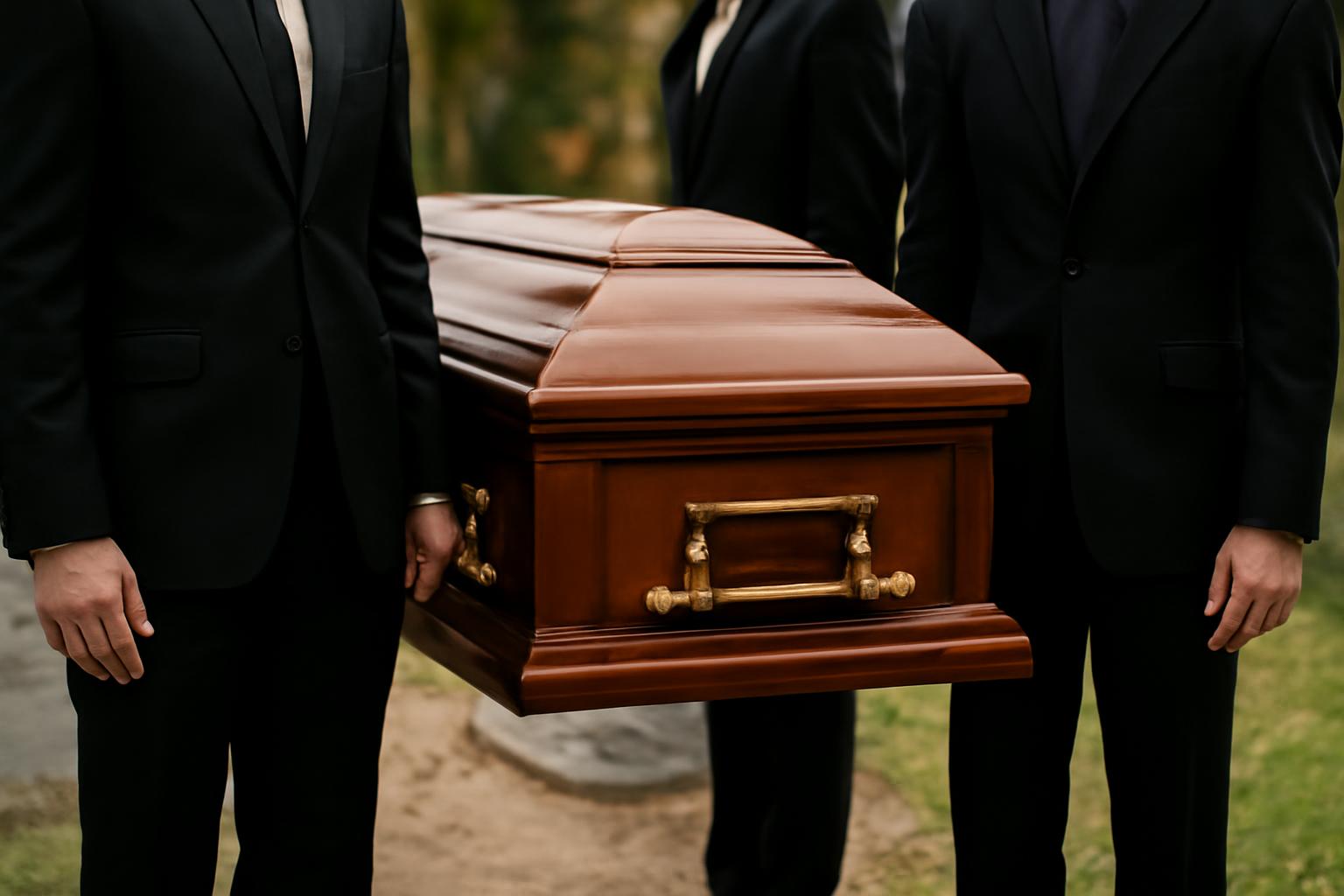
When people ask about a pallbearer in funeral arrangements, they usually want practical answers fast: What does the role involve, who should do it, how many people are needed, and what happens if someone cannot carry the casket?
The short answer is that pallbearers help move or escort the casket during the funeral’s key transitions. In most services, that means bringing the casket into or out of the venue, assisting with transfer to and from the hearse, and, if there is a burial, accompanying it to the graveside. The role is both practical and symbolic. It helps the day run smoothly, but it also visibly honors the person who died.
That said, there is no single universal rulebook. Practices vary by family preference, funeral home procedure, faith tradition, location, casket design, and whether the service involves burial, cremation, or a memorial without the body present. The safest approach is to treat this guide as a general roadmap and confirm the details with the funeral director handling the service.
What Is a Pallbearer?
A pallbearer is someone chosen to help carry or escort the casket during major transitions in a funeral. In a typical casketed service, that may include:
- moving the casket into the church, chapel, or funeral home
- helping transfer it from the service location to the hearse
- helping move it from the hearse to the gravesite for burial
In other words, the pallbearer’s job is centered on movement from one stage of the funeral to the next.
This role is most closely associated with funerals where a casket is present. That is why families often think about pallbearers only when planning a traditional burial service or a funeral before cremation. If there is no casket, the role may be unnecessary or may be adapted into something ceremonial, such as honorary pallbearers or an urn bearer.
The role also carries meaning beyond logistics. Many funeral providers describe pallbearing as a sign of respect, closeness, and support for the grieving family. That symbolism is part of why families often choose relatives, close friends, or other people who mattered to the deceased. Even so, symbolism should not override practical realities. A person can be deeply loved and still not be the best choice to lift a casket because of health, age, mobility, or emotional distress.
One important point: pallbearers do not run the procession themselves. The funeral director and staff coordinate the timing, route, handoffs, and equipment. Families sometimes imagine pallbearers independently carrying a casket over long distances, but in many modern funerals the movement is carefully managed and may involve short carries, staging areas, church trucks, or other wheeled supports. The funeral director is the person who tells the group where to stand, when to lift, when to pause, and where to go next.
So if you have been asked to serve, the expectation is not that you already know the choreography. Your job is to show up, listen carefully, and follow direction.
Active vs. Honorary Pallbearers
Families often separate pallbearers into two categories: active pallbearers and honorary pallbearers.
Active pallbearers are the people who physically lift and carry the casket, usually by taking positions at the handles or designated carrying points. They are the ones doing the actual bearing during the service and procession.
Honorary pallbearers are recognized participants who do not lift the casket. Depending on the family’s preference and the funeral home’s practice, they may:
- walk alongside the casket
- walk ahead of it or behind it
- be named in the program
- participate in a more symbolic way without any lifting
This distinction is helpful because it lets families honor more people than the casket can physically accommodate.
For example, honorary pallbearer status often works well for:
- older relatives
- people with back, knee, or balance problems
- mourners with disabilities or limited mobility
- children or teenagers who are old enough to participate symbolically but not suited to carry
- people who may become too emotional to manage the physical task
- individuals the family especially wants to recognize, even if active carrying is not realistic
Both roles are generally treated as honors. Families do not need to think of honorary pallbearers as a “lesser” choice. In many cases, honorary status is the most thoughtful option because it includes someone important without putting them in a physically or emotionally difficult situation.
Another practical difference is numbers. Active pallbearers are limited by the casket and the route. Honorary pallbearers are much more flexible. Families can often name as many honorary pallbearers as they wish, as long as the funeral home can fit them into the ceremony in a respectful, organized way.
That flexibility can solve a common family problem: there may be six or eight people who can carry, but 12 or 20 people whom the family wants to recognize. In that case, a mix of active and honorary roles can preserve both dignity and inclusion.
One nuance worth noting: some sources describe honorary pallbearers as having no duties at all, while others say they may walk in the procession or help greet guests. The practical takeaway is simple: “honorary” usually means ceremonial, not physical, but the exact form can vary. Ask the funeral director what honorary participants will do at that particular service.
How Many Pallbearers Are Needed?
The most common answer is six pallbearers, with eight used in some situations.
Six is typical because many full-size caskets have six side handles, and many services are organized around three pallbearers on each side. Some caskets or carrying setups allow for additional positions at the front and back, which is why eight pallbearers are sometimes used.
A good rule of thumb is:
- 6 active pallbearers for many standard casket funerals
- 8 active pallbearers for larger caskets, different handle layouts, or routes that make extra support helpful
But that is still only a rule of thumb. The number should be confirmed with the funeral home, because the real answer depends on several things:
- the casket’s design and handle layout
- whether the casket will actually be hand-carried or mostly moved by wheeled equipment
- the distance involved
- stairs, ramps, narrow doorways, or uneven ground
- weather and cemetery conditions
- whether the service is indoors only or includes a graveside committal
That is why families should not assume “six” without checking. Even if the casket has six side handles, the funeral director may recommend extra support or a different arrangement based on the route.
It is also smart to plan backup pallbearers. Even when the intended number is clear, last-minute issues happen:
- someone gets sick
- travel is delayed
- a person realizes on the day of the funeral that they cannot physically manage the role
- a mourner becomes too distressed to continue
A backup does not need to be publicly emphasized, but it helps avoid chaos. Some families quietly identify one or two alternates in advance. Others use honorary pallbearers who can step in if needed. If family and friends are not available, many funeral homes can provide staff or stand-ins.
One more practical point: the number of pallbearers is not just about weight. It is also about control. A route with steps, tight corners, or soft ground may make coordination more important than raw strength. That is another reason to let the funeral director make the final call.
How to Select Pallbearers
Families most often choose pallbearers from among close family, friends, coworkers, fellow church members, or other people with a meaningful connection to the deceased. The core idea is simple: choose people who mattered to the person who died and who can carry out the role reliably.
That said, closeness alone is not enough. The best choices usually balance relationship with practicality.
Here are the main factors to weigh.
Relationship to the deceased
Many families start with the people who were closest to the deceased:
- adult children
- siblings
- grandchildren
- nieces and nephews
- close friends
- long-time colleagues
- church or community members
That is a natural place to begin. But not every close relative is the right fit, and not every good pallbearer has to be family. Some families prefer relatives because the role feels intimate. Others prefer close friends because the nearest family members are too grief-stricken to manage the physical demands. Both approaches are common.
A useful question is not just, “Who loved this person?” but also, “Who can carry out this role calmly and safely?”
Physical ability
This is one of the biggest selection factors and one of the easiest to overlook in the rush of funeral planning.
A good pallbearer should be able to:
- walk steadily
- lift and support part of the casket with a team
- navigate steps, slopes, or uneven ground if necessary
- stand for periods of time
- follow instructions without rushing
This does not mean you need athletes. In many modern services, the carry is short and the funeral home uses equipment to reduce the burden. But families should still avoid choosing someone whose health, mobility, or balance makes the task unsafe or stressful.
Emotional readiness
Grief affects people differently. One mourner may find pallbearing grounding and meaningful. Another may be too overwhelmed to do it.
Some funeral advice sources encourage families to choose the closest mourners because the role is intimate and honorable. Others advise avoiding the closest mourners if they are likely to break down during the carry. The most sensible approach is to treat this as a case-by-case judgment.
Ask:
- Can this person remain composed enough to follow directions?
- Would the role comfort them, or burden them?
- Might the public visibility of the role make the day harder?
There is no shame in deciding that someone should be honored in another way.
Reliability and punctuality
A person can be strong and loving and still be a poor choice if they are chronically late, hard to reach, or uncertain about attending. Because pallbearers are part of the funeral’s basic logistics, reliability matters more here than in many other ceremonial roles.
Choose people who will:
- answer clearly
- arrive on time
- stay available for instructions
- notify the family if circumstances change
Gender
There is no universal rule that pallbearers must be men. Modern practice is widely gender-neutral, and many families choose women as active pallbearers. Some sources describe women pallbearers as increasingly common; others frame them as less common in certain communities. The important point is that gender does not decide suitability. Capability, willingness, and family preference do.
All-female groups, mixed groups, and all-male groups are all seen in practice.
How to ask
It is best to ask privately and directly, rather than putting someone on the spot in front of others. When asking, give the person enough detail to make an informed decision:
- date and time
- service location
- whether there will be a burial afterward
- whether the role is active or honorary
- when they should arrive
Also make clear that it is acceptable to decline. People may have health issues, mobility limits, schedule conflicts, or emotional reasons for saying no. A gracious decline is much better than a last-minute problem.
Backup and honorary options
If you want to include more people than can actively carry, or if you are uncertain about someone’s ability to lift, two solutions work well:
- designate backups
- offer honorary pallbearer status
These options reduce pressure and make the service more inclusive without compromising safety.
Pallbearer Duties and Procession Steps
If you have been asked to serve, it helps to picture the day in sequence. Not every funeral follows the same order, but the usual pallbearer duties look something like this.
1. Arrive early for instructions
Pallbearers are commonly asked to arrive 30 to 60 minutes early. The exact time depends on the funeral home’s plan, but the purpose is consistent: the funeral director needs time to gather the group and explain what will happen.
That briefing may cover:
- where each person will stand
- when to step forward
- how to position hands
- how fast to walk
- where the casket is going next
- whether there are stairs, turns, or uneven ground
- what to do at the hearse and at the cemetery
This is also the time to quietly mention any concerns, such as a back issue, recent injury, or fear about lifting.
2. Take your assigned position
Before the casket is moved, the funeral director or staff usually assigns each active pallbearer a position. That matters because organized movement is safer than everyone improvising.
Even if you think you know where to go, wait for direction. The staff may already have a plan based on height, strength, route, or equipment.
3. Carry or escort the casket into the service
If the casket is not already in place, active pallbearers may help carry it into the church, chapel, funeral home, or other venue. In some services, staff may do more of this transfer, especially if equipment is involved. In others, the pallbearers will lead the casket in.
If you are an honorary pallbearer, you may walk with the group or take the ceremonial position the family has chosen.
4. Remain available during the service
During the service itself, pallbearers usually sit together or near the front if the funeral home has arranged for that. This is common practice, though not universal. In some settings, the group may simply remain close by so they can move quickly when needed.
Your main duty during this part is presence and readiness. You are not expected to manage equipment or coordinate logistics yourself.
5. Carry or escort the casket out of the venue
At the close of the service, pallbearers are usually called forward again. Active pallbearers help move the casket out of the venue and toward the hearse. Staff typically gives cues for when to lift, when to turn, where to pause, and how to set the casket onto the next support.
This is one of the moments people worry about most, but it is also one of the most controlled parts of the day because the funeral director expects it and supervises it closely.
6. Transfer to or from the hearse
A common pallbearer duty is assisting with the casket’s movement to the hearse after the service, and then from the hearse at the cemetery if there is a burial. Funeral staff usually handles the hearse hardware and any rolling platform or church truck. Pallbearers should follow staff cues rather than trying to operate equipment on their own.
7. Travel in the procession
If there is a funeral procession to the cemetery, pallbearers often travel together or in a coordinated group behind the hearse. The exact vehicle arrangement varies. Some funeral homes provide a designated vehicle; others simply tell pallbearers where to line up in the procession.
What matters is staying with the group and following the plan.
8. Carry or escort the casket to the gravesite
At the cemetery, active pallbearers may again take positions to move the casket from the hearse to the graveside or burial platform. Depending on the setup, the carry may be short. In some cases, wheeled support is used for part of the route. In others, the final approach is hand-carried.
Honorary pallbearers may walk with the group or stand nearby as part of the ceremony.
9. Follow cues until dismissed
A pallbearer’s job is not over until the funeral director says it is. Staff may need the group to pause, reposition, or remain nearby for a final step in the graveside service. When in doubt, stay put and ask quietly.
Through all of this, the guiding principle is simple: follow the funeral director’s cues exactly. Pallbearing is a group task. Smoothness matters more than strength.
Pallbearer Etiquette, Attire, and Preparation
Most pallbearer etiquette is straightforward. The role calls for respect, calm, and reliability.
What should pallbearers wear?
The safest choice is conservative, dark, formal clothing. That usually means:
- a dark suit, dress shirt, and tie
- a dark dress, skirt, pantsuit, or similarly subdued formal outfit
- clean, polished, understated clothing rather than anything flashy
The key is not rigid fashion rules but appropriateness. A pallbearer should look neat, respectful, and in harmony with the tone of the funeral.
Footwear matters more than many people expect. Choose comfortable, sturdy shoes with good traction, especially if the service includes a cemetery, gravel path, grass, rain, or uneven ground. This is one of the most practical parts of pallbearer preparation.
If you are unsure about the dress code, ask the family or funeral director rather than guessing.
When should pallbearers arrive?
A common recommendation is 30 to 60 minutes early. Some funeral homes may want the group there closer to 30 minutes before the service, others earlier. The important thing is not the exact number but the reason: there must be time for a briefing before guests are seated and before the casket needs to move.
Do not cut it close. Lateness can delay the start of the service and add stress to the family.
What if you cannot attend?
Say so as early as possible. If illness, travel problems, or physical limitations arise, notify the family and funeral home immediately. This gives them time to use a backup or change the plan.
The worst outcome is not declining. It is waiting until the last moment and leaving everyone scrambling.
How should pallbearers conduct themselves?
Good pallbearer etiquette is mostly about steadiness:
- stay attentive
- keep conversation low and brief
- avoid drawing attention to yourself
- follow directions precisely
- move slowly and in step with the group
- remain composed
Being composed does not mean being emotionless. Funerals are emotional. Tears are normal. But active pallbearers do need enough control to carry out the task safely.
Do pallbearers need a rehearsal?
Usually, no formal rehearsal is needed. In many services, pallbearers get a short briefing shortly before the funeral, and that is enough. Funeral homes typically manage the process with staff direction rather than a separate practice session.
Likewise, pallbearers are usually not expected to handle specialized equipment. Church trucks, rolling biers, hearse mechanics, and cemetery setup are generally handled by funeral staff. Pallbearers should focus on their assigned carrying role and let staff manage the technical parts.
Simple preparation tips
If you have been asked to serve, these basics help:
- get a full night’s sleep if possible
- eat something light beforehand
- avoid alcohol before the service
- wear shoes you have already walked in
- arrive early enough to settle yourself
- silence your phone
- tell the director privately about any physical concern
Those small steps do more to prevent problems than most people realize.
Pallbearers in Cremations, Memorials, and Alternatives
Pallbearers are most relevant when there is a casket present, but that does not mean the role disappears whenever cremation is involved.
Cremation with a funeral before cremation
If the family holds a funeral service with the body present in a casket before cremation, pallbearers may still be used in the usual way. In that case, the pallbearers may carry or escort the casket into and out of the service, even though burial will not follow.
This is one reason people should not assume pallbearers are only for burial. If there is a casketed ceremony before cremation, the role can still be fully appropriate.
Cremation without a casketed service
If the family chooses direct cremation or another arrangement without a casketed service, traditional pallbearers may not be needed. Some families adapt the role by naming:
- an urn bearer
- honorary pallbearers
- ceremonial escorts for the urn during a memorial or inurnment
That lets people participate in an honoring role even when there is no casket to carry.
Memorial services without the body present
At a memorial service with no casket and no urn procession, pallbearers are often unnecessary. There is simply no carrying function to perform.
Still, families sometimes adapt the idea ceremonially. For example, they may recognize a group of honorary pallbearers in the program, ask them to enter together, or give them another visible place in the service. That is less about logistics than tribute.
Alternatives when no volunteers are available
If family or friends are unavailable, uncomfortable, or physically unable to serve, funeral homes can often provide staff or stand-ins. Some families feel awkward about that at first, but it is a normal practical solution. It may be especially helpful when:
- there are too few able-bodied mourners
- key relatives are traveling from far away
- the deceased had a very small social circle
- the emotional burden on the immediate family is too high
Why this matters more today
As cremation has become more common, families increasingly encounter funeral formats where the old assumptions about pallbearers do not fully apply. Some services still use active pallbearers exactly as before. Others use honorary roles, urn bearers, or no pallbearers at all.
The right question is not “What is the rule?” but “What form of participation fits this service?”
Faith, family, and local custom
Practices vary widely. Some religions and cultures place special meaning on who carries the casket, how the body is accompanied, or whether family members should do the carrying. Other communities are more flexible and treat pallbearers as a matter of convenience and preference. That is another reason to confirm details with the funeral director or officiant rather than relying on generic etiquette advice.
Role of the Funeral Director and Common Concerns
The funeral director is the person who turns a pallbearer plan into an organized, safe procedure.
What the funeral director usually does
A funeral director or lead staff member typically:
- confirms how many active pallbearers are needed
- explains where and when the group should arrive
- assigns positions
- gives instructions on pace, route, and timing
- coordinates transitions to and from the hearse
- decides how staff and equipment will assist
- adjusts the plan if someone cannot carry
That guidance matters because funerals vary so much. A flat chapel entrance is different from a church with stairs. A short cemetery path is different from wet grass or a long walk. Good direction reduces uncertainty.
What if someone is not suitable to carry?
Some sources frame suitability as mainly a family decision; others suggest the funeral director may intervene if someone is clearly unfit. In practice, both can be true. Families usually choose the participants, but the director is responsible for the service running safely. If there is a real concern about balance, strength, mobility, or coordination, the director may suggest a different arrangement.
That is not disrespect. It is risk management.
The fear of dropping the casket
This is one of the most common anxieties for first-time pallbearers. The fear is understandable, but modern funeral procedures are designed to reduce that risk.
Several things help:
- the load is shared across a group
- movements are usually short and controlled
- staff supervises the transitions
- wheeled equipment often handles part of the distance
- the group is told where to stand and when to move
The most important thing a pallbearer can do is not rush. Most problems come from mismatched timing or people improvising, not from a lack of bravery.
Is the role as physically demanding as people imagine?
Sometimes yes, but often less than expected. Many people picture a long, fully hand-carried route. In reality, funeral homes often use church trucks, trolleys, or staged handoffs, especially indoors and at the hearse. The actual hand-carrying may be limited to key transitions rather than the entire journey.
That does not mean the role is effortless. It still requires steadiness, coordination, and a realistic assessment of your own ability. But it is often more structured than first-time pallbearers fear.
What if customs differ from what you have heard?
That is normal. Some families want close relatives to carry. Others prefer friends. Some include women freely; others follow older traditions. Some use honorary pallbearers as a formal procession; others only list names in the program. Some cremation services still include pallbearers before cremation; others do not use the role at all.
The practical answer is simple: ask the funeral director what applies to this specific funeral.
Pallbearers play a vital role in honoring the deceased through both practical support and visible respect. But details vary enough that no article can replace local guidance. Use general funeral etiquette as a starting point, then confirm the actual plan with the professionals and family involved.
Can women or children serve as pallbearers?
Women can serve as pallbearers, and many families now treat the role as fully gender-neutral. There is no universal rule limiting pallbearing to men.
Children are a more situational question. A child or teenager might be included as an honorary pallbearer or in another ceremonial role, especially if the family wants to recognize that relationship without requiring lifting. Whether a younger person should be an active pallbearer depends on maturity, size, physical ability, emotional readiness, and the funeral director’s judgment about safety. When in doubt, honorary status is often the better choice.
What if a pallbearer cannot attend or carry?
Tell the family and funeral home as soon as possible. That gives them time to use a backup pallbearer, shift someone from honorary to active status, or ask staff to assist.
If a person can attend but should not lift because of injury, illness, age, or emotional strain, the family can often convert that person to an honorary role. If the problem arises at the last minute, funeral home staff can sometimes step in as stand-ins. Early communication makes all of these solutions much easier.
Do pallbearers need special training?
Usually not. Most pallbearers do not receive formal training in advance. Instead, they are given a brief set of instructions by the funeral director shortly before the service.
That briefing is normally enough because the funeral home controls the route, pace, and equipment. If you are worried, speak up before the procession begins. You are not expected to already know what to do.
How do cultural practices affect pallbearers?
Cultural and religious customs can shape nearly every part of pallbearing, including:
- who is expected or allowed to carry
- whether family members or friends are preferred
- whether the coffin is carried, wheeled, or otherwise escorted
- how formal the procession is
- whether the role is active, symbolic, or not used at all
Some traditions place strong emphasis on family participation. Others rely more heavily on funeral staff. In some communities, older gender expectations still influence choices; in others, mixed-gender or all-female groups are unremarkable. Because these customs vary so much, families should confirm expectations with the funeral director, officiant, or religious leader involved.
What happens if there are not enough pallbearers?
If there are too few active pallbearers, the funeral director will usually adjust the plan. Common solutions include:
- asking a backup person to step in
- converting an honorary pallbearer to active status
- reducing the amount of hand-carrying through more staff assistance or wheeled equipment
- using funeral home or cemetery staff as stand-ins
Families should not feel that a shortage means the service cannot proceed respectfully. It usually just means the logistics need to be adapted.
Serving as a pallbearer is one of the clearest ways to support a family at a funeral: show up, follow directions, and help the day move with dignity. For families choosing pallbearers, the best decision is usually the one that balances closeness with capability. For anyone asked to serve, the best preparation is simple: arrive early, dress appropriately, be honest about your limits, and let the funeral director lead.