
20 min read ·
Who Is a 'Mourner' or Funeral Attendee? Essential Guidance for Showing Up Right
In common English-language funeral etiquette, "mourner" is often the traditional term. "Funeral attendee" is a clear alternative in plain everyday writing.
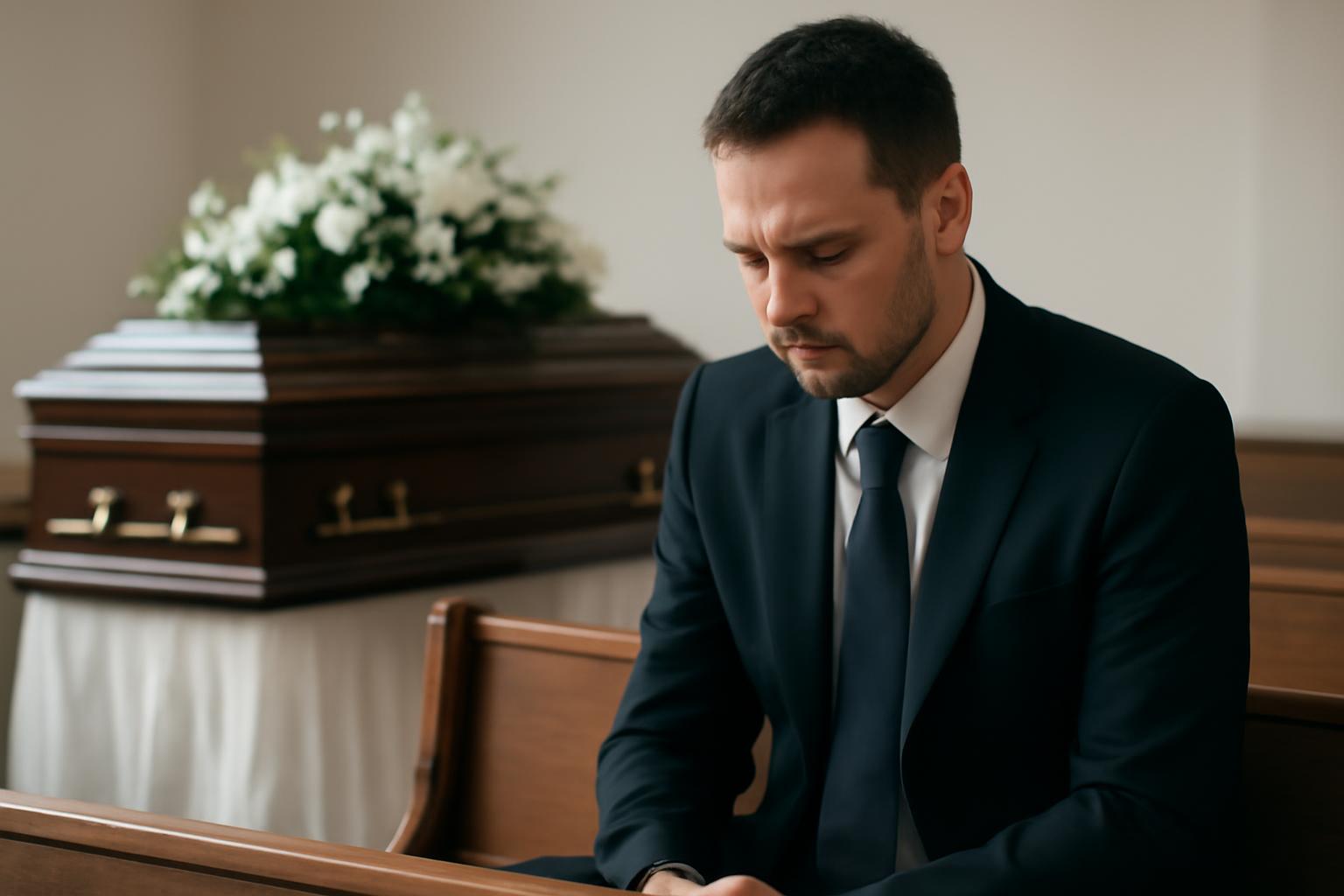
If you are searching for the right term for a person who attends a funeral, the shortest careful answer is this:
In common English-language funeral etiquette, the traditional word is often mourner. In plain everyday writing, funeral attendee or simply attendee is also a clear description.
That answer needs a little caution. Funeral language is not universal, and customs vary by religion, culture, country, and family preference. The guidance below reflects common English-language funeral norms, especially in Western-style funeral guidance, not a single official rule that applies everywhere.
For most people, though, the vocabulary question quickly turns into a more practical one:
- Should I go?
- Would I be welcome?
- What do I wear?
- What do I say?
- What if I did not know the person well?
Those are the questions that matter most in real life. Funeral etiquette is not about performing grief perfectly. It is about showing respect, avoiding extra strain on the bereaved, and supporting the people closest to the loss.
What Term Describes a Person Who Attends a Funeral?
Across common funeral-etiquette guides, the most traditional term for a person attending a funeral is mourner.
That word usually carries the sense of someone who is present to grieve, pay respects, or support the bereaved. It is the closest standard answer to the question, What do you call a person who attends a funeral?
At the same time, not every person present is grieving in the same way or to the same degree. Because of that, a neutral phrase such as funeral attendee can be useful in everyday writing, especially when the person present is:
- a coworker
- a neighbor
- a community member
- a family friend
- an acquaintance of the bereaved rather than of the deceased
A few nearby terms are worth separating, because they do not all mean the same thing.
- Mourner: a general person attending to pay respects or support the bereaved
- Chief mourner: a term some etiquette guides use for the closest bereaved relatives, often immediate family
- Pallbearer: someone with a specific ceremonial role connected with carrying or accompanying the casket
Those role labels are especially easy to confuse if you have not attended many funerals before. A pallbearer may also be a mourner, but pallbearer is a job within the ceremony, not the general name for everyone present.
It also helps to separate terminology from invitation status. Someone at a private funeral may still be a mourner. The real difference is not whether the word applies; it is whether the service is open to that person.
So if you want a careful, publication-safe answer:
- Mourner is the traditional term commonly used in funeral etiquette.
- Funeral attendee is a clear neutral alternative in plain English.
- Chief mourner is a narrower term used in some guidance for closest family members.
- Pallbearer is a specific ceremonial role, not the general label.
If the service is described as private, family-only, or invite-only, do not assume that knowing the person or family automatically means you should attend. In those cases, sending condolences is often the better choice unless the family tells you otherwise.
Who Should Attend a Funeral or Memorial Service?
Many funeral-etiquette sources treat funerals and memorial services as generally open to family, friends, and acquaintances unless the notice says otherwise. That is a useful starting point, but not a universal rule.
The safest approach is:
- read the obituary, notice, or service details carefully
- look for words such as private, family-only, or invite-only
- if your relationship is distant, complicated, or uncertain, ask a family member or mutual contact before assuming
In many cases, you do not need to have known the deceased intimately to attend appropriately. Funeral guidance often emphasizes that a funeral supports the living as well as honors the dead. Because of that, attendance may be appropriate if your connection is mainly with the bereaved family.
That can include situations such as these:
- You knew the deceased only casually but are close to their spouse, child, sibling, or parent.
- You worked with the deceased and want to pay respects.
- A bereaved friend asked whether you would come.
- You are part of the family’s religious, neighborhood, school, or community circle.
Several etiquette sources make the same broad point: respectful attendance can help a grieving family feel less alone. Some also note that if you are uncomfortable going alone, bringing a respectful companion may be acceptable for an open service.
But this is where nuance matters.
You may decide not to attend if:
- the service is explicitly private or family-only
- your presence could make the bereaved uncomfortable
- there is unresolved conflict or a strained relationship
- the service involves cultural or religious customs you do not understand and no one has clarified what is appropriate
- distance, illness, work, caregiving, or finances make attendance unrealistic
That last category matters more than people sometimes admit. Not going to a funeral is not automatically indifference. Practical barriers are real.
A helpful decision test used in some funeral-planning guidance is the future-regret question: a year from now, would you wish you had gone? That is not a rule, but it can clarify your motives. If the service is open, your presence would not create tension, and you think you would regret staying away, that often points toward attending.
A balanced way to think about it is this:
- If the service is open and your purpose is respectful support, attending is often appropriate.
- If your presence would cause discomfort, do not assume good intentions are enough.
- If the relationship or setting is unclear, check first rather than guess.
- If you cannot attend, there are still meaningful ways to show care.
Key Differences: Mourner, Chief Mourner, Attendee, and Other Roles
Funeral language makes more sense when you separate general attendees from specific roles.
| Term | What it usually means | Typical place or function |
|---|---|---|
| Mourner | A person attending to grieve, pay respects, or support the bereaved | General seating behind the closest family unless directed otherwise |
| Funeral attendee | A neutral plain-English description for someone present at the service | General attendance without implying a formal role |
| Chief mourner | A term some guides use for the closest bereaved relatives, often immediate family | Front rows, central family role |
| Pallbearer | A person assigned to help carry or accompany the casket | Part of the procession or casket movement |
| Close family or friends in funeral cars | People traveling with the main funeral party | Near the front of the procession |
| Reception guest | Someone attending the post-service gathering | Joins the family and other attendees afterward |
General mourners or attendees
These are the people who attend the service, sit behind reserved family seating, and pay their respects before, during, or after the ceremony.
They may include:
- extended family
- friends
- neighbors
- coworkers
- classmates
- fellow congregants
- community members
- acquaintances
Their role is simple: to be present respectfully.
That does not mean every attendee experiences the day the same way. Some are in deep grief. Others are there mainly to support the bereaved. That is one reason a broader term like attendee can sometimes be useful in plain writing.
Chief mourners
Some English-language etiquette guidance uses chief mourners for the closest bereaved relatives. In practice, that often means:
- a spouse or partner
- children
- parents
- siblings
- sometimes other nearest relatives depending on the family structure
These are usually the people seated in the first rows and receiving the greatest share of condolences.
Because the term is not universal, it is better understood as a customary role label in some funeral guidance, not a title every family will use.
Pallbearers
A pallbearer is someone with a particular ceremonial duty involving the casket. That may mean carrying it or accompanying it as part of the service.
This is a formal role, not a catch-all term for people who attended.
Why these distinctions matter
The label helps set expectations.
If you are a general attendee, you are usually expected to:
- arrive on time
- sit outside the reserved family area
- follow directions from staff or the funeral director
- offer condolences briefly and sincerely
- avoid drawing attention to yourself
If you are part of the closest family group or have a formal role such as pallbearer, there may be added responsibilities around timing, seating, the procession, or casket movement.
Most people at a funeral, though, are simply best understood as mourners or attendees, not as role-holders.
Funeral Etiquette Basics: From Arrival to Exit
Good funeral etiquette is mostly practical. The question is not whether you appear polished. The question is whether your presence makes a hard day easier rather than harder.
Arrive early or on time
Prompt arrival is one of the clearest expectations across funeral guidance.
A useful rule is to:
- arrive a little early if possible
- enter quietly if you are late
- follow staff directions rather than improvising
At a visitation, wake, or calling hours, arrival is often more flexible than it is at the formal funeral service. At the service itself, timeliness matters more because late entry can disrupt the ceremony.
Silence your phone
Turn your phone off or put it fully on silent before entering.
Message sounds, vibrations, and quick glances at a screen are distracting in a setting where people are trying to focus, pray, listen, or grieve.
If you must deal with something urgent, excuse yourself and step into another room or outside.
Enter quietly and take cues from the room
Some funeral spaces are formal and hushed from the moment you walk in. Others, especially visitations, allow a little more movement and conversation.
Either way:
- keep your voice low
- move calmly
- watch the tone of the room before acting
- follow the funeral director’s or staff’s instructions
If the funeral is in a religious tradition unfamiliar to you, many etiquette guides note that you do not need to participate in prayers or rituals you do not understand. Respectful observation is usually enough unless someone specifically guides you otherwise.
Sit behind the family unless directed otherwise
A common seating pattern is:
- immediate family and close friends in the first rows
- other attendees behind them
If you are not part of the closest family group, do not take front-row seating unless you are invited or directed there.
At a visitation, some guidance suggests greeting the family and offering condolences before taking a seat, if seating is even part of the format.
Offer condolences briefly and sincerely
You do not need a perfect script. In fact, simpler is usually better.
Common phrases include:
- “I’m sorry for your loss.”
- “I’m so sorry.”
- “[Name] will be missed.”
- “I’m thinking of you.”
- “You and your family are in my thoughts.”
If the family may not know you, a short introduction is helpful:
- “I worked with Maria.”
- “I’m a friend of James.”
- “I knew your mother through church.”
Keep it brief unless they clearly want to talk longer.
Do not take photos or post on social media without permission
This is one of the strongest modern etiquette points.
Do not assume that photos, video, or social-media posts are acceptable just because the event has many attendees. Several funeral-etiquette guides specifically warn against selfies, casual photography, or posting funeral information before the family has done so.
A good default is simple: no photos and no posting unless the family has clearly indicated it is welcome.
Emotion is normal
Crying, visible sadness, silence, and awkwardness are all normal responses at funerals.
You do not need to hide your feelings. What matters is not the presence of emotion but whether your behavior disrupts the service or redirects attention away from the bereaved.
Follow directions at the end
Different funerals end differently. You may be asked to:
- remain seated
- exit row by row
- join a receiving line
- proceed to a graveside committal
- move to a reception
Do not rush to be first out. Wait for direction, especially if the service includes a procession or a transition to another location.
In short, the simplest funeral etiquette rules are still the most useful:
- be on time
- be quiet
- be respectful
- keep your phone away
- follow the family’s lead
What to Wear to a Funeral: Attire Guidelines
The broad rule for funeral attire is conservative, modest, and subdued.
In many Western settings, that means clothing such as:
- a dark suit
- a simple jacket and trousers
- a modest dress
- a skirt or slacks with a subdued top
- plain, practical shoes
- minimal flashy accessories
Do you have to wear black?
No.
Black is traditionally associated with mourning in Western society, and it is often a safe choice. But general funeral guidance does not treat black as mandatory in every case.
Other subdued colors are often appropriate, including:
- dark gray
- navy
- charcoal
- other muted tones
The underlying principle is not “wear black or you are wrong.” It is “dress in a way that does not pull attention toward you.”
What to avoid
Unless the family asks for something different, it is usually safest to avoid:
- bright colors
- loud prints
- very casual clothing
- revealing clothing
- outfits that feel festive or party-like
- anything likely to distract in a solemn setting
Cultural and religious variation matters
This is where funeral attire can differ sharply.
General English-language etiquette guidance often notes that while black is traditional in Western funerals, other traditions may use different mourning colors. One example given in funeral guidance is that white is customary at some Hindu and Sikh funerals.
That is why the best attire rule is a context rule:
- follow any instructions from the family
- consider the religious or cultural setting
- if nothing is specified, choose modest and subdued clothing
If the obituary or family requests something more specific, that request comes first. Some families ask attendees to wear a favorite color, dress less formally, or treat the event more like a celebration of life. If that happens, the family’s wishes override generic etiquette advice.
For readers who want more examples, Mortuary Guide also publishes practical articles on funeral attire, including “Do You Have to Wear Black to a Funeral?” Treat that kind of article as orientation, not as a replacement for the family’s instructions.
What to Say: Condolence Phrases and Support Ideas
People often worry more about the words than the funeral itself.
The good news is that the safest condolences are usually short, kind, and direct.
Simple phrases that work
These are widely accepted:
- “I’m sorry for your loss.”
- “I’m so sorry.”
- “[Name] will be missed.”
- “I’m thinking of you.”
- “You and your family are in my thoughts.”
If you knew the deceased, one brief personal detail can be enough:
- “I was very sorry to hear about [Name].”
- “I always appreciated how kind [Name] was.”
- “I worked with [Name], and I wanted to pay my respects.”
If you are attending mainly to support the bereaved rather than because you knew the deceased well, honesty works:
- “I’m a friend of your daughter, and I wanted to come.”
- “I worked with Daniel and wanted you to know I’m thinking of your family.”
What to avoid
Several etiquette sources warn against phrases that try to explain the loss rather than acknowledge it.
Try to avoid lines such as:
- “They’re in a better place.”
- “Everything happens for a reason.”
- “At least they lived a long life.”
- “I know exactly how you feel.”
Even well-meant reassurance can land badly. The family may have different beliefs, unresolved feelings, or no energy for interpretation. Sympathy usually helps more than explanation.
Support is not only verbal
Some of the most useful funeral support happens outside the service itself.
Commonly recommended practical help includes:
- bringing food
- helping with childcare
- running errands
- covering household necessities
- checking in after the funeral
This matters because grief does not end when the service ends.
If you offer help, make it concrete. Compare:
- “Let me know if you need anything.”
- “I can bring dinner on Thursday.”
- “I can pick up groceries this week.”
- “I can watch the kids tomorrow afternoon.”
The second kind of offer is often easier for a grieving person to accept.
Match the moment
At the service, keep your interaction brief unless the family clearly wants to talk.
A good rhythm is:
- offer sympathy
- identify yourself if needed
- share one short memory if appropriate
- move on kindly
For readers who want more examples, Mortuary Guide also publishes practical guidance on funeral wording, including “What to Say at a Funeral: Simple Words That Offer Comfort.” As with any general guide, the family’s circumstances and preferences come first.
Bringing Children to a Funeral: Decision Factors
There is no single rule on children at funerals.
Some etiquette sources say children are welcome unless the family asks otherwise. Others stress that the decision depends on age, maturity, relationship to the deceased, and the likelihood of disruption. Put together, the most useful answer is:
Children may attend funerals, but it should be a case-by-case decision.
Questions to ask before bringing a child
Consider:
- How old is the child?
- Can they sit or stand quietly for the likely length of the service?
- Did they know the deceased?
- Will attending help them understand and say goodbye?
- Is the family comfortable having children there?
- Do you have a plan if they become restless or upset?
A child being sad is not the problem. Visible emotion is natural. The harder question is whether the child is likely to become so distressed, noisy, or active that the service is disrupted.
Prepare them in advance
If you do decide to bring a child, preparation helps a great deal.
Explain:
- where you are going
- why people may be crying or quiet
- what they may see
- whether there will be prayers, music, a casket, or a burial
- how you expect them to behave
Children usually cope better when the setting is not a surprise.
It is also practical to sit where you can step out easily if needed.
When not bringing them is reasonable
It is not disrespectful to decide that a child should not attend.
That may be the better choice if:
- the child is very young
- the service is long or highly formal
- the child did not know the deceased
- travel would be especially difficult
- the child is likely to be overwhelmed or disruptive
- you cannot both support the child and be present for the family
If you are unsure, asking the family is often the kindest option.
Funeral Event Types and Attendee Roles
People often say “funeral” to cover the whole set of events around a death, but attendee expectations change depending on which event you are attending.
Viewing, visitation, calling hours, or wake
These terms are often used for the same kind of less formal gathering, though regional and religious differences affect the name and structure.
Common features include:
- a funeral home, church, or similar venue
- more flexible arrival times
- an opportunity to greet the family directly
- a casket that may be open or closed
- photos, flowers, religious symbols, or memorabilia
This is often the setting where brief conversation and direct condolences are most expected.
Funeral service or memorial service
This is the more structured ceremony honoring the deceased.
It may include:
- prayers
- scripture or readings
- music
- messages of comfort
- eulogies
- a printed order of service
A memorial service often serves the same purpose as a funeral. Traditionally, the distinction was that a memorial service took place without the casket present, although everyday usage is now looser.
For attendees, this is usually the moment for quiet attention, prompt arrival, and minimal movement.
Committal or graveside service
A committal takes place at the final resting place, with the casket or urn present.
It may happen:
- immediately after the funeral service
- later the same day
- on a different day
This part is often more intimate than the main service. Some guidance notes that a committal may be family-only even when the funeral itself is open. Do not assume that attending the church or funeral-home service automatically means you should join the graveside portion.
If you are unsure, ask or follow staff guidance.
Reception or post-service gathering
Many funerals are followed by a meal, refreshments, or a reception.
This is often the most conversational part of the day. It gives attendees a chance to speak more naturally with the family and with one another.
Even so, it remains part of the mourning process. The tone may be warmer or more relaxed, but it is still a bereavement setting.
How expectations change by event
The same values carry across all funeral-related events:
- respect
- modest dress
- brief and sincere condolences
- following the family’s lead
What changes is the style of participation:
- At a visitation or wake, you may speak more directly with the family.
- At the funeral or memorial service, you are mainly there to listen and follow the ceremony.
- At the committal, space and attendance may be more limited.
- At the reception, conversation opens up more.
So while the broad label may still be mourner or attendee, your practical role depends on the event.
What If You Can’t Attend: Respectful Alternatives
Sometimes you cannot go. Distance, illness, work, caregiving, cost, and family logistics are real obstacles.
Not attending does not automatically mean a lack of care.
Send a condolence note or card
A written condolence is one of the best alternatives to attending in person.
A simple note can say:
- that you were sorry to hear of the death
- that you are thinking of the family
- that you regret being unable to attend
- one short memory or expression of respect, if appropriate
Written condolences can matter because the family may reread them later.
Send flowers or make a donation if appropriate
Flowers and memorial donations are common, but the family’s stated wishes should guide the choice.
An obituary may specify:
- flowers welcome
- donations preferred
- no flowers, please
- donations in memory of the deceased
If the family has given instructions, follow them. If nothing is specified, a sympathy card alone is still appropriate.
Offer practical help
Especially if you are close to the bereaved, practical help may matter more than ceremonial presence.
That can include:
- a meal
- errands
- childcare
- transportation help
- a phone call after the service
- ongoing support in the following weeks
Contact the family directly
If you cannot attend because of travel, illness, or another serious barrier, a direct message can be thoughtful.
Keep it brief. The goal is to support them, not to ask them to reassure you about your absence.
Something as simple as this is enough:
I’m sorry I can’t be there, but I wanted you to know I’m thinking of you.
Do not treat attendance numbers as a scorecard
One useful reminder from funeral guidance is that the number of attendees is not a moral verdict on the deceased.
A smaller crowd does not measure the worth of a life. What matters most is whether the bereaved feel supported in some real way.
The respectful path, if you cannot attend, is usually:
- acknowledge the loss
- send condolences
- follow the family’s wishes on flowers or donations
- offer practical support if appropriate
Whether you think of yourself as a mourner, an attendee, or simply someone showing up for others, the meaning of your presence is the same: respect for the dead and support for the living. If the service is open, timely arrival, modest dress, quiet attention, and a few sincere words are usually enough. If you are unsure, the safest guide is always the same one: the family’s wishes come before general etiquette.
Are funerals open to the public or invite-only?
Many funeral-etiquette guides treat funerals and memorial services as generally open unless the notice says private, family-only, or invite-only. But that is a general norm, not a universal law.
The safest approach is to read the obituary or announcement carefully. If your connection is distant, complicated, or unclear, check with a family member or mutual contact. A graveside committal is more likely than the main service to be limited to close family.
Can I attend if I didn’t know the deceased well?
Often, yes—especially if your reason for attending is to support the bereaved rather than to satisfy curiosity.
Open services are often attended by coworkers, neighbors, acquaintances, and community members, not only by intimate friends and family. Still, if your presence could create tension or the setting is culturally unfamiliar, check first rather than assume.
Should I bring flowers, donations, or a card?
A sympathy card is almost always appropriate.
Flowers or memorial donations can also be appropriate, but the best choice depends on the family’s instructions. If the obituary asks for donations instead of flowers, follow that request. If nothing is specified, there is usually no requirement to bring anything beyond respectful condolences.
Is it ok to cry or show emotion at a funeral?
Yes.
Crying and visible sadness are normal at funerals. Etiquette does not require emotional distance. What matters is simply that your behavior stays respectful and does not disrupt the service or draw focus away from the bereaved family.
What if the service is out-of-town?
For an out-of-town funeral, the decision usually comes down to two things:
- how close you are to the deceased or bereaved
- how difficult the travel would be in practice
If attending feels important and the trip is manageable, going can be meaningful. If distance, cost, work, illness, or caregiving make travel unrealistic, it is still respectful to send a note, flowers if appropriate, or a donation, and to contact the family directly.
For more practical reading on attire, condolence wording, and funeral planning topics, Mortuary Guide publishes general guides on those subjects. Use them as orientation; for any specific service, family wishes and local custom should lead.