
19 min read ·
A Practical Guide to Visiting, Paying Respects, and Supporting the Family
Guests generally arrive within the announced window instead of staying for a full program. A listed prayer, tribute or remarks can have a set time.
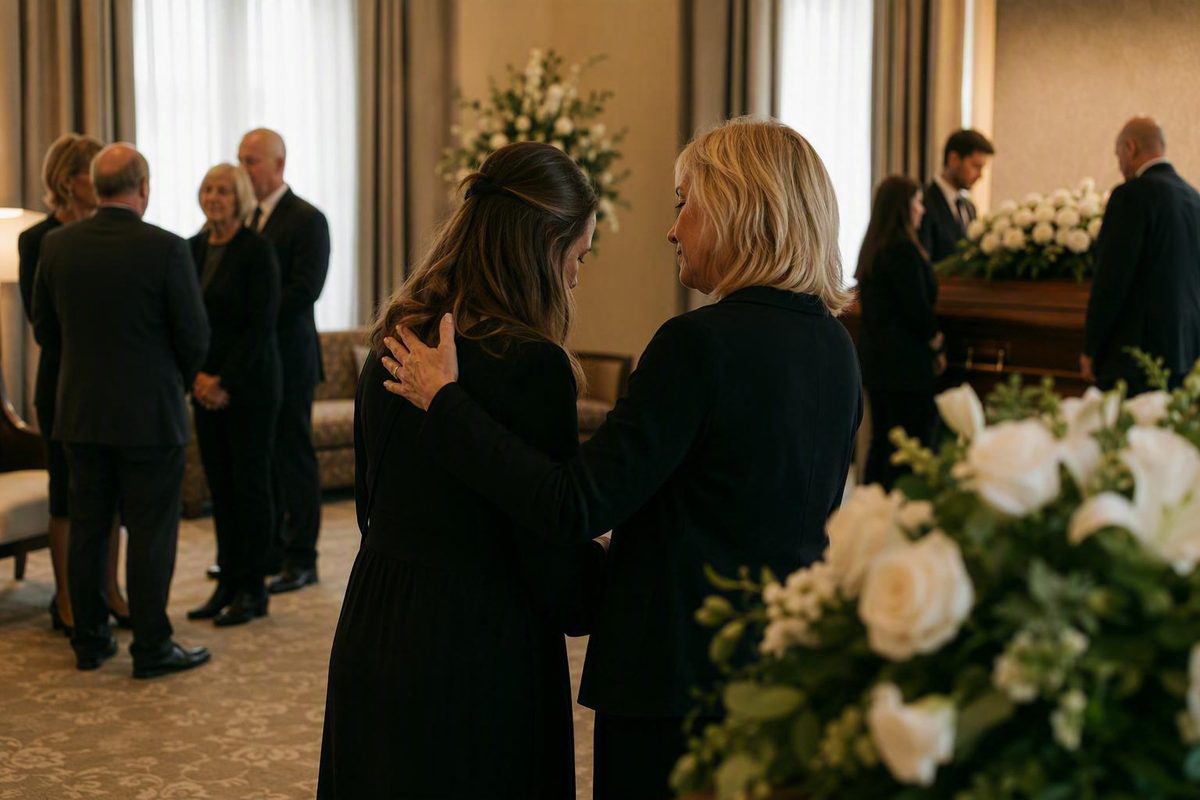
- A practical guide to visiting, paying respects, and supporting the family.*
What Calling Hours Mean in a Funeral Context
In a funeral context, calling hours are a scheduled period during which visitors may pay respects, offer condolences, share memories, and support bereaved family members. Guests generally arrive during an announced time window rather than attending a structured program from beginning to end.
Here, “calling hours” refers to a funeral-related gathering—not a company’s telephone availability, customer-service schedule, or ordinary business hours.
Calling hours and visitation are commonly used as equivalent terms. Both usually describe a less structured gathering during which people come and go within designated hours. However, funeral terminology is not standardized. Meanings can vary by region, religion, community, family, and funeral provider. Keyser Funeral Service describes visitation as a flexible gathering shaped by local tradition, religion, and family preference.
It is therefore more useful to understand calling hours by their purpose than to impose a rigid definition. They create an opportunity to:
- Greet the family
- Express sympathy
- Pay respects to the deceased
- Share a brief memory
- Sign a guest register, if one is provided
- Look at photographs or other memorial items
- Spend a quiet moment in reflection
- Support other people affected by the death
Calling hours are generally a visiting window, not a ceremony that everyone must enter and leave together. A prayer, tribute, or brief set of remarks may occur at a particular time, but the event notice should identify any fixed-time element.
You also do not necessarily need to have known the deceased. When the gathering is open to you, it can be appropriate to attend because you want to support a surviving relative, friend, neighbor, client, or coworker. If the family may not recognize you, briefly explain your connection when offering condolences.
Calling Hours vs. Visitation, Viewing, Wake, Funeral, and Memorial Service
Terms for funeral gatherings overlap considerably. Some providers distinguish them according to whether the deceased is present. Others use several labels for substantially similar events. For example, one funeral home uses “viewing” when the body is present and “calling hours” or “visitation” more broadly for offering condolences, but that is one provider’s terminology rather than a universal rule. Miles Funeral Home illustrates how these labels can overlap.
The table below summarizes common distinctions. It should not be treated as a binding glossary: the obituary or invitation, family, faith community, venue, and funeral provider determine what each label means for a particular gathering.
| Gathering | Usual purpose | Common timing | Typical structure | Possible presence of remains | Terminology caveat |
|---|---|---|---|---|---|
| Calling hours | Offer condolences, support the family, share memories, and pay respects | Commonly before the funeral, either on a prior day or earlier the same day | Flexible arrival and departure; a fixed-time element may be included | Open or closed casket, urn, or no remains | Often synonymous with visitation and sometimes called a wake or viewing |
| Visitation | Visit the bereaved and pay respects | Usually before or near the funeral | Generally informal and flexible, although prayers or remarks may occur | Body, urn, photographs, or no remains | Frequently used interchangeably with calling hours |
| Viewing | See the deceased and say goodbye, sometimes as one part of a wider gathering | Usually before the funeral or disposition | May be private or public | Ordinarily suggests that the body is present for viewing | Some providers use “viewing” more broadly for the entire visitation |
| Wake | Gather, remember, pray, share stories, support the family, or pay respects | Often before the funeral | May be informal, formal, religious, cultural, or social | Casket, urn, or no remains, depending on custom | May mean calling hours in one community and a distinct observance in another |
| Funeral | Conduct a formal ceremony honoring the deceased and, where applicable, observe religious rites | Usually after calling hours or visitation | Planned beginning, middle, and end; guests generally arrive before it starts | Casket or urn may be present, depending on the arrangements | “Funeral” can refer broadly to several events, but often means the formal service |
| Memorial service | Remember and honor the deceased | May occur before or after disposition, or independently | Usually a planned gathering with readings, music, tributes, stories, or prayers | Often held without the body; an urn may be present | Families and providers use the term for many different formats |
Calling hours and visitation
These are the closest equivalents. Both usually describe a designated period when visitors may stop in to offer condolences and pay respects. If a notice lists “visitation” rather than “calling hours,” the practical expectations are often similar: arrive within the announced window, greet the family, and leave when your visit feels complete.
Viewing
A viewing places particular emphasis on seeing the deceased. It may be a private gathering for close relatives, a public event, or one component of calling hours. A family might hold a private viewing and then open the venue for a broader visitation.
Do not assume that every visitor must approach the casket. Even when the body is present, viewing is generally a personal choice.
Wake
“Wake” is especially variable. In some communities, it is another name for calling hours. Elsewhere, it describes a more formal gathering or an observance involving prayers, religious practices, food, storytelling, or cultural traditions.
One provider, for example, calls a wake “calling hours” while distinguishing it from a less formal visitation. That local usage demonstrates why the label alone cannot establish exactly what will happen. Wujek-Calcaterra explains this particular use of wake and related terms.
Funeral
A funeral is generally more structured. It ordinarily has a stated start time, planned content, and a recognizable conclusion. Calling hours, by comparison, usually permit guests to arrive and depart throughout the announced period.
If a notice says, “Calling hours from 4 to 7 p.m.; funeral at 10 a.m.,” the first event is a flexible visiting window. The second is a service for which guests should normally arrive before the scheduled start.
Memorial service
A memorial service is a remembrance gathering, often held without the body present. It may include music, readings, a eulogy, prayers, photographs, or shared stories. An urn may be present, but that is not required. As with the other terms, the exact format depends on the family’s arrangements.
Treat the event notice as your primary starting point. If the wording is unclear—particularly about invitation status, body presence, religious observances, or a ceremony beginning at a fixed time—confirm the details with the funeral home, venue, faith community, or family representative.
When, Where, and in What Format Calling Hours Take Place
Calling hours commonly take place before the funeral. They may be held during the prior evening, earlier on the day of the service, or at another time chosen by the family. Funeral homes and places of worship are common venues, although another suitable location may be selected.
The length of the entire gathering should not be confused with the length of one person’s visit. Calling hours may remain open for an extended window so that different groups can attend, while individual visitors come and go. No single duration applies to every event, and guests are not generally expected to remain throughout.
The physical format can vary just as much as the schedule. Depending on the arrangements, the room may contain:
- An open casket
- A closed casket
- An urn
- A portrait or collection of photographs
- A memorial video
- Clothing, awards, artwork, tools, or hobby items
- Flowers and cards
- Music selected by the family
- No remains at all
Calling hours can take place before cremation with a casket present, after cremation with an urn, or without remains present. A family can also arrange a private open-casket viewing followed by public calling hours with the casket closed. Keohane Funeral Home outlines several casket, urn, and no-body visitation formats. Families weighing these arrangements may also find it useful to review how cremation and burial affect service options.
If there is an open casket, approaching it is generally optional. You may greet the family, sign the register, look at the memorial display, and leave without viewing the deceased. There is no need to participate in a form of farewell that makes you uncomfortable.
The same principle applies to kneeling, praying, bowing, or making another religious gesture. Follow the family’s or officiant’s lead respectfully, but do not assume that you must imitate an unfamiliar practice. Quietly standing or sitting is usually an appropriate alternative.
What to Expect: A First-Time Attendee Walkthrough
A first visit can feel less intimidating when you understand the likely sequence.
1. Read the notice carefully
Before leaving, check the obituary, funeral-home page, invitation, or family message for:
- The exact venue and address
- The date and calling-hours window
- Whether the gathering is public, private, or invitation-only
- Any entrance or parking instructions
- A dress request
- Guidance concerning children
- Flower, donation, or memorial instructions
- The time of any prayer, remarks, or ceremony
- Whether a funeral or other service follows
Use the official notice as your main reference, and confirm anything unclear with the funeral home or family.
2. Arrive during the announced window
If calling hours are listed from 4 to 7 p.m., you can generally arrive at a suitable point within that period. You do not ordinarily have to be at the door at 4 p.m.
The exception is when the notice announces a prayer, military tribute, family remarks, or another element at a specific time. If you want to attend that portion, arrive early enough to enter and follow any seating directions.
Allow reasonable extra time for parking, weather, a receiving line, or a large crowd.
3. Enter quietly and follow directions
Silence your phone before entering. Look for signs and follow instructions from funeral-home staff, ushers, or the officiant.
If a guest register is provided, sign it legibly. When your name alone may not be familiar, a short identifier—such as your workplace, neighborhood, school, or organization—can help the family recognize your connection later.
4. Join the receiving line if there is one
A line may lead toward a casket, urn, or memorial display before reaching the family, or it may go directly to family members. Follow the room’s natural flow and any directions from staff.
While waiting, keep conversations quiet. It is fine to acknowledge someone you know, but avoid loud reunions, unrelated business discussions, or conversations that obstruct the line.
5. Pay respects in a personally comfortable way
You may pause by a photograph, urn, closed casket, or open casket. You might bow your head, pray silently, remember the deceased, or simply stand quietly for a moment. None of these specific actions is mandatory.
If viewing the body would be distressing, bypass that part and focus on greeting the family. You also need not participate in an unfamiliar prayer or physical gesture. Remain respectful and follow instructions without pretending that a particular practice is your own.
6. Greet the family
Offer a short condolence. If the family may not know you, introduce yourself and explain your connection. When other visitors are waiting, a sentence or two is enough.
If the bereaved person continues the conversation or invites you to sit nearby, you may stay longer. Otherwise, allow the line to keep moving.
7. Decide how long to remain
A brief visit can be entirely appropriate, particularly when the venue is crowded or your connection is indirect. Close friends and relatives may remain longer when the family’s cues, available space, and schedule make that appropriate.
Do not try to satisfy a fixed number of minutes. Consider:
- Your relationship to the family or deceased
- Whether other visitors are waiting
- Whether the family appears ready to continue talking
- Whether a ceremony is about to begin
- The venue’s closing time
8. Leave without waiting for a dismissal
Calling hours do not usually end each person’s visit formally. After offering condolences and paying respects, you may leave quietly. You do not need to say goodbye to everyone in the room.
Avoid arriving at or after the listed closing time. If an unavoidable delay would put you near closing, call the funeral home and ask whether a brief visit is still practical.
What to Wear and How to Behave
The safest clothing is clean, modest, respectful, and appropriate for the family and venue. There is no universal calling-hours uniform, and black is not always required.
Subdued business or business-casual clothing is often a practical default:
- Slacks with a button-down shirt, sweater, or simple blouse
- A modest dress or skirt
- A jacket or understated suit
- Neat workplace clothing
- Clean, low-key shoes
If you must attend directly from work, neat work clothing may be more practical than missing the gathering solely because you cannot change. Avoid clothing that is dirty, highly revealing, covered with distracting slogans, or likely to draw attention away from the occasion.
Family instructions take priority over generic advice. Some families request a favorite color, team apparel, casual clothing, traditional dress, or attire connected with the deceased’s interests. Others expect greater formality. Follow the notice and consider the standards of the venue or place of worship.
Black is not universally necessary. One funeral-home attire guide recommends modest clothing suited to the family’s level of formality, comfortable shoes if a line is expected, and a sweater for a cool interior. Anthony Funeral Homes provides this practical visitation-attire guidance.
Respectful conduct
Once inside:
- Silence your phone and other electronics.
- Keep conversations quiet.
- Follow directions from staff, ushers, or the officiant.
- Avoid disruptive behavior and unrelated arguments.
- Do not monopolize a family member when others are waiting.
- Step outside before taking an urgent call.
- Respect private rooms and restricted areas.
- Follow the venue’s rules concerning food and drinks.
Avoid photographs and selfies unless you have clear permission. A memorial display may be visible to guests, but the gathering remains a sensitive family occasion. Never assume that an open casket may be photographed simply because no sign prohibits it.
Bringing children
Whether children should attend depends on the family’s wishes, the setting, and the child. If the notice does not address children and you are uncertain, ask the family or funeral home.
Before attending, explain in age-appropriate language that there may be a casket or urn, crying adults, quiet prayers, and a receiving line. Let the child know what behavior the setting requires, and be prepared to step outside if they become distressed or disruptive.
These are adaptable etiquette recommendations, not universal requirements. Family, cultural, religious, and venue expectations come first.
What to Say to the Family
You do not need a polished speech. A short, sincere condolence is enough:
“I’m so sorry for your loss.”
Speak naturally, avoid forcing optimism, and let the bereaved person decide whether the conversation continues.
If you knew the deceased
Use a simple three-part structure:
- Introduce yourself if necessary.
- Explain how you knew the person.
- Mention one specific positive memory or quality.
For a coworker:
“I worked with Maria, and I will always remember how welcoming she was to new employees.”
For a friend from an earlier stage of life:
“I went to school with Daniel. He had a wonderful way of making everyone feel included.”
A specific, concise memory can show the family how their loved one affected others. Save a long story for another time unless the family invites you to continue.
If you know the family but did not know the deceased
Be honest:
“I didn’t have the chance to know your father, but I wanted to come and support you.”
There is no need to imply that you had a personal relationship. Attending to support a bereaved person is a valid reason to be there.
If you are a neighbor or acquaintance
Identify the connection without requiring a long explanation:
“I’m Jordan from across the street. Your mother was always so kind when we spoke, and I’m very sorry for your loss.”
Or:
“I know you from the community center. I wanted to stop in and offer my condolences.”
What to avoid
Try not to say:
- “I know exactly how you feel.”
- “Everything happens for a reason.”
- “At least they lived a long life.”
- “They’re in a better place,” unless you know this reflects the family’s beliefs.
- “You need to be strong.”
- “You’ll feel better soon.”
Such phrases can unintentionally compare, explain, minimize, or hurry another person’s grief. Guidance from Montgomery & Steward instead recommends sincere condolences, a specific memory when appropriate, or a simple “I’m sorry for your loss.” Its visitation-etiquette guide also advises against saying, “I know how you feel”.
You do not need to fill every silence. “I’m so sorry,” followed by a quiet pause, can be enough.
A handshake, hug, touch on the arm, or other physical gesture should depend on your relationship and the other person’s cues. Let the bereaved person initiate or visibly welcome closer contact. Words alone are appropriate if you are uncertain.
Should You Attend Calling Hours, the Funeral, or Both?
Attending both calling hours and the funeral is not generally required. The right choice depends on your relationship, availability, the family’s preferences, and whether each gathering is open to you.
Consider attending them when:
- Your main goal is to offer condolences personally.
- You cannot attend the funeral.
- You knew the deceased through work, school, a neighborhood, or an organization.
- You know a survivor but did not know the deceased.
- A flexible visiting window works better for your schedule.
- You want to share a brief memory with the family.
A funeral may be the better choice when:
- You want to participate in the formal service.
- Your faith or community relationship makes the ceremony especially meaningful.
- The family has indicated that the service is the preferred gathering.
- You are expected to take a formal role.
- The visitation is private but the funeral is open to you.
Close relatives and friends may choose to attend both. Coworkers, neighbors, acquaintances, and people supporting a survivor may reasonably attend one. Neither choice should be treated as a ranking of how much someone cared.
A person who did not know the deceased may still attend an open gathering to support someone who is grieving. A brief introduction makes the reason for attending clear.
First confirm the invitation status. A notice may describe an event as public, private, family-only, or by invitation. Do not assume that every announced gathering is open to everyone. If the wording is uncertain, ask the funeral home discreetly.
Attendance is an offer of support, not a compulsory test. Distance, work, health concerns, caregiving responsibilities, or a private invitation may affect what is possible. If you cannot attend, a card, message, later phone call, meal, donation, or specific offer of practical help may be another thoughtful response.
Bringing Something and Planning Calling Hours
Guests do not need to arrive with a gift unless the notice or local custom indicates otherwise. Your presence and condolence are sufficient.
Depending on the circumstances, possible gestures include:
- A sympathy card
- Flowers
- A photograph or copy of a photograph
- Food for the family
- A donation to a named organization
- A written memory
- Nothing beyond your presence
Check the obituary or family instructions before choosing. If the notice says “in lieu of flowers,” follow the exact directions that accompany the phrase rather than assuming which alternative the family wants.
Flowers and food are especially dependent on family, religious, and cultural practice. One funeral-home guide advises against bringing flowers to Jewish funerals, but the broader lesson is to confirm the customs of the particular family or congregation rather than applying one general rule to an entire faith tradition. Hindman Funeral Homes discusses cards, photographs, food, flowers, and faith-specific cautions.
Before bringing a large floral arrangement or food container, ask whether the venue can receive it and when delivery should occur. The family may prefer that food go to a home or reception rather than the calling-hours venue.
Planning calling hours as a family
Families have considerable flexibility when arranging calling hours. Confirm the following with the funeral provider, place of worship, or venue:
- Date and time window: Coordinate the visitation with the funeral schedule, travel needs, religious requirements, and venue availability.
- Public or private attendance: Decide whether the gathering will be open, invitation-only, family-only, or divided into private and public periods.
- Expected attendance: Ask how the venue recommends handling room capacity, parking, seating, and visitor flow.
- Receiving arrangement: Decide whether family members will stand or sit and whether visitors will pass a casket, urn, or memorial display first.
- Accessibility questions: Ask the venue directly about entrances, seating, restrooms, hearing assistance, parking, or any other accommodation guests may need.
- Fixed-time elements: Identify prayers, remarks, music, military honors, organizational rites, or other moments that require guests to arrive at a particular time.
- Children: Decide whether the notice should address child attendance and ask what space or options the venue can provide.
- Deliveries: Ask how and when the venue accepts flowers, cards, food, photographs, and memorial items.
Possible formats include an open or closed casket, an urn, photographs, music, video, and personal memorabilia. Items connected to work, military service, hobbies, sports, volunteering, travel, or family life can provide natural points for reflection and conversation.
A family may hold a private viewing followed by broader public calling hours. It may also arrange calling hours with a closed casket, after cremation with an urn, or with no remains present. None of these choices is the single correct form.
Clear notice wording can reduce uncertainty. Consider including:
- Full venue name and address
- Date and arrival window
- Whether attendance is public or private
- The time of any prayer, tribute, or formal remarks
- Whether a funeral or memorial service follows
- Any dress request
- Guidance about children, if needed
- Flower, food, or donation preferences
- Parking or accessibility instructions supplied by the venue
- A contact point for questions
For example:
Calling hours will be held from 4 to 7 p.m. at Green Street Funeral Home. A brief prayer service will begin at 6:30 p.m. Guests may arrive at any time before the prayer service. Children are welcome. In lieu of flowers, please follow the memorial-donation instructions in the obituary.
Families do not have to hold calling hours. Choosing them does not guarantee closure, acceptance, or a particular emotional result, and declining them does not establish that anyone will experience regret. The arrangements should reflect the family’s circumstances, values, traditions, resources, and preferences.
Frequently Asked Questions About Calling Hours
Do I have to arrive when calling hours begin or stay until they end?
Generally, no. Calling hours are usually a flexible visiting period. You may arrive during the announced window, pay respects, greet the family, and leave without remaining until the end.
Arrive before any fixed-time prayer or ceremony you want to attend, and avoid coming at or after the listed closing time. If a delay leaves you uncertain, call the funeral home.
Will there be an open casket at calling hours?
Possibly, but not necessarily. Calling hours may include an open casket, closed casket, urn, memorial display, or no remains. The event’s label alone does not establish which format the family selected.
If an open casket is present, you generally do not have to approach it. You can greet the family and pay respects without viewing the deceased.
How long should an individual guest stay at calling hours?
There is no universal number of minutes. A brief visit may be appropriate when the gathering is crowded or your relationship is indirect. Close friends and relatives may stay longer when space, family cues, and the venue schedule permit.
Stay long enough to offer condolences and pay respects, but avoid delaying a receiving line. The full calling-hours window is not the expected length of each guest’s visit.
Can I attend calling hours if I knew the family but not the deceased?
Yes, if the gathering is open to you. Supporting a bereaved relative, friend, coworker, or neighbor is a valid reason to attend.
You can say:
“I didn’t have the chance to know your father, but I wanted to come and support you.”
Check first whether the event is public, private, or invitation-only.
Is black clothing required for calling hours?
No. Black is not universally required. Clean, modest, respectful business or business-casual clothing is often a safe choice.
Follow any specific request from the family and consider the venue, culture, and faith tradition. If no instructions are given, subdued clothing and comfortable shoes are practical options.
Calling hours are primarily an opportunity to show support, not a test of perfect etiquette. Verify the event details, arrive within the announced window, dress respectfully, offer a brief and sincere condolence, and follow the family’s and venue’s lead. Because terminology and customs vary, the obituary, funeral home, family, and relevant faith community are better guides for a specific gathering than any universal rule.