
17 min read ·
Dress Modestly and Comfortably for a Funeral Visitation
Modest business-casual clothing is the safest default. Dark, neat jeans with a nice shirt may suit relaxed families, but tailored pants are safer if unsure.
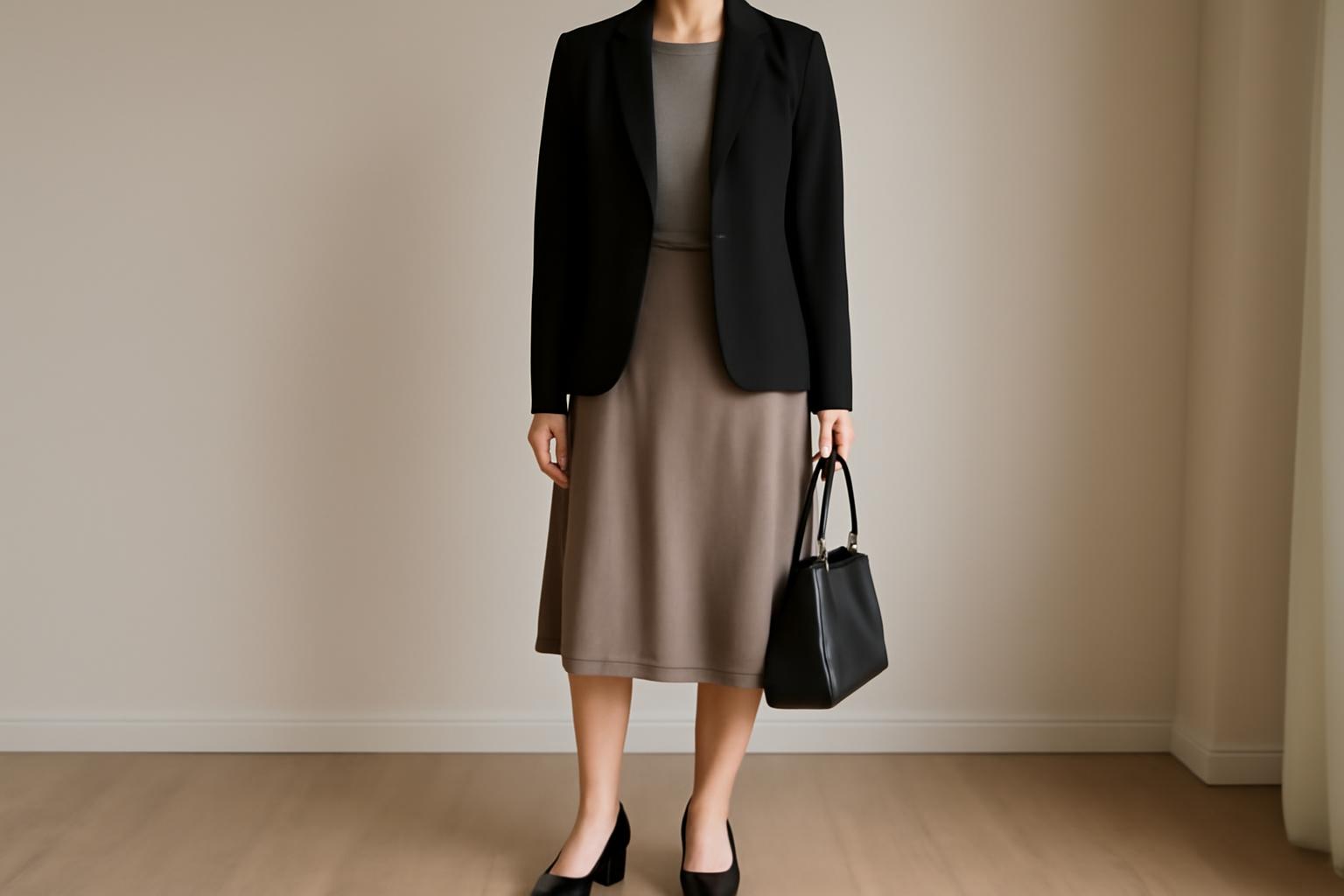
If you are wondering what to wear to a visitation, the safest answer is usually this: choose something modest, neat, and comfortable in the business-casual range. In many communities, a visitation is less formal than the funeral service itself, but it is still a serious gathering where your clothing should reflect respect for the family.
That usually means polished everyday clothes rather than full formalwear. Think slacks and a collared shirt, dress pants and a blouse, or a simple modest dress or skirt outfit. The goal is not to look fashionable or memorable. The goal is to look appropriate, stay comfortable, and avoid pulling attention away from the purpose of the visit.
There is no single dress code that fits every visitation. Family habits, faith traditions, local customs, and any instructions in the obituary or service notice all matter. Use this guide as general information only, not as a substitute for directions from the family, funeral home, or a licensed funeral professional.
Understanding Visitation Attire Expectations
A visitation is often treated as a time to stop by, offer condolences, and briefly greet the family. Because of that, many sources place visitation clothing in the business or business-casual category rather than the more formal end of funeral attire.
That said, terms such as visitation, viewing, wake, memorial, and funeral are not always used consistently. Different families and funeral homes use them in different ways, and expectations can overlap. So it is best to think in patterns, not rigid rules. In many situations, visitation attire is a little less formal than funeral attire. In others, the difference may be small.
The most reliable standard is simpler than any label: your clothes should look like they belong at a serious, respectful gathering.
That usually means choosing items that are:
- Clean
- Neat
- Pressed or wrinkle-free if you can manage it
- Modest
- Understated
Those qualities matter more than owning a black suit or buying a special outfit.
A safe general framework, regardless of your personal style, is:
- Tailored pants, chinos, a modest skirt, or a simple dress
- A plain blouse, knit top, button-front shirt, or other tidy top
- A sweater, cardigan, blazer, or light jacket if needed
- Comfortable, understated shoes
That formula works because it keeps the focus on respect rather than appearance.
If you are unsure how formal a specific visitation will be, a few clues can help:
- Read the obituary or service notice carefully. Some families request bright colors, casual clothes, religious dress, uniforms, or another meaningful theme.
- Think about the family’s usual style. Some families dress quite formally for life events; others keep things more relaxed.
- Consider your role. Immediate family members and people participating in the service often choose dressier clothing.
- When in doubt, lean a little more formal. That is usually safer than showing up too casually.
Because visitations often happen after work, polished office attire is commonly acceptable. If you are coming straight from work and your clothes already fit a business or business-casual standard, that may be entirely appropriate.
If you still feel uncertain, it is reasonable to ask someone close to the family or check with the funeral home. Specific instructions always matter more than general etiquette advice.
Recommended Outfits for Men
For men, the easiest and most dependable choice is slacks or dress pants with a button-down shirt. That combination fits the business-casual standard many visitations follow and rarely feels out of place.
Reliable outfit combinations include:
- Dress slacks or chinos with a long-sleeve button-down
- Dress pants with a collared shirt and a sweater
- Tailored trousers with a simple sport coat
- A suit, with or without a tie, if the situation calls for it
A full suit is usually optional for a visitation, but it can be a sensible choice if:
- You are part of the immediate family
- You are greeting guests with the family
- You are speaking or taking part in the service
- The family tends to dress traditionally
- You would rather be slightly overdressed than risk being too casual
For many guests, though, a collared shirt and slacks are enough.
Good choices for men
Pants: Dress slacks, wool trousers, chinos, or other clean tailored pants in darker or neutral shades
Shirts: Button-down shirts, other simple collared shirts, or a plain sweater layered over a collared shirt
Outer layers: A cardigan, sweater, blazer, or light jacket can be useful if the building feels cool
Shoes: Closed-toe shoes you can stand in comfortably, such as loafers, oxfords, derbies, or other understated dress shoes
What men should avoid by default
Unless the family has clearly asked for casual dress, it is safest to avoid:
- Shorts
- Flip-flops
- Athletic shoes
- Very casual sneakers
- Graphic T-shirts
- Clothing with large logos
- Hoodies
- Athletic wear
- Jeans
Jeans are the most common gray area. Some sources acknowledge that nice jeans may be accepted in more relaxed communities or by families who dress casually. But that does not make jeans the safest default. If you do not know what the family expects, tailored pants are the better choice.
A useful test is this: if the outfit feels like something you would wear for errands, the gym, or a backyard gathering, it is probably too casual. If it looks like respectful office or event clothing, it is usually a safer fit.
Easy example outfits for men
These combinations usually work well:
- Charcoal slacks, pale blue button-down, brown loafers
- Navy chinos, white shirt, dark belt, simple dress shoes
- Gray dress pants, dark sweater over a collared shirt, black shoes
- Navy suit, white shirt, dark dress shoes
Keep the overall look quiet and polished. That matters more than following a strict formula.
Recommended Outfits for Women
For women, visitation attire usually falls in the same modest business-casual range. Good choices include dress pants with a nice top or blouse, a modest skirt outfit, or a simple dress that does not feel flashy or revealing.
Dependable combinations include:
- Dress pants with a blouse and flats
- A modest dress with a cardigan or blazer
- A simple skirt and blouse
- Tailored trousers with a knit top and light sweater
Many women already own something suitable in their regular work wardrobe. You usually do not need special funeral clothing. A neat, conservative outfit you already feel comfortable wearing is often the best option.
Good choices for women
Pants and skirts: Dress pants, tailored trousers, or a modest skirt in a dark or neutral tone
Dresses: A simple dress in a modest cut, often around knee length or another conservative length
Tops: Blouses, simple knit tops, shells with a cardigan, or other understated tops
Shoes: Flats, loafers, or low heels that are comfortable for standing and walking
Layers: A cardigan, sweater, or light blazer can help if the venue feels chilly
Fit and styling guidelines
For a visitation, it is safest to choose clothing that is:
- Modest through the neckline
- Not overly short
- Not very tight
- Not sheer
- Easy to sit, stand, and move in comfortably
A dress can be appropriate, but so can pants. There is no requirement to wear a dress if tailored pants feel more practical or more natural for you.
Accessories are best kept simple. That usually means:
- Minimal jewelry
- No oversized statement pieces
- A quiet, practical handbag if you need one
- Avoiding anything glittery, noisy, or attention-grabbing
The same principles also work for anyone who does not dress in a traditionally gendered way. Tailored trousers, a simple top or button-front shirt, a cardigan or blazer, and understated shoes can create a respectful visitation outfit without forcing a style that does not feel like you.
What women should avoid by default
Unless the family has requested a different style, avoid:
- Very revealing necklines
- Very short hemlines
- Flashy or highly decorative dresses
- Very bright colors
- Busy patterns
- Flip-flops
- Athletic shoes
- Distressed denim
- Graphic shirts
- Clothing that feels more suited to a party or night out
The point is not to erase personality. It is to make sure your clothes do not become a distraction in a room centered on grief and support.
Easy example outfits for women
A few safe combinations:
- Black or navy dress pants, cream blouse, cardigan, flats
- Charcoal dress, simple necklace, low heels
- Navy skirt, gray blouse, black cardigan, loafers
- Deep green trousers, neutral top, dark flats
Colors, Fabrics, and What to Avoid
One of the biggest misconceptions about visitation attire is that you must wear black. In most cases, you do not. Black is traditional and always acceptable, but it is not the only respectful option.
If you do not own black, other safe choices often include:
- Navy
- Gray
- Charcoal
- Deep green
- Brown
- Taupe
- Other subdued neutrals
Some guidance says almost any color can work. In practice, the safest interpretation is not “wear anything at all,” but rather choose a color that feels quiet and appropriate for a serious occasion.
Colors and patterns to avoid
Unless the family has asked for cheerful or themed clothing, it is usually best to avoid:
- Neon or very bright colors
- Loud prints
- Busy patterns
- Glittery or flashy fabrics
- Large logos
- Graphic designs
The issue is not that a bright color is automatically disrespectful. It is that bold clothing can easily draw focus in a room where the attention should stay on the family and the person being remembered.
Fabrics that work well
The most practical fabrics for a visitation are usually those that are:
- Comfortable
- Breathable
- Modest
- Structured enough to look polished
- Not obviously flashy
You do not need to buy a new outfit for a visitation. A clean, neat, conservative outfit you already own is usually a better choice than something new that feels stiff, flashy, or unlike you.
Common items to avoid
Unless the family has specifically asked guests to dress casually, these are usually best left at home:
- Jeans
- Shorts
- Flip-flops
- Athletic shoes
- Tank tops
- Sweatshirts
- Graphic tees
- Clothing with slogans
- Very revealing clothing
Again, jeans sit in a gray area because some families truly are casual. But if you are unsure, do not assume jeans are acceptable.
Do not forget fragrance
Clothing is only part of the overall impression. Strong perfume or cologne can be distracting in a crowded indoor space, and some people are sensitive to scent. Floral arrangements may already add fragrance to the room, so a light hand—or no added fragrance at all—is usually the most considerate choice.
Comfort and Practical Tips for the Venue
A respectful outfit also needs to be practical. Visitations can involve more standing and waiting than many people expect. You may have a receiving line, move through several rooms, or spend time both indoors and briefly outside.
That is why comfort matters, especially in your shoes and layers.
Choose shoes you can stand in
Good visitation shoes are usually:
- Closed-toe
- Understated
- Comfortable enough for standing
- Stable enough for walking through parking lots, sidewalks, or crowded rooms
Loafers, flats, low heels, and simple dress shoes are all common choices. You do not need uncomfortable shoes to look respectful.
Expect cool indoor temperatures
Some funeral homes are kept on the cool side. Even if the weather outside is warm, you may be more comfortable with a sweater, cardigan, blazer, or light jacket.
That can be especially helpful if you:
- Tend to get cold easily
- Are wearing short sleeves
- Expect to stay for a while
- Will be moving between indoors and outdoors
Think in layers
Breathable fabrics and simple layers work well because a visitation may involve several short transitions:
- Parking lot to entrance
- Lobby to visitation room
- Funeral home to church
- Indoor space to reception area
A layered outfit gives you flexibility without making you look too casual.
Keep accessories simple
Minimal accessories are usually the safest choice. Large or elaborate jewelry, oversized bags, or dramatic extras can feel out of place in a quiet room.
Simple accessories also tend to be easier to manage if you are:
- Greeting several people
- Signing a guest book
- Carrying tissues
- Offering hugs or handshakes
Skip strong scents
This point is easy to overlook, but it matters. Strong perfume or cologne can bother people who are already dealing with flowers, tears, and crowded indoor air. A low-fragrance approach is a considerate part of funeral etiquette.
If the service may be photographed or livestreamed
Some services are photographed, recorded, or livestreamed. If that is noted in the service information, it is one more reason to stay with simple, subdued clothing rather than anything bright or attention-seeking. You do not need to dress for a camera; you just want to avoid standing out unnecessarily.
Exceptions for Children, Family Wishes, and Special Cases
General etiquette is helpful, but it is never the last word. Visitations vary by family culture, religion, community, and the personality of the person who died. In some cases, the most respectful thing you can do is set aside the default advice and follow the family’s wishes.
Children and teens usually have more flexibility
Most etiquette guidance gives children more leeway than adults. The main standard for kids is not strict formality. It is clean, neat, respectful clothing that they can wear comfortably.
For children and teens, aim for:
- Clean clothes
- A tidy appearance
- Comfortable fit
- Simple or subdued styles when possible
That might mean a collared shirt, a sweater, simple pants, a modest dress, or other neat everyday clothing. Teenagers can usually follow a simplified version of adult business-casual clothing, but families are not likely to judge children’s outfits by the same standard they use for adults.
Family requests override the default
If the family asks for something specific, follow that request first.
Examples might include:
- Favorite sports team colors
- Bright colors for a celebration of life
- Casual dress
- Hawaiian shirts
- Military uniforms
- Religious clothing
- A favorite color of the deceased
Honoring those requests is usually more respectful than following a general article about funeral attire. If the family wants something personal or celebratory, that preference matters more than tradition.
If you want to follow a color request without feeling overly conspicuous, you can still do it in a quiet way—for example, by choosing a muted version of the requested color.
Religious and cultural customs matter
Some communities have funeral customs that differ from mainstream Western expectations. Certain services may call for:
- White rather than black
- Greater modesty
- Head coverings
- Specific garments
If the family belongs to a faith or cultural tradition with specific expectations, those customs take priority over default advice about dark business-casual clothing. The obituary, place of worship, or funeral home may provide guidance. If not, asking someone close to the family is appropriate.
Immediate family and participants may dress up a step
Even when ordinary guests wear business-casual clothing, people with a more visible role often choose something dressier. That may include:
- Immediate family
- Speakers
- Musicians
- Clergy
- Pallbearers
- Others participating in the service
If you are part of that group, a suit, jacket, tie, or dressier dress may make sense even if many other guests are more simply dressed.
Visitation vs. Funeral or Graveside Attire
People often use the words visitation, viewing, wake, memorial, and funeral as if they mean the same thing, but clothing expectations can differ. They can also blur together depending on the family and the funeral home, so it helps to treat the following as common patterns rather than fixed rules.
Visitation
A visitation is often the event where guests come to offer condolences and briefly speak with the family. In many communities, the dress standard lands around:
- Modest
- Neat
- Business casual
- Comfortable enough for standing and greeting people
That is why slacks, a blouse, a collared shirt, or a simple dress are so often suggested.
Funeral
A funeral service is often a step more formal than the visitation. Many people choose:
- A suit
- A tie
- A more formal dress
- Darker colors
- Dressier shoes
That does not mean every funeral requires full traditional black clothing. Modern standards are looser than they once were. But compared with a visitation, the funeral itself is often where more guests choose classic formal funeral attire.
If you attend both events, the visitation can help you judge the family’s style. If most people are dressed very formally at the visitation, that may signal a more traditional funeral. If the visitation is relaxed and the family has used celebration-of-life language, the funeral may also be less formal.
Graveside service
A graveside service changes the practical side of dressing because weather and ground conditions matter much more.
For graveside events, think about:
- Grass
- Uneven ground
- Mud
- Wind
- Heat or cold
- Standing outdoors
That is why shoe choice matters so much. A shoe that works well indoors may be a poor choice at a cemetery. Thin heels, in particular, can be impractical.
If you are attending both the funeral and the graveside service, it is reasonable to keep the same general outfit but choose weather-aware layers and sturdier shoes.
What about dark jeans?
Relaxed dress norms have changed expectations in some communities, and some guidance now allows nice dark jeans in certain circumstances. But that does not make jeans a universal visitation option.
A balanced rule is:
- They may be acceptable at some casual visitations
- They are not the safest choice if you are unsure
- They are usually less appropriate for the funeral itself
If you do not know what the family expects, business-casual clothing remains the safest route.
Quick Checklist: Your Visitation Outfit Ready
Before you leave, run through this quick checklist.
Do:
- Wear modest business-casual clothing
- Choose dark or neutral colors when possible
- Make sure your clothes are clean and neat
- Pick comfortable closed-toe shoes
- Bring a sweater, cardigan, blazer, or light jacket
- Keep accessories simple
- Check the obituary or service notice for dress requests
- Dress a little more formally if you are unsure
Don’t:
- Wear shorts, flip-flops, athletic shoes, or gym clothes
- Choose loud prints, flashy fabrics, or large logos
- Wear revealing clothing
- Assume jeans are fine if you do not know the family’s expectations
- Overdo jewelry or statement accessories
- Wear strong perfume or cologne
Check:
- Whether the family requested special colors or casual dress
- Whether the venue may feel cool
- Whether you may be standing for a while
- Whether there is a graveside portion afterward
- Whether you are attending as a participant or close family member
If you still feel uncertain, remember the simplest rule: slightly too formal is usually safer than too casual. And above all, your presence matters more than a perfect outfit.
Do I have to wear black to a visitation?
No. Black is traditional and always safe, but it is not required for most visitations.
Dark or neutral colors such as navy, gray, charcoal, brown, or deep green are also widely considered respectful choices. The better question is not whether the outfit is black, but whether it looks subdued, modest, and appropriate for a serious occasion.
If the family, faith tradition, or obituary asks for something specific, follow that request instead of defaulting to black.
Are jeans or sneakers okay for a visitation?
Usually, not as a default.
For most visitations, slacks, dress pants, or other business-casual clothing are a safer choice than jeans. Some families are relaxed enough that dark, neat jeans with a nice shirt may be acceptable, but that depends on the family and community. If you are unsure, avoid jeans.
Sneakers are similar. Athletic shoes are generally too casual for a visitation. More understated closed-toe shoes are a better fit.
What if the family requests bright colors or casual dress?
Follow the family’s request.
If the family asks guests to wear bright colors, sports colors, casual clothes, military uniforms, or religious attire, honoring that request is usually the most respectful thing you can do. It shows that you paid attention to what they wanted for their loved one’s service.
If the request is casual dress, aim for clean and neat casual, not sloppy clothing. If the request is for bright colors, you can still choose a tasteful version rather than the loudest option you own.
How should children dress for a visitation?
Children usually have more flexibility than adults. The standard is simply clean, neat, respectful clothing that they can wear comfortably.
Good options might include:
- Simple pants and a collared shirt
- A modest dress
- A sweater with clean pants
- Other tidy everyday clothes
You do not need to force strict adult formality on children. The bigger goal is to help them stay comfortable and able to behave calmly during the event.
Can I wear work clothes straight to a visitation?
Often, yes.
Because visitations are commonly less formal than funerals and may happen after the workday, polished work clothes are often appropriate if they already fit a business or business-casual standard. Office slacks, a blouse, a button-down, a sweater, or similar professional clothing can work well.
If your work clothes are very casual, then it is better to change if you reasonably can. But in general, neat workplace attire is often suitable for a visitation.
A respectful visitation outfit does not need to be complicated. In most cases, modest business-casual clothing in dark or neutral tones will work well: slacks or a simple dress, understated shoes, and a layer for a cool room. If the family, obituary, or funeral home gives a different dress request, follow that first. Practices vary by family, faith, and community, so treat this as general guidance and ask the funeral home if you need specifics.