
20 min read ·
How to Scatter Ashes at Sea With Less Environmental Impact
The direct impact of one well-dispersed open-ocean release is likely low, but it has not been proved to be zero.
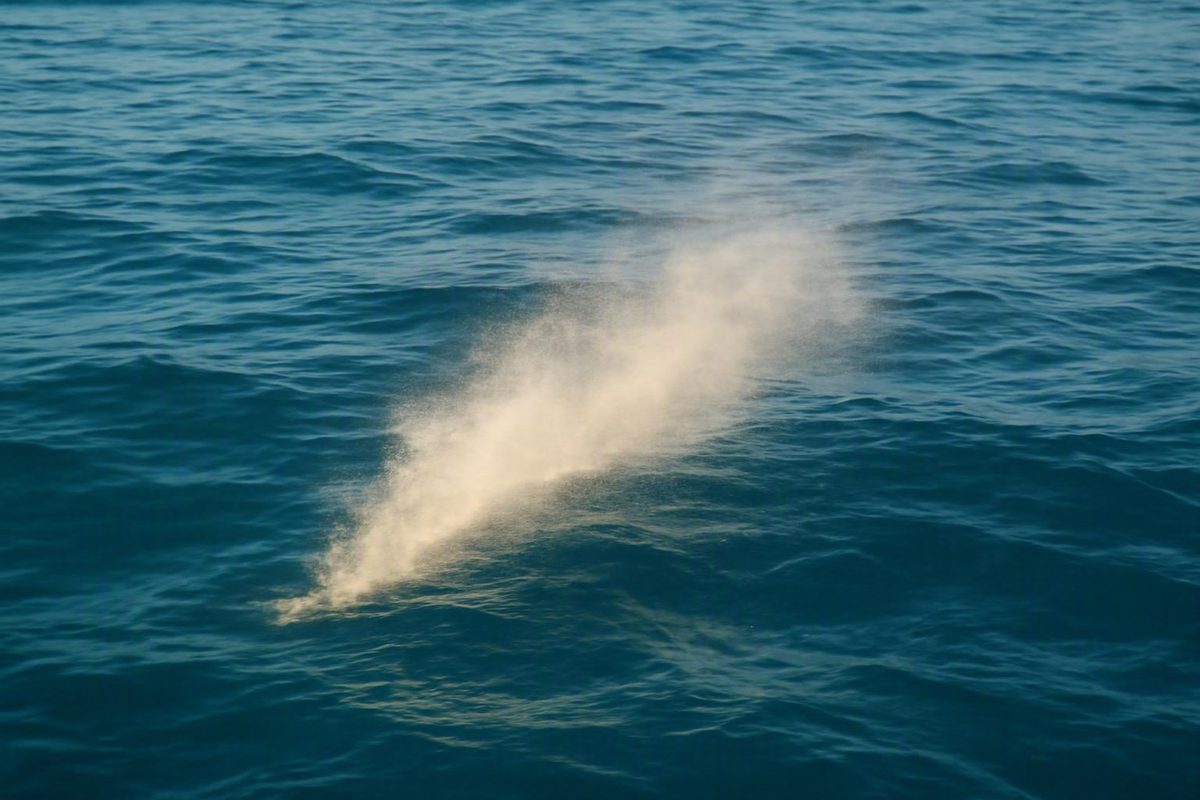
The short answer: what is the environmental impact of scattering ashes at sea?
A single, properly dispersed release of human cremated remains in moving, open-ocean water likely has a low direct ecological impact. This is a bounded inference from the scale of one release, the ocean’s volume, and the dispersal provided by currents—not a finding demonstrated by direct field measurements or comprehensive marine ecotoxicology.
It would therefore be inaccurate to describe ocean scattering as harmless, pollution-free, risk-free, or proven to leave no ecological trace. Published evidence measuring how a typical family scattering changes seawater chemistry, sediment, or marine organisms over time is limited. Government rules establish the conditions under which an ocean burial may occur, but legal authorization does not prove that a release has zero environmental effect.
Three separate questions are often conflated:
- Is the release legal? That depends on the location, distance from land, type of remains, accompanying materials, reporting requirements, and any additional jurisdictional rules.
- Will an urn or tribute decompose? A product may break apart even though its dyes, coatings, adhesives, liners, closures, or decorations are not necessarily suitable for release into the sea.
- Has every component been demonstrated to be ecologically safe? Neither legal authorization nor a biodegradable label establishes that a material has no effect at every concentration.
The likely exposure changes with the quantity released, initial concentration, currents, water depth and movement, release method, urn construction, and frequency with which one site is used. Moving ocean water should disperse particles and dilute soluble components more effectively than a small lake, slow river, sheltered bay, or concentrated underwater deposit.
The clearest avoidable concern is often ceremony debris rather than the cremated remains. Plastic bags, balloons, ribbons, wire frames, synthetic flowers, foam, metal clips, coated decorations, and nondegradable containers can remain after a ceremony ends. A controlled release that returns all packaging and keepsakes to shore is materially different from one that leaves persistent objects in the water.
The memorial’s footprint also begins before the ashes reach the sea. Flame cremation uses energy and can produce air emissions. Guest travel, vessel fuel, urn manufacturing, flowers, packaging, and other ceremony materials add further impacts. A useful environmental assessment considers both the direct release and the memorial as a whole.
What cremated remains contain and what happens after release
“Cremated ashes” can create the wrong mental picture. The material returned to a family is not primarily soft soot like fireplace ash. It consists largely of bone fragments remaining after cremation and mechanically processed into coarse granules.
Commercial ocean-burial providers commonly describe the material as grit- or sand-like and composed principally of calcium-phosphate compounds, with salts and trace minerals also present. That is an industry description rather than independent proof of environmental safety, but it helps explain the material’s physical character (commercial provider description of cremated remains).
The fact that these minerals can occur naturally does not establish that every concentration is harmless. Ecological effects depend on dose, exposure time, surrounding chemistry, and the sensitivity of organisms present.
After a loose surface release, several processes are plausible:
- Wind and surface movement spread particles during and immediately after release.
- Currents distribute suspended material through a larger volume of water.
- Soluble components become diluted.
- Coarser particles that remain intact may eventually settle into marine sediment.
- A sinking urn may retain the remains until it opens or breaks down, creating a different initial distribution from loose scattering.
Alkalinity, sodium, phosphorus, and other mineral constituents are sometimes cited as possible localized concerns when cremated remains are deposited in a concentrated form. Commercial environmental commentary draws a distinction between thin dispersal in open water and concentrated deposits in soil or low-flushing freshwater. Its strongest observations concern terrestrial conditions, however, and should not be treated as direct measurements of marine effects (commercial discussion of ash chemistry in different receiving environments).
The supplied evidence does not establish a seawater concentration at which a typical scattering causes biologically meaningful harm. It also does not provide direct measurements showing how nearby water, sediment, or organisms change during the minutes, days, or months after one release.
The ocean’s volume and movement nevertheless provide a reasonable basis for expecting lower localized exposure than would occur if the same material remained concentrated in a small area. That is the basis for describing one properly dispersed open-ocean release as likely low impact. It is an inference from scale, dilution, and dispersal—not proof of no effect or evidence of a broad scientific consensus.
One scattering should not automatically be treated as equivalent to repeated deposition at the same charter location. If many releases occur at precisely the same coordinates, accumulation in local sediment is a question worth investigating. The evidence supplied here neither documents harm at such sites nor establishes that cumulative exposure is identical to an isolated event.
Families can respond to this uncertainty without abandoning a sea memorial. Choose a lawful location with moving ocean water, avoid concentrating unnecessary materials, release no persistent debris, and be skeptical of claims that either cremated remains or a memorial product have been proved to cause no ecological effect.
Why open ocean, bays, and freshwater should not be treated alike
“Scattering in water” is not one environmental scenario. An offshore site exposed to tides and currents differs substantially from a small lake, slow stream, enclosed harbor, estuary, or sheltered bay with limited flushing.
In moving open-ocean water, particles can spread horizontally and vertically while soluble constituents are diluted. In smaller or more enclosed waters, the same quantity may remain near the release point longer. Coarse particles may settle within a more confined area, while alkaline, salty, or nutrient-containing components may initially be less diluted.
This does not mean that one family-sized release will necessarily damage a lake, river, or bay. The available evidence does not quantify such an effect. It means only that conclusions based on open-ocean dilution cannot automatically be transferred to receiving waters with different volume, circulation, salinity, sediment, and biological communities.
Findings about plants and soil require the same caution. Concentrated remains may affect terrestrial chemistry or vegetation, but those observations do not measure effects in seawater. Freshwater concerns likewise cannot be used as proof of open-ocean harm.
Nor should a single scattering be equated casually with industrial nutrient discharge. The quantities, frequency, pathways, and surrounding conditions are fundamentally different. At the same time, repeated releases at heavily used memorial sites have not been studied well enough to assume that their effects are identical to those of one isolated ceremony.
The governing authority also changes with the location:
| Proposed location | Authority or rule to investigate | Practical implication |
|---|---|---|
| Qualifying U.S. ocean waters | Federal burial-at-sea framework, plus any other applicable requirements | Follow the federal offshore, materials, and post-event reporting conditions described below. |
| Bay, harbor, or estuary | Federal definitions, state and local agencies, port authority, and any site manager | Do not assume that being on salt water makes the federal ocean checklist sufficient. |
| Lake or river | State, local, park, property, wildlife, or waterway authority | The federal ocean framework is not a general authorization for freshwater scattering. |
| Beach or pier | Property owner, municipality, park agency, port, or coastal authority | A shoreline release is not automatically authorized because the water eventually reaches the ocean. |
| Marine reserve or protected water | The agency managing the protected area | Obtain express confirmation before arranging the ceremony. |
| Foreign waters | The relevant country’s national and local authorities | U.S. authorization should not be treated as permission abroad. |
For qualifying U.S. ocean burials, the federal boundary is measured from “land” under the applicable rule, including the ordinary low-water mark and charted closing lines across certain bays and rivers. It is more precise than simply saying “three miles from a beach.” The federal framework does not automatically authorize releases in lakes, rivers, shoreline sites, or foreign waters (EPA burial-at-sea guidance).
The three-nautical-mile condition is a legal boundary, not a scientifically established point at which cremated remains suddenly become ecologically safe. Actual exposure changes with concentration, currents, depth, weather, and repeated site use rather than at one exact line on a chart.
To identify the right authorities, begin with the exact coordinates and departure port. Ask the charter operator who manages the water and launch site; check whether the location is within a park, reserve, sanctuary, harbor, or other managed area; and contact the relevant state environmental, wildlife, coastal, or waterway agency if jurisdiction remains unclear. Verify these questions before paying a nonrefundable deposit.
U.S. EPA rules for scattering cremated human remains in the ocean
In the United States, the EPA’s general permit under the Marine Protection, Research and Sanctuaries Act authorizes qualifying transportation and release of human cremated remains in ocean waters when all applicable conditions are followed. It is not unrestricted permission to scatter anywhere.
For cremated human remains, the central federal conditions are:
- The release must occur at least three nautical miles from land, using the regulatory definition of land rather than simply measuring from the nearest visible beach.
- EPA imposes no ocean-depth requirement for cremated remains.
- Materials placed in the water with the remains must be readily decomposable in the marine environment.
- Qualifying use of the general permit requires no individual EPA application, advance notice, or EPA fee.
- The burial at sea must be reported to EPA within 30 days after the event.
These conditions appear in the EPA’s current federal guidance. The same guidance distinguishes cremated remains from full-body burial and identifies materials and activities that the general permit does not authorize (EPA burial-at-sea conditions and exclusions).
A practical compliance sequence is:
- Confirm that the planned location qualifies. Obtain the intended coordinates and ask how the vessel operator measures distance from land. Check whether another authority also manages the site or departure point.
- Review everything intended to enter the water. Remove anything that is not readily decomposable in the marine environment.
- Conduct the release beyond the federal boundary. Retain the actual coordinates, date, and other event details rather than relying only on an approximate route.
- Submit the post-event report. Use the official EPA Burial at Sea Reporting Tool within the federal deadline and retain confirmation.
When using a charter operator, funeral provider, or memorial service, agree before departure about who will save the coordinates and submit the report. The supplied evidence does not assign that operational responsibility to one party in every arrangement. What matters is that someone has accepted the task and that EPA receives the required notification on time.
Federal compliance may not resolve every question. Depending on the site, families may need to verify requirements imposed by a state or local agency, port, park, protected-area manager, property owner, or vessel operator. The boat must also be operated lawfully and be appropriate for the planned waters. The federal general permit does not override unrelated requirements.
Online forms, agency procedures, and legal rules can change. Review current EPA guidance and open the reporting tool shortly before departure. For an unusual location or memorial design, contact the relevant EPA regional office and the authority responsible for the site rather than relying solely on a general article or a product seller.
What may enter the water—and what must stay on the boat
The federal principle is that material accompanying human remains must be readily decomposable in the marine environment. For environmental purposes, an even simpler rule is useful: place as little as possible in the water.
| Item | Potential treatment | Environmental and compliance caution |
|---|---|---|
| Loose human cremated remains | May be released in a qualifying ocean burial | Use a controlled method and keep the temporary container aboard. |
| Small quantity of readily decomposable natural flowers or petals | Potentially permitted | Remove plastic, wire, ribbon, foam, clips, tags, netting, and synthetic fabric. Check for additional site restrictions. |
| Readily decomposable wreath | Potentially permitted | Every component—not only the visible plant material—must satisfy the requirement. |
| Water urn intended to decompose in the marine environment | Potentially permitted if all components comply | Investigate liners, adhesives, coatings, dyes, closures, labels, and decorations. |
| Nondegradable urn or keepsake | Keep aboard | It may carry the remains to the site but should return to land after a loose release. |
| Plastic or metal flowers and synthetic wreaths | Do not release | These are not authorized accompanying materials under the federal general permit. |
| Balloons, plastic wrap, foam, glitter, synthetic fabric, ribbon, or wire | Do not release | These create avoidable debris and may detach from otherwise natural tributes. |
| Monument, tombstone, mausoleum, or artificial-reef structure | Not covered by the basic general permit | Obtain separate regulatory guidance before purchasing or arranging placement. |
Words such as “natural,” “eco-friendly,” “water-soluble,” and “biodegradable” are not interchangeable guarantees. A paper vessel may contain a plastic liner. A plant-fiber urn may use synthetic fabric, waterproof coating, metallic ink, or an undisclosed adhesive. Breaking into smaller pieces is not the same as decomposing completely without persistent residue.
Before buying a water urn, ask:
- What is every structural component made from?
- Is there a plastic inner bag or liner?
- What adhesive holds the seams together?
- Are the inks, paints, dyes, and coatings disclosed?
- Are any handles, ribbons, clasps, labels, or fabric elements synthetic?
- Is the vessel designed specifically to break down in water?
- Does the manufacturer explain how it breaks down, or only use a general marketing label?
- Has independent testing addressed complete degradation, toxicity, or persistent residue?
- Can unnecessary decorations be removed before release?
A family choosing loose scattering can retain a durable urn, temporary container, or keepsake on the boat. A container does not need to enter the ocean merely because it carried the remains to the site. Any plastic bag supplied by the crematory should also remain aboard.
The evidence does not establish that loose scattering is always environmentally preferable to a sinking water urn, or vice versa. It also introduces the urn’s materials and manufacturing impacts.
The better-supported approach is to choose a controlled method, examine every component, minimize what enters the water, and leave no persistent object behind.
Activities the federal general permit does not cover
The ordinary ocean-scattering checklist applies to human cremated remains in a qualifying burial at sea. It should not be extended to materially different activities.
Pet ashes and other non-human remains cannot be mixed with human cremated remains under the federal burial-at-sea general permit. A family planning a combined human-and-pet memorial should ask the appropriate EPA regional office and other relevant authorities about lawful alternatives.
Medical waste cannot accompany the cremated remains. If there is uncertainty about whether an unusual residual object or material constitutes medical waste, obtain agency guidance before the ceremony rather than making that determination at the release site.
Monuments and artificial-reef structures incorporating ashes are not authorized by the basic general permit. A marketed reef memorial is not equivalent to loose scattering or release in a readily decomposable urn. Concrete or other permanent structures raise different placement, navigation, fishing, habitat, and permitting questions.
Full-body burial at sea is a separate practice. Although the federal framework covers both cremated and non-cremated human remains, their preparation, depth, materials, vessel, and operational conditions are not identical. The no-depth-requirement rule for cremated remains should not be applied to full-body burial.
Contact the appropriate EPA regional office and other authorities before arranging:
- a full-body burial at sea;
- a permanent reef memorial or underwater structure;
- a memorial combining human and pet remains;
- an installation containing concrete, metal, stone, or another durable material;
- a release involving material that may constitute medical waste;
- a ceremony at a site that may not qualify as U.S. ocean waters; or
- an arrangement for which the charter company and product seller provide conflicting legal advice.
A provider’s willingness to sell or transport a memorial product does not establish that placement is authorized. Ask which permit or approval applies, who holds it, which authority approved the site, and what documentation the family will receive.
A low-impact ocean scattering checklist
The most defensible low-impact ceremony is simple: choose a lawful site, control the release, place little or nothing else in the water, and bring every persistent item back to shore.
Before departure
- Verify the site. Confirm that the intended coordinates satisfy the federal offshore condition. Do not rely only on estimated distance from the marina or beach.
- Identify other authorities. Check the launch port, site manager, park or reserve agency, and relevant state or local authority where applicable.
- Assign reporting responsibility. Decide who will retain the date, actual coordinates, and other information and who will submit the EPA report.
- Inspect every ceremony item. Remove plastic liners, wrapping, labels, wire, ribbon, foam, synthetic flowers, clips, and nondegradable decorations.
- Choose a controlled method. Use either careful loose dispersal or a thoroughly vetted, readily decomposable water urn without claiming that one is proven greener.
- Review conditions with the operator. Check the forecast, waves, wind direction, visibility, and expected vessel traffic, and follow the captain’s instructions.
- Plan travel efficiently. Where practical, use a nearby suitable departure point and coordinate guest transportation.
- Pack for retrieval. Bring a container for packaging and other ceremony waste.
Commercial memorial-planning guidance also recommends checking local rules, avoiding protected waters without permission, accounting for wind and sea conditions, and staying clear of congested boating areas. These are practical planning suggestions from a service provider, not a substitute for instructions from the vessel captain or responsible authority (commercial sea-scattering planning guidance).
At the release site
- Confirm the vessel has reached the planned location and record the actual coordinates.
- Wait for the captain or operator to say when and where participants may gather.
- Position participants so the wind carries loose remains away from people, decks, ventilation openings, and nearby vessels.
- Open the container only when everyone is ready.
- Release the remains slowly and close to the water rather than throwing them into the air.
- If using a water urn, release only the vetted urn—not its shipping box, plastic sleeve, tag, or display stand.
- Use no tribute material, or only a small quantity of permitted, readily decomposable natural material.
- Keep balloons, ribbons, plastic-sleeved notes, candles, wire frames, synthetic wreaths, photographs, and keepsakes aboard.
- Do not interfere with navigation, fishing activity, swimmers, wildlife, or other vessels.
- Leave no ceremony waste.
Within 30 days
- Submit the required burial-at-sea notification through the EPA reporting process.
- Retain the filing confirmation with the date and coordinates.
- Confirm that any operator or provider that accepted reporting responsibility completed the filing.
- Dispose of packaging and other waste on land.
- Save the location for family records if desired, while considering whether future memorial releases need to use precisely the same point.
A shorter vessel journey will generally require less fuel than an unnecessarily long one, although legality and the captain’s operational judgment come first.
The ashes are only one part of the memorial’s footprint
The direct marine effect of releasing already-cremated remains is only one stage in the disposition process. Energy and materials have already been used to transport, prepare, and cremate the person before the family reaches the ocean.
Flame cremation requires fuel and can produce greenhouse gases and air pollutants. Commercial sources report inconsistent per-cremation emissions estimates, so no single figure should be treated here as settled fact. The narrower supported point is that scattering does not erase the energy use and emissions associated with producing the cremated remains (commercial overview of flame-cremation energy use and emissions).
The memorial’s broader footprint may include:
- transportation of the person before cremation;
- crematory operation;
- manufacture and shipping of an urn or temporary container;
- guest flights and road travel;
- charter-vessel fuel;
- flowers and wreath materials;
- printed programs and ceremony supplies;
- catering or related gatherings; and
- packaging and waste.
Ocean scattering generally avoids reserving a permanent cemetery plot for the scattered remains. Depending on the alternative, it may also avoid some durable materials associated with conventional burial. That does not prove that ocean scattering has the lowest total footprint. A destination ceremony involving flights, hotels, imported flowers, and a long private charter differs substantially from a short local trip with a small group.
The same boundary must be used when comparing disposition options. The following is a decision framework, not a ranked lifecycle assessment:
| Consideration | Ocean scattering after flame cremation | Conventional burial | Green burial | Aquamation |
|---|---|---|---|---|
| Energy and emissions | Includes cremation, transportation, and vessel activity | Depends on body care, manufactured materials, transportation, and cemetery practices | May reduce some conventional materials and practices, but transportation and site management still matter | Uses a water-, heat-, and alkali-based process; equipment and local energy sources affect the result |
| Land use | Usually does not require a permanent grave for the scattered remains | Commonly uses a cemetery plot | Uses burial land, sometimes within a natural or conservation-oriented setting | No grave is required unless the resulting remains are buried |
| Permanent materials | Can be minimal if the urn stays aboard and no debris is released | May involve a casket, vault, marker, and other durable materials | Typically emphasizes biodegradable shrouds or containers and may limit vaults or conventional markers | Depends on the final container and disposition |
| Transportation | May include destination travel and a charter voyage | May include funeral, procession, and cemetery travel | Depends on the distance to a suitable burial ground | Depends on facility availability and final disposition |
| Water or marine considerations | Release method, urn composition, tributes, site conditions, and vessel activity matter | Usually involves no marine release | Soil, drainage, and cemetery practices are relevant | Uses water during processing; the resulting remains still require disposition |
| Legal availability | Available for qualifying ocean releases subject to federal and other applicable rules | Depends on cemetery and local requirements | Depends on access to a suitable cemetery or lawful burial site | Availability must be checked in the relevant jurisdiction |
Green burial and aquamation are often selected for environmental reasons, but the supplied evidence does not support naming a universal winner. Green burial may avoid some conventional materials, yet access to a suitable site can require substantial travel. Aquamation avoids flame but still uses equipment, energy, water, and alkaline inputs. Conventional burial also varies: a simple burial without extensive manufactured materials is not environmentally identical to a more elaborate arrangement.
For a broader explanation of how the options differ in practice, see this cremation-versus-burial comparison.
Likewise, “ocean scattering” describes many possible events. A local family using a shared vessel, retaining the urn, and releasing no tributes has a different footprint from a large destination gathering with flights, a long charter, imported flowers, and single-use decorations.
The soundest decision principle is to minimize avoidable travel and materials, choose a legally available disposition consistent with the person’s and family’s values, and avoid environmental claims that exceed the evidence.
Families do not have to choose between a meaningful ceremony and basic environmental care. For a qualifying U.S. ocean scattering, the defensible approach is to travel beyond the federal three-nautical-mile boundary, release only human cremated remains and permitted readily decomposable tributes, retrieve every persistent item, verify any additional jurisdictional requirements, and ensure that EPA receives the report within 30 days.
The direct impact of one well-dispersed open-ocean release is likely low, but it has not been proved to be zero.
Frequently asked questions
Do you need an EPA permit before scattering human ashes in the U.S. ocean?
Qualifying releases operate under an EPA general permit. A family ordinarily does not submit an individual permit application, give advance notice, or pay an EPA permit fee, but every applicable condition must still be followed and the event must be reported afterward. Verify current eligibility and procedures before departure.
How far offshore must human ashes be scattered in the United States?
For a qualifying release in U.S. ocean waters, cremated human remains must be placed at least three nautical miles from land as defined under the applicable federal rule. That is not necessarily the same as measuring three ordinary miles from the nearest beach. The EPA’s official guidance covers the distance rule, reporting deadline, materials requirements, and exclusions discussed in these answers.
Can flowers or a biodegradable urn be placed in the ocean with the ashes?
Readily decomposable flowers, wreaths, or a compliant water urn may potentially accompany the remains. Remove plastic, metal, wire, foam, ribbon, synthetic fabric, and other persistent components. A biodegradable label alone does not establish that every liner, dye, coating, adhesive, or closure is appropriate for marine release.
Can pet ashes be mixed with human ashes for an ocean scattering?
Not under the federal burial-at-sea general permit for human remains. Pet ashes and other non-human remains cannot be mixed into the authorized release. Families planning a combined memorial should contact the relevant EPA regional office and other responsible authorities instead of relying on the standard human-remains checklist.
Are ocean scattering rules the same for beaches, bays, lakes, and rivers?
No. The federal burial-at-sea framework applies to qualifying ocean waters and should not be treated as automatic authorization for a beach, pier, bay, lake, or river. Depending on the exact location, a state or local agency, park, port, property owner, waterway authority, or protected-area manager may control access or impose additional conditions. Confirm permission for the specific site before making arrangements.